18 Million Yuan Vanishes From a Bank Account — and China's Internet Explodes
Here's a nightmare scenario: you check your bank balance one morning and discover that 18 million yuan — roughly $2.5 million — has simply evaporated. Not a hack. Not a scam you fell for. Just... gone. From inside the bank. That's exactly what's trending on Toutiao (今日头条) right now, with over 4 million engagements and counting, under the blistering headline: "18 Million in Deposits Vanishes — How Did Bank Internal Controls Become a Paper Fence?"
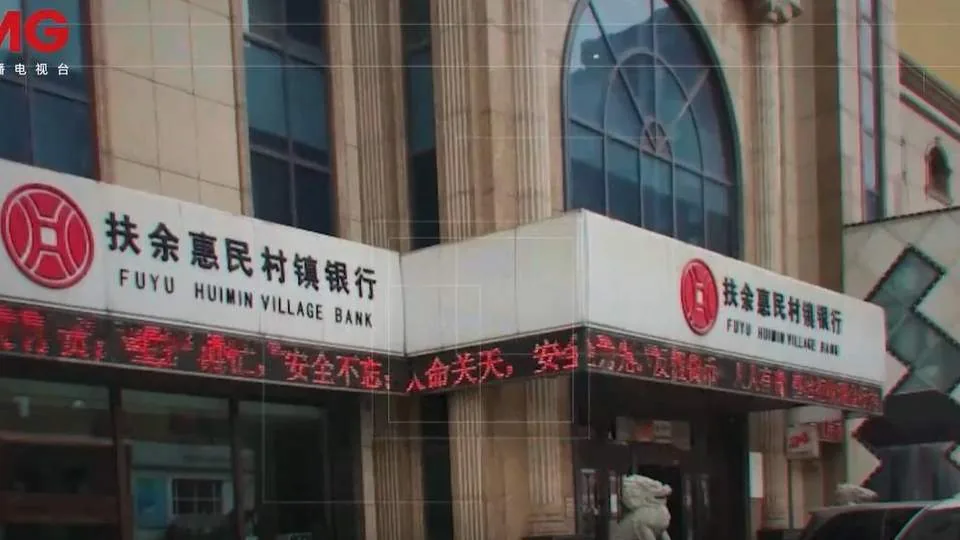
Let that sink in. The metaphor here — "paper fence" (纸篱笆) — is doing incredible rhetorical work. A paper fence looks like a fence. It has the shape of a fence. It might even deter the occasional honest person. But anyone with mild determination can walk right through it. That's what Chinese netizens are saying about their banking system's vaunted "internal controls."
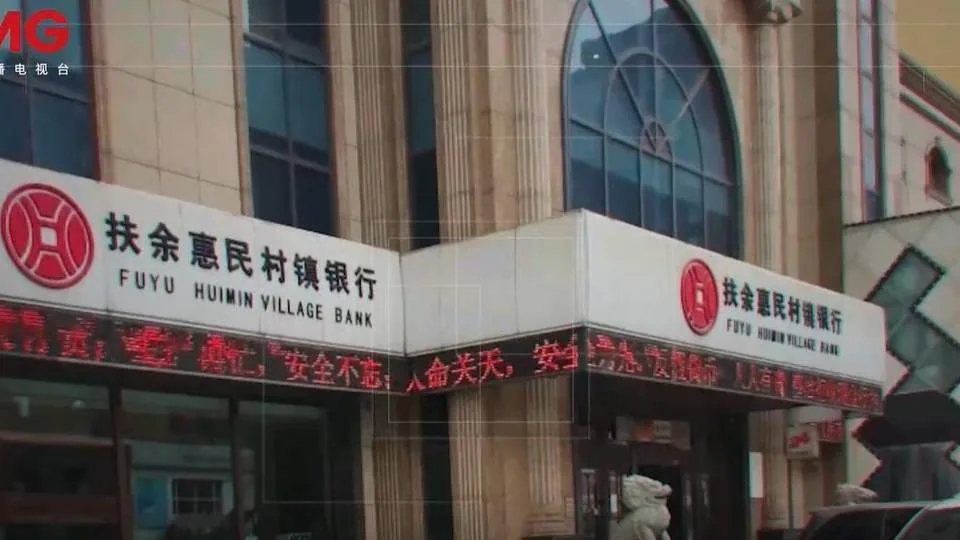
This isn't some back-alley shadow bank or a shady peer-to-peer lending platform that promised 20% returns before vanishing overnight. This is a real bank — the kind with tellers and branches and official-looking signage and presumably a compliance department that meets regularly to discuss risk management while eating pastries. And yet somehow, 18 million yuan walked out the door.
The details, as they've been emerging across Weibo (微博) and Douyin (抖音), paint a picture that's almost comically grim. The victim — reportedly a business owner — had deposited the funds in what they believed was a standard fixed-term deposit account. These are the bread and butter of Chinese personal finance: safe, boring, government-insured up to 500,000 yuan, and carrying interest rates that have been steadily declining as the People's Bank of China keeps cutting to stimulate the economy. The whole pitch is safety. That's the product.
But somewhere between "deposit" and "maturity," the money simply wasn't there anymore. Internal controls — those magical systems that are supposed to prevent exactly this kind of thing — apparently failed so completely that the metaphor of a paper fence feels generous. A paper fence at least has structural integrity for a few minutes in light rain.
The trending conversation reveals something deeper happening in Chinese consumer psychology right now. For decades, the implicit social contract in China has been relatively straightforward: the system might not be perfect, but your money in the bank is sacred. Banks are state-backed. Deposits are guaranteed. The foundation is solid. This belief has underpinned everything from China's absurdly high savings rate (households stash away roughly 30-35% of disposable income) to the entire real estate ecosystem that turned apartment complexes into the primary wealth-storage vehicle for hundreds of millions of families.
But cracks have been showing for a while now. The 2022 Henan banking scandal — where rural bank depositors found their accounts frozen and were then physically prevented from protesting in Zhengzhou by a health-code system suspiciously weaponized against them — was a seismic moment. That scandal involved approximately 40 billion yuan and hundreds of thousands of depositors. The government eventually stepped in to make depositors whole, but the damage to trust was done.
This new case, while smaller in absolute terms, hits differently because of the sheer brazenness. 18 million yuan isn't a rounding error. It's not a cracked ATM or a skimmed card. It suggests systemic failure at multiple checkpoints — or, worse, systematic collusion that those checkpoints were designed to prevent.
On Xiaohongshu (小红书), finance influencers are already posting guides titled things like "How to Actually Protect Your Deposits" and "What This Scandal Means for Your Money." The advice ranges from practical (diversify across banks, stay within the 500,000-yuan deposit insurance limit per institution) to philosophical (maybe don't trust any single entity with your entire net worth). There's a booming cottage industry of financial literacy content on Chinese social media, and scandals like this are rocket fuel for engagement.
What's particularly fascinating is how the conversation intersects with China's broader financial anxiety moment. Property values in Tier 1 cities continue their slow-motion correction. Stock markets have been volatile enough that state media intervention has become almost routine. Wealth management products that once promised 8% returns now offer 2-3% — if they're even available. The golden era of stick-your-money-somewhere-and-watch-it-grow is over, and ordinary Chinese consumers are being forced to become reluctant financial strategists.
Into this steps the "paper fence" metaphor — and it's spreading because it captures something millions of people feel. The institutions that were supposed to be bedrock are starting to feel like theater. The controls that were supposed to protect are revealed as performative. It's not that every bank is corrupt or every deposit is at risk. It's that the gap between the appearance of safety and the reality of vulnerability has become visible, and once you see it, you can't unsee it.
Bilibili (B站) commentators have been particularly savage, with one viral comment comparing bank internal controls to "a VPN that only blocks websites nobody visits." The comment has over 50,000 likes. On Weibo, the hashtag related to this story has generated hundreds of millions of views, with the prevailing sentiment being dark humor rather than shock. Chinese netizens have been through enough financial scandals at this point that the dominant emotional register is resignation seasoned with sarcasm.
Here's what I think is actually going on: China is experiencing a slow-motion trust recalibration across multiple institutions simultaneously. The post-pandemic era has been characterized by a collective reassessment of what's stable, what's guaranteed, and what's actually worth believing in. When a property developer like Evergrande can collapse under $300 billion in debt, when rural banks can freeze deposits, and when 18 million yuan can vanish from inside the banking system itself — the implicit guarantees that governed Chinese economic life start to feel conditional.
For the global observer, this is worth watching because Chinese consumer behavior doesn't exist in a vacuum. When trust in domestic institutions erodes, capital seeks alternative channels — some legal, some less so. The surge in interest in offshore assets, digital currencies, and even gold among Chinese consumers isn't coincidental. It's a direct response to exactly this kind of institutional failure narrative.
The 18 million yuan will probably be recovered. Regulators will announce reforms. The specific bad actors will face consequences. But the paper fence metaphor will persist, because it names something millions of Chinese citizens have been feeling: the structures that are supposed to protect them are, in the end, only as strong as the people who are supposed to enforce them. And right now, a lot of Chinese netizens are looking at those structures and seeing right through them.