China to Bosses: You Can't Just Fire Humans for AI
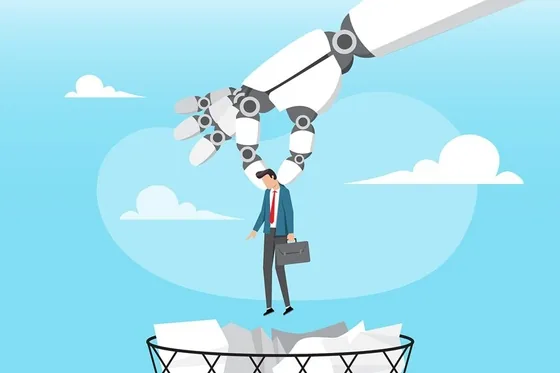
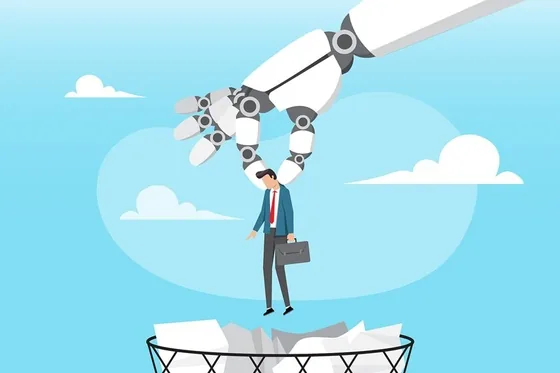
Something remarkable just happened in China's labor courts, and if you're watching the country's AI arms race, you should probably pay attention.
Chinese courts have ruled that companies cannot simply fire workers to replace them with AI. Let that sink in for a moment. In the country that brought you DeepSeek (深度求索), the open-source model that terrorized Silicon Valley's valuations in early 2025, judges are now drawing a line: you actually need a legitimate business reason to terminate someone. "We bought a chatbot" doesn't cut it.
Here's why this matters more than you think.
The ruling heard 'round the feed
The Caixin report details what is essentially the first major judicial precedent addressing the AI-labor displacement question head-on. Courts have determined that adopting artificial intelligence tools — whether that's large language models like Qwen (通义千问) from Alibaba, or Doubao (豆包) from ByteDance (字节跳动), or any of the dozen-plus Chinese foundation models now flooding the market — does not constitute sufficient grounds for unilateral termination.
In plain Mandarin: you can't hand someone their walking papers and point at a server rack running inference.
This is, frankly, a massive deal. China currently has somewhere north of 130 large language models competing for enterprise clients. Every tech giant and half the startups in Zhongguancun are pitching "AI transformation" to companies across manufacturing, e-commerce, content creation, customer service, finance, logistics — you name it. The default sales pitch has been: "fire your expensive humans, buy our API."
The courts just threw a very large wrench into that pitch deck.
Why China's AI-labor tension is different
Look, the AI-job-displacement anxiety is global. But China's version hits different for a few reasons.
First, scale. China has approximately 740 million employed workers. Even small displacement percentages represent tens of millions of livelihoods. The social stability implications are not abstract — they're the kind of thing that keeps officials in Beijing up at night.
Second, speed. The pace at which Chinese companies adopt new technology is genuinely insane. We went from barely anyone knowing what an LLM was to every Douyin (抖音) creator using AI-generated scripts, every Taobao merchant running AI customer service bots, and every mid-tier company exploring AI-powered workflow automation — all in roughly 18 months. That's DeepSeek, Kimi (月之暗面), GLM/Zhipu (智谱清言), MiniMax, and the rest going from research papers to enterprise deployment faster than anywhere else on Earth.
Third, labor law that actually has teeth. China's Labor Contract Law, enacted in 2008 and strengthened since, requires employers to provide legitimate reasons for termination, offer severance, and follow due process. "We want to use software instead" has always been legally dubious. Courts are now confirming: yeah, it's still dubious even when the software is fancy.
What this reveals about the Chinese AI moment
Here's what I find fascinating: this ruling tells us Chinese courts are treating AI as a tool, not a transformational exception to existing law. There's no special "AI exemption" being carved out. The technology is impressive — DeepSeek-V3 matching GPT-4 performance at a fraction of the cost, Yi (零一万物) and Baichuan (百川) pushing open-source boundaries, Huawei Ascend chips increasingly powering domestic inference — but the legal framework remains stubbornly human-centered.
This runs counter to the techno-utopian narrative you hear from some Chinese tech evangelists, the ones who insist AI will solve everything from demographic decline to industrial upgrading. The courts are essentially saying: cool story, still gotta pay your people.
It also reflects a genuine tension within China's tech ecosystem. On one hand, Beijing wants to be the world leader in AI by 2030 — that's official policy. On the other hand, mass layoffs driven by that same AI push would be socially destabilizing, and social stability is priority one, two, and three.
The ruling threads that needle perfectly: yes, develop AI, deploy it widely, just don't use it as an excuse to gut your workforce without consequences.
The enterprise AI reality check
Let's be honest about what's actually happening on the ground. Most Chinese companies aren't replacing entire departments with AI. What they're doing is more nuanced — and more interesting.
Customer service teams are using Doubao-powered chatbots to handle tier-one queries while humans manage complex cases. Content studios are running Kimi for research and first drafts while human editors refine and fact-check. Factories deploying Unitree (宇树科技) robots and Fourier (傅利叶 GR-1) humanoids aren't firing assembly-line workers — they're struggling to hire enough people in the first place, thanks to China's demographic headwinds.
The companies that ARE trying to wholesale replace humans with AI? They're discovering what everyone discovers: the last 10% of any job is really hard to automate, and customers hate interacting with broken chatbots. Ask anyone who's screamed "transfer me to a real person" into their phone in the past year.
What comes next
Expect more rulings like this. Expect labor arbitration cases to skyrocket as AI adoption accelerates. Expect a cottage industry of employment lawyers specializing in AI-displacement disputes.
Also expect companies to get creative. They won't fire you for AI — they'll fire you for "restructuring," or "performance issues," or "departmental redundancy." The AI will just happen to be doing your old job two weeks later. Judicial scrutiny will need to keep up with corporate euphemisms.
The deeper question is whether China can sustain its current approach: full-speed AI development combined with robust worker protections. The optimistic read is that AI augments rather than replaces, creating productivity gains that grow the overall pie. The pessimistic read is that companies quietly shed workers through attrition and hiring freezes while courts fight the last war.
For now, though, the message from Chinese courtrooms is clear and surprisingly human: the robots may be coming, but your boss still needs a real reason to show you the door. In the age of DeepSeek and Doubao, that's worth something.
And honestly? It's a more sensible framework than anything I've seen from regulators in Washington or Brussels. Sometimes the best AI governance is just... enforcing the labor laws you already have.