China's 11.2% Service Export Surge: The Tech Story Beneath the Boring Headline
A headline is screaming across Toutiao (今日头条) right now with over 24 million degrees of heat: 「一季度我国服务出口同比增长11.2%」 — "China's service exports grew 11.2% year-on-year in Q1." Yawn, right? Another beige government data dump.
Wrong. Stop scrolling.
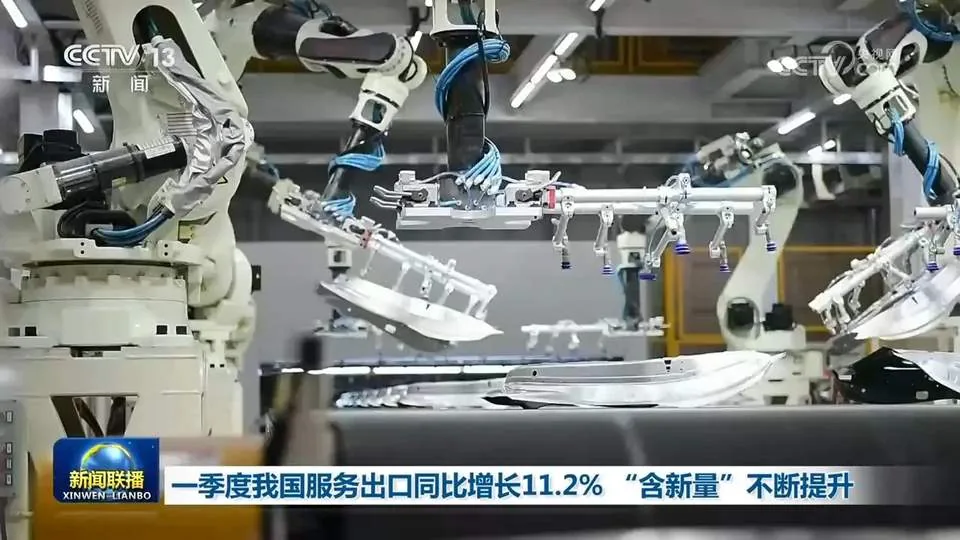
Here's the thing about "service exports" that the dry statistic doesn't capture: we are no longer living in the China of plastic trinkets and sweatshopexports. The 11.2% jump in service exports is a technology story masquerading as a trade number, and decoding it tells you exactly where China's consumer-internet economy is heading next.
What's Actually Inside "Service Exports"
When Beijing says "service exports," it's bundling together a fascinating mix: software-as-a-service, gaming revenue from overseas players, cross-border e-commerce platform fees, cloud computing, fintech licensing, and — increasingly — AI API calls shipped from Chinese servers to global developers.
Consider the evidence:
- ByteDance (字节跳动) has been aggressively pushing Douyin's (抖音) commerce infrastructure into Southeast Asia and the Middle East. Every TikTok Shop transaction processed through Chinese backend systems counts as a service export.
- Pinduoduo (拼多多), through its Temu juggernaut, isn't just shipping cheap goods — it's exporting an entire supply-chain logistics platform. The software layer alone is a service export goldmine.
- Chinese gaming giants like miHoYo (米哈游) and Tencent (腾讯) are raking in billions from international players. Every Genshin Impact battle pass purchased in Texas or Tokyo? Service export.
- And then there's the new frontier: AI model APIs. DeepSeek (深度求索), Alibaba's Qwen (通义千问), and Moonshot's Kimi (月之暗面) are all positioning themselves for global developer adoption. Every inference call from a startup in Lagos or São Paulo to a Chinese model endpoint? You guessed it — service export.
Why 11.2% Matters More Than You Think
China's goods exports have been sputtering — everyone knows that. The narrative of collapsing export growth has been drilled into Western media coverage for two years straight. But services? Services are the stealth growth engine that nobody's watching.
The 11.2% figure tells us something specific: Chinese tech platforms are successfully monetizing international users without physically shipping anything. This is the exact economic transformation Beijing has been begging for since the "Dual Circulation" strategy launched. Move up the value chain. Sell brains, not brawn. Export code, not cargo.
And it's working — kind of.
The AI Factor Nobody's Counting
Here's my hot take: the service export number is about to get a massive AI boost that official statistics aren't even capturing properly yet.
Chinese AI labs are currently engaged in an arms race to offer the cheapest, most capable models on the planet. DeepSeek's pricing sent shockwaves through Silicon Valley earlier this year. Qwen's multilingual capabilities are genuinely competitive. When a Brazilian fintech startup chooses Qwen over OpenAI because it's 80% cheaper for Portuguese-language tasks, that's a service export — but it's also a geopolitical pivot point that trade statisticians haven't figured out how to track properly.
I'd estimate that AI-related service exports are currently undercounted by at least 30-40%, simply because the classification systems haven't caught up. A developer in Indonesia paying for access to Zhipu's (智谱清言) GLM models through a cloud marketplace? Good luck finding that in the customs data.
The Consumer Internet Angle
But here's where it gets really interesting for qipaobuzz readers: the service export boom is directly fueling the consumer internet culture we cover every day.
When Meituan (美团) exports its hyperlocal delivery algorithms to Southeast Asian partners, the revenue funds more R&D at home. When Xiaohongshu (小红书) starts testing international monetization — and trust me, they are — the service export revenue cycle begins. Every Douyin commerce innovation that gets licensed abroad generates cash that funds the next round of creator tools, the next viral filter, the next livestream-commerce revolution.
The 11.2% isn't just a macroeconomic indicator. It's the financial bloodstream keeping Chinese consumer tech innovation alive while domestic consumer confidence remains shaky.
My Take: Don't Sleep on Services
Western China-watchers are obsessed with factory output, export container counts, and PMI numbers. That's so 2015. The real story — the story that matters for anyone tracking Chinese tech, consumer culture, and the AI race — is in the services column.
11.2% growth in Q1 service exports means Chinese platforms are successfully exporting their operating systems for digital life to the rest of the world. Not hardware. Not widgets. The software and AI infrastructure that powers how 1.4 billion people shop, watch video, order food, and interact with AI assistants.
That's not a boring trade statistic. That's a roadmap for the next decade of global tech competition.
Pay attention.
Numbers sourced from China's Ministry of Commerce Q1 2025 trade data release, Toutiao trending board (24.39M热度), and qipaobuzz analysis of Chinese platform international expansion patterns.