Washington Buried a Report. China's AI Didn't Get the Memo.
The US National Science Board was finalizing a report on China's accelerating scientific edge over the United States. Then Trump fired the entire board. The website was wiped. Coincidence? Who cares. Because here's what actually matters: while Washington plays HR games with advisory committees, China's tech ecosystem is hitting milestones that would have made that report very uncomfortable reading for anyone who thinks American technological dominance is self-sustaining.

The AI Arms Race DC Doesn't Want Documented
Let's be blunt about what's happening in Chinese AI right now, because apparently the US government would prefer not to keep official records.
DeepSeek (深度求索) dropped their R1 reasoning model and sent Silicon Valley scrambling. A lab funded by the quant-trading firm High-Flyer (幻方量化) built something that went toe-to-toe with OpenAI's best reasoning outputs—at a training cost that was allegedly a fraction of Western budgets. The benchmark wars got ugly. The denials flew. But the message landed: you don't need a $100 billion compute moat to compete at the frontier anymore.
Then there's Alibaba's Qwen team (通义千问), quietly assembling one of the most capable open-source model families on the planet. Their Qwen 2.5 variants keep topping leaderboards that Western labs used to dominate by default. ByteDance (字节跳动) has been shoving their Doubao (豆包) models into every consumer app they touch, leveraging the same distribution engine that powers Douyin (抖音) and TikTok. Moonshot AI (月之暗面) built Kimi into a genuine long-document analysis tool that Chinese professionals actually use—because nothing says "product-market fit" like people choosing your thing voluntarily.
Zhipu AI (智谱清言) keeps shipping GLM models. MiniMax does interesting multimodal work. Kai-Fu Lee's 01.AI (零一万物) pushes the Yi model family. Baichuan (百川) keeps plugging. New entrants emerge monthly. None of these names are secrets. The National Science Board didn't discover them. But an official US government report documenting the competitive gap? That was apparently a bridge too far.
Chips: The Ban That Backfired Into Innovation
The GPU export bans were supposed to strangle Chinese AI development. Instead, they've created a perverse incentive structure that's producing actual results.
Huawei's Ascend chips are becoming genuinely viable for AI training workloads—not matching NVIDIA's cutting edge, but approaching "good enough at scale," which is often what actually matters in deployment. Moore Threads (摩尔线程) and Cambricon (寒武纪) iterate faster than anyone in Cupertino expected.
And here's the news that should've been in that buried report: Lisuan Tech just became the first Chinese GPU maker to earn Microsoft WHQL certification. Their LX 7G100 GPU now sits in the same certification tier as NVIDIA, AMD, and Intel. A Chinese graphics chip with Windows-certified drivers. That's not a competitive threat tomorrow—it's a statement about where the trajectory points in five years.
When you can't buy the best, you build. Sometimes you build garbage. Sometimes you build something that surprises everyone, including yourself.
Humanoid Robots: The Shenzhen Advantage
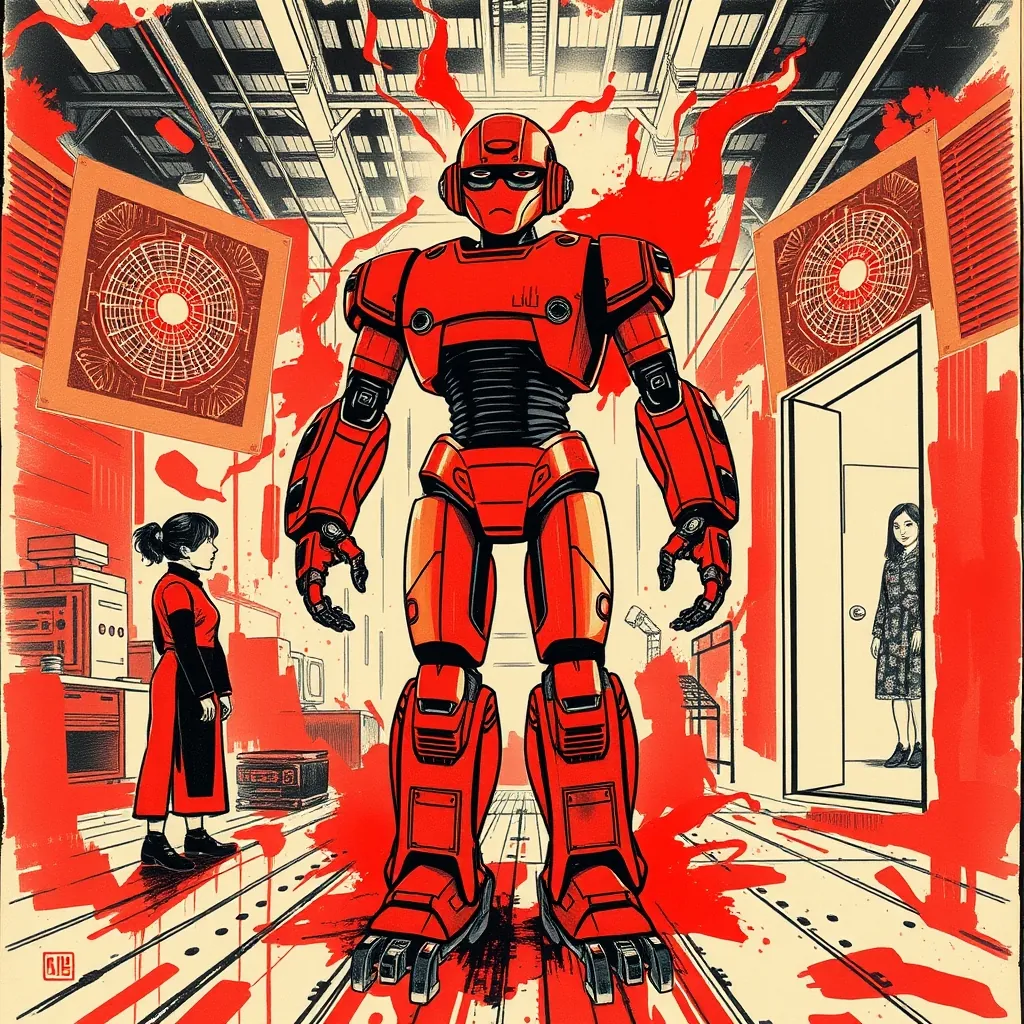
China's humanoid robotics scene is where consumer electronics was in Shenzhen circa 2005: a thousand companies throwing prototypes at the wall, backed by the world's most ruthlessly efficient manufacturing ecosystem.
Unitree (宇树科技) ships their H1 and G1 humanoids at prices that make Western VCs sweat. Their playbook is transparent—flood the market with capable-enough machines, iterate fast, win on volume. Fourier Intelligence (傅利叶智能) already delivered their GR-1 humanoid to paying commercial clients. Agibot (智元机器人) builds the Yuanzheng (远征) series specifically for factory deployment, because of course the factory-automation play comes first.
UBTech (优必选) has been in this game for years and now deploys Walker robots in actual manufacturing facilities. EngineAI, Booster Robotics, Robot Era—the roster expands monthly. Each benefits from the same advantages that made China dominant in solar panels and smartphones: supplier proximity, iteration speed, and a domestic market large enough to absorb imperfect products while they improve.
The Talent Flywheel Nobody Wants to Discuss
This week also brought news that a convicted former Harvard scientist has rebuilt a brain-computer interface lab—in China. Whatever you think about the ethics, the pattern is clear: researchers facing constraints in Western institutions are finding environments where the funding flows, the institutional ambition burns hot, and the regulatory friction has a different texture.
Meanwhile, Chinese courts just ruled that companies cannot fire workers simply to replace them with AI. That's a fascinating tension—aggressively develop automation while building legal guardrails around labor displacement. It suggests a society simultaneously sprinting toward the future and trying to manage the social wreckage in real time. Whether that balancing act holds is anyone's bet, but it's more sophisticated than either "AI fixes everything" or "shut it all down."
What Washington Doesn't Want to See Can't Hurt It, Right?
The National Science Board report would have been a document. Documents don't build labs. They don't train models. They don't certify GPUs.
But documents do shape policy conversations. Policy conversations shape funding. Funding shapes whether the next breakthrough happens in your country or someone else's.
By firing the board before the report landed, the administration didn't change reality. DeepSeek will still ship. Unitree will still iterate. Lisuan Tech will still chase the next certification milestone. What the administration did was blind its own decision-making apparatus to the pace of competition. You cannot strategize against something you refuse to acknowledge.
And meanwhile, the Chinese internet—the actual one, the one we track here—keeps buzzing about milk tea wars, whether Dong Yuhui (董宇辉) can sustain East Buy's (东方甄选) comeback arc, and why Pop Mart's (泡泡玛特) Labubu figures have become the nation's most improbable luxury good. The consumer energy fuels the tech ambition. The tech ambition creates the consumer products. The flywheel spins.
That's the story. Not a buried report. Just reality, with or without official documentation.