Deng Chao Crashes a Beijing Proposal and China Eats It Up
Someone tell Hollywood — China's celebrity cameo game just went nuclear.
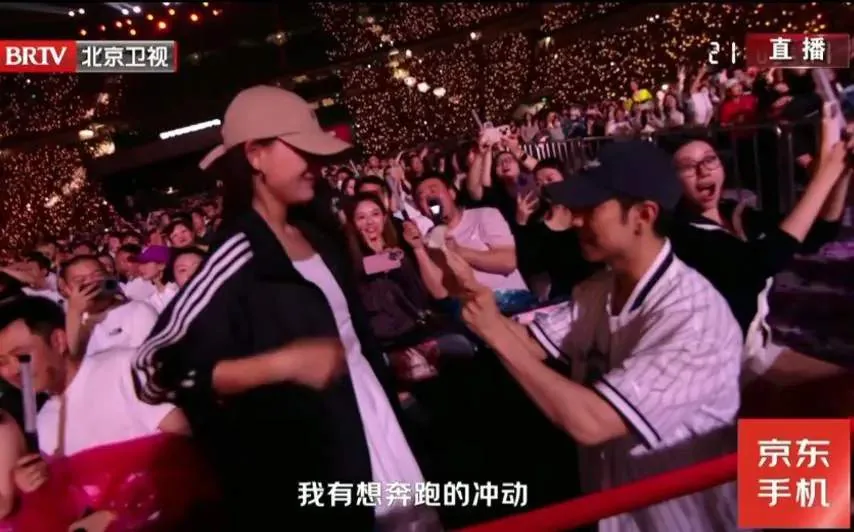
A young man proposed to his girlfriend at Beijing's legendary Workers' Stadium (工体, universally called 'Gongti' by anyone who's ever screamed themselves hoarse at a Chinese Super League match or a Jay Chou concert), and who swooped in to help seal the deal? None other than Deng Chao (邓超) — actor, variety-show king, and the human equivalent of a golden retriever who learned to host TV.
The Toutiao (今日头条) hot board lit up with over 1.1 million engagements in hours. The headline: 'Young man proposes to girlfriend at Beijing Gongti, Deng Chao plays bridge.' The internet collectively lost its mind.
Let's break down why this seemingly fluffy moment tells us everything about Chinese consumer-internet culture in 2025.
Gongti: The Cathedral of Beijing Cool
Workers' Stadium isn't just a sports venue. Reopened in 2023 after a massive renovation, the 'New Gongti' is a 68,000-seat multiplex that sits at the intersection of Beijing's nightlife district, football fandom, and concert culture. It's where Chinese Super League club Beijing Guoan plays. It's where Mandopop royalty holds court. It's surrounded by clubs that spawned a thousand 'Beijing drift' (北漂) coming-of-age novels.
Proposing at Gongti is the Beijing equivalent of proposing at... actually, there's no Western equivalent. Imagine proposing at Madison Square Garden, except MSG is also the spiritual home of your city's football ultras, and also surrounded by the bars where you spent your twenties, and also your date's favorite singer has performed there 12 times. Gongti carries that much emotional freight.
Deng Chao: China's Permission Slip to Feel
Deng Chao occupies a unique niche in Chinese entertainment. He's a serious actor (he starred in Zhang Yimou's 'Shadow' and the mega-hit 'The Mermaid'), but he's far better known as the endlessly goofy host of 'Keep Running' (奔跑吧兄弟) — the Chinese adaptation of 'Running Man' that became a national obsession on Zhejiang TV.
His brand is wholesome chaos. He's the celebrity your grandmother approves of AND your nephew quotes memes from. He has over 50 million followers on Weibo (微博). When he crashed this proposal, he wasn't just a random famous face — he was the cultural equivalent of getting a notarized blessing from the entire Chinese entertainment-industrial complex.
The Economics of the Viral Proposal
Public proposals are a whole genre on Chinese short-video platforms. Search '求婚' (proposal) on Douyin (抖音) and you'll find millions of videos, from flash mobs to drone shows to proposals at bubble-tea shops. They're engagement catnip — the algorithm loves them because viewers love them, and viewers love them because they're simultaneously romantic and anxiety-inducing.
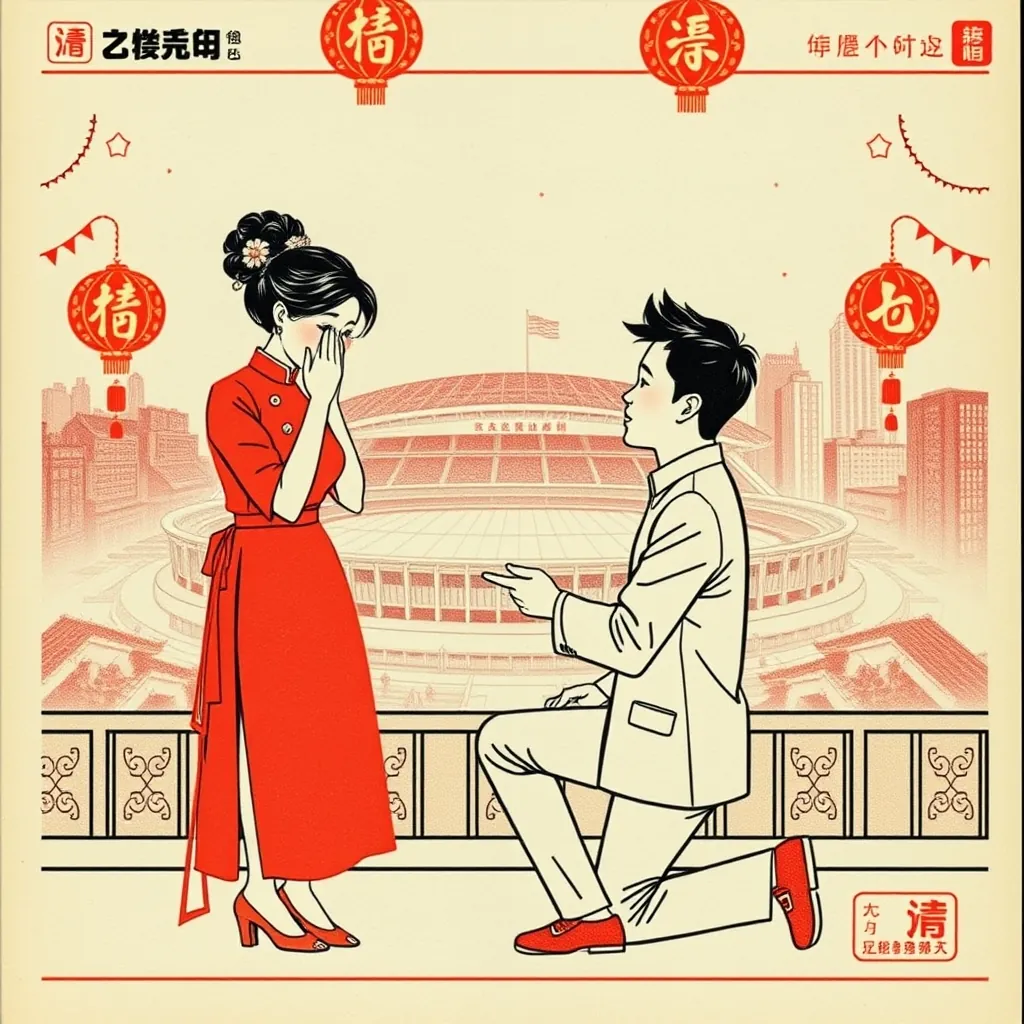
But the Gongti-Deng Chao proposal hits different. It's not some orchestrated brand event (though honestly, who knows anymore). It's got the organic feel of a real moment blessed by celebrity serendipity. In a content ecosystem where everything feels staged — where livestreamers cry on cue and couple influencers have documented their entire relationship arc for engagement metrics — the idea that Deng Chao just happened to be there, just happened to help, feels almost radically sincere.
Almost. The cynic in me notes that Deng Chao has a new film project every few months, and this kind of warm-fuzzy viral moment is worth more than a thousand billboard ads. But the romantic in me — buried deep beneath years of analyzing Chinese internet metrics — says maybe it was just... nice?
What This Reveals About China's Content Culture
Three things:
Celebrity accessibility is a selling point. Chinese fans don't want untouchable idols behind velvet ropes. They want stars who feel like they could show up at your proposal, your wedding, your random Tuesday. Deng Chao's entire career is built on this relatability. It's why 'Keep Running' worked — he seemed like the rich famous guy who'd still buy you a beer.
The border between 'content' and 'life' has fully dissolved. Was this a real proposal that happened to go viral, or was it always going to be content? Does the distinction even matter when you're filming on your phone and posting to Douyin before the ring is on the finger? Every major life event is now potential content, and every piece of content needs to feel like a major life event.
Gongti remains a cultural anchor. In a Beijing that's been transformed by demolition, rebuilding, and the endless churn of 'city upgrades' (城市更新), Gongti stands as one of the few places that still means something to multiple generations. Your parents watched games there. You watched concerts there. Your kids will probably watch e-sports tournaments there. Proposing there is a statement: this place matters to us.
The Verdict
Look, is this the most important thing happening in China today? No. DeepSeek (深度求索) is probably training its next model somewhere, and Unitree (宇树科技) is probably building a robot that can propose better than any human. But the fact that 1.1 million people engaged with this story on Toutiao in hours tells you what actually drives attention: not just breakthroughs, but moments of unexpected human connection, amplified by celebrity and platform dynamics.
Deng Chao didn't have to help that guy propose. But he did. And China watched. And shared. And felt something.
In an internet economy that runs on manufactured drama and algorithmic outrage, maybe that's the most valuable currency of all.
Now someone get that ring size. This is content, after all. There's a sequel to plan.