Jensen Huang's Masterplan: All Roads Lead to Compute
The Chinese internet is buzzing about one man's grand strategy, and surprisingly, he's not even Chinese. Jensen Huang (黄仁勋), the leather-jacket-wearing CEO of NVIDIA, has captured the attention of over 2.2 million readers on Toutiao (今日头条) with what commentators are calling his "new open conspiracy" (新阳谋)—the unapologetic vision that every technological future, from AI to robotics to scientific computing, funnels back to one thing: raw, unbridled compute power.
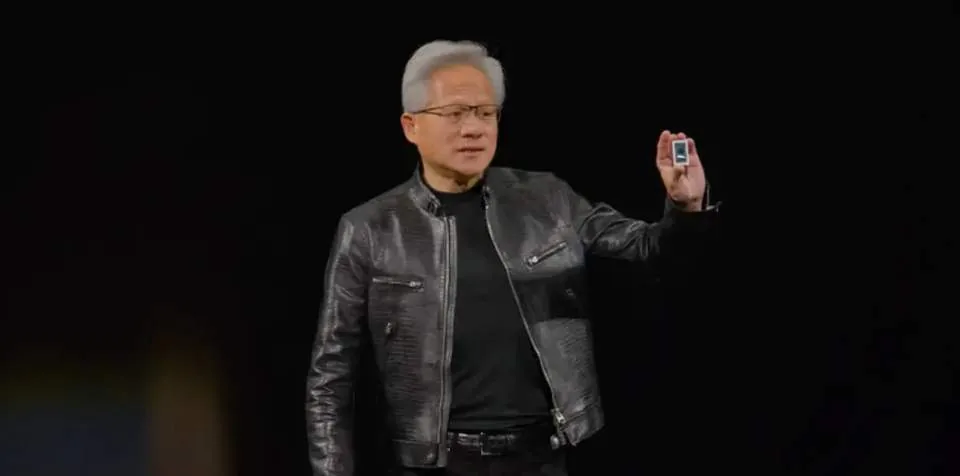
Let's be real here. The word "阳谋" (yángmóu) is doing heavy lifting in that headline. Unlike a阴谋 (yīnmóu, conspiracy), an 阳谋 is an open strategy—something everyone can see coming but nobody can stop. It's the chess grandmaster announcing checkmate three moves early and daring you to prevent it. That's exactly what Huang has done to the global AI industry, and China's tech ecosystem is both captivated and cornered by it.
Here's why this matters for China-watchers: the Chinese AI ecosystem is currently engaged in what can only be described as a desperate, ingenious scramble for compute. While American labs like OpenAI and Google can throw endless NVIDIA H100 clusters at their training runs, Chinese AI companies face a very different reality. US export controls have made it extraordinarily difficult to acquire high-end NVIDIA chips legally. The result? A cottage industry of creative workarounds, gray-market imports, and feverish domestic alternatives.
DeepSeek (深度求索), the Hangzhou-based AI lab that shocked the world earlier this year with its cost-efficient models, reportedly trained its systems using older NVIDIA chips and clever engineering—essentially doing more with less. Alibaba's Qwen team (通义千问) has pursued a similar path, optimizing every ounce of performance from whatever compute they can access. ByteDance's Doubao (豆包) and Moonshot AI's Kimi (月之暗面) have likewise had to innovate around hardware constraints.
Meanwhile, the domestic chip industry is racing to fill the void. Huawei's Ascend (昇腾) chips have become the most visible alternative, powering AI infrastructure across major Chinese cloud providers. Cambricon (寒武纪) and Moore Threads (摩尔线程) are pushing their own solutions. But here's the uncomfortable truth that the Toutiao commentariat understands: nobody has yet matched NVIDIA's software ecosystem, particularly CUDA, which has become the de facto standard for AI development worldwide.
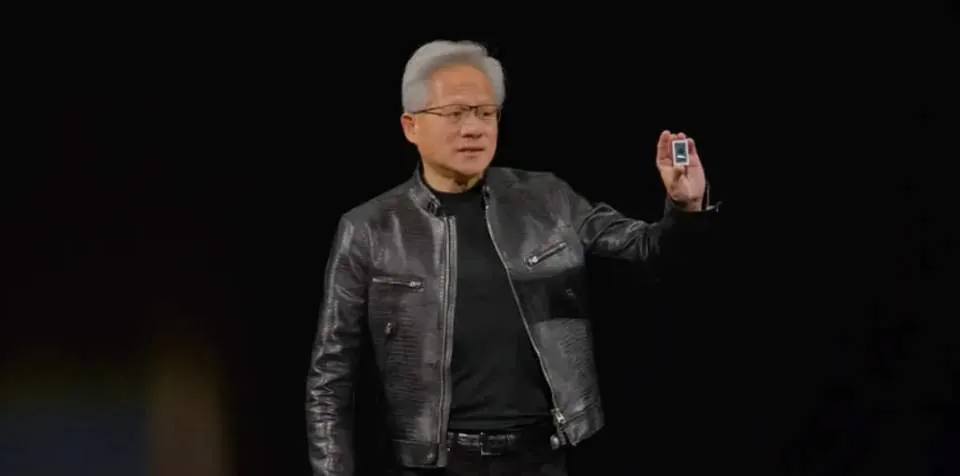
This is Huang's genius—and his "open conspiracy" in full view. By building not just hardware but an entire software moat around NVIDIA's products, he's ensured that even competitors who match his chips' raw performance still can't replicate the decades of developer tools, libraries, and community built on top of CUDA. Every AI researcher trained on NVIDIA systems becomes another node in this ecosystem lock-in. Every Chinese startup that dreams of training foundation models must reckon with this reality.
The Chinese internet's fascination with this story reveals something deeper about the national mood around tech competition. There's admiration for Huang—after all, he was born in Tainan and speaks frequently about his Taiwanese roots, though Chinese media carefully avoids that particular detail. But there's also frustration and determination. The comments sections across Toutiao, Weibo (微博), and Zhihu (知乎) are filled with a mix of respect for NVIDIA's strategy and patriotic calls for China to build its own CUDA equivalent.
Some of that is already happening. Huawei's MindSpore framework and other domestic alternatives are trying to create parallel ecosystems. Chinese AI researchers are increasingly publishing papers on efficient training methods, model compression, and novel architectures that require less compute. In some ways, the chip restrictions have forced a kind of forced innovation—the technological equivalent of evolution under environmental pressure.
But the numbers tell a stark story. NVIDIA's market capitalization has soared past $3 trillion, making it arguably the most important company in the AI revolution. China's entire semiconductor industry, while growing rapidly, remains years behind in the most advanced manufacturing processes needed to replicate cutting-edge AI chips. SMIC (中芯国际), China's leading chipmaker, has made impressive strides but still operates under severe equipment restrictions that limit its ability to produce the most advanced nodes.
What makes the Toutiao trending moment particularly interesting is the framing. By calling Huang's strategy an "open conspiracy," Chinese commentators are acknowledging something that Western coverage often misses: this isn't just about business competition. It's about architectural control of the AI future. Whoever controls compute controls the pace of AI development, and right now, that's decidedly not China.
The “all roads lead to compute” (条条大路通算力) formulation is telling. It echoes the old saying about all roads leading to Rome—a recognition of centrality and inevitable convergence. Chinese AI companies can innovate on algorithms, pioneer new architectures, or find clever training tricks, but ultimately, they need hardware to run on. And that's where Jensen Huang's leather-jacketed shadow looms largest.
For China's AI ambitions—whether it's DeepSeek challenging OpenAI, humanoid robot companies like Unitree (宇树科技) and Fourier (傅利叶) pushing hardware boundaries, or tech giants like ByteDance (字节跳动) and Tencent (腾讯) racing to deploy AI across their platforms—the compute bottleneck remains the defining constraint. The country that cracks this—whether through domestic chips, novel architectures, or some yet-unimagined breakthrough—will determine the next phase of the global AI race.
Huang's open conspiracy isn't just a business story. It's the central tension of the AI age, playing out in real-time across Chinese social media. And with 2.2 million Toutiao users engaging with this single headline, it's clear that China's tech-conscious public understands exactly what's at stake.