Jensen Huang Declares the AI PC Revolution Is Here
NVIDIA CEO Jensen Huang (黄仁勋) has spoken, and the Chinese internet is hanging on every leather-jacketed word. The headline blazing across Toutiao (今日头条) with nearly 11 million热度? "Jensen Huang previews the 'New PC Era'" — and if you think this is just another tech CEO doing buzzword karaoke, you haven't been paying attention to what's happening on the ground in China's AI hardware wars.
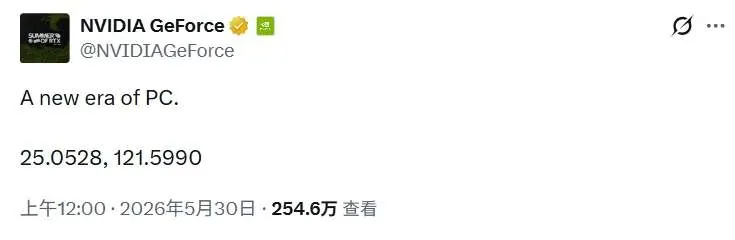
Here's the deal: Huang has been evangelizing the concept of AI PCs — personal computers with dedicated neural processing units (NPUs) that can run AI models locally without cloud dependency. This isn't futuristic speculation. This is shipping reality, and Chinese consumers and manufacturers are scrambling to position themselves in what could be the most significant computing paradigm shift since the smartphone killed the desktop.
Why China Cares More Than Anyone
China has a unique relationship with PC hardware that makes Huang's prophecy particularly explosive. The country that perfected the internet cafe (网吧) culture, birthed the gaming-addiction panic, and built entire cities around electronics manufacturing now faces a fascinating inflection point: can it lead in AI computing hardware while navigating US chip export restrictions?
The answer appears to be a chaotic "yes, but." Chinese companies like Huawei with their Ascend chips (昇腾), Cambricon (寒武纪) with their MLU series, and Moore Threads (摩尔线程) with their domestic GPUs are all angling to provide the silicon backbone for this new PC era. The catch? They're starting from behind NVIDIA's CUDA ecosystem, which has become the de facto standard for AI development worldwide.
The Consumer Uprising
What makes this trending on Toutiao rather than some niche tech forum is the consumer angle. Chinese netizens aren't just passive observers in this hardware war — they're active participants with strong opinions. The comment sections reveal a population simultaneously excited about AI capabilities and frustrated by the geopolitical constraints limiting their access to cutting-edge NVIDIA hardware.
The timing is significant. While American consumers debate whether they need an NPU in their laptop, Chinese consumers are asking a more urgent question: will domestic chips be good enough to run the AI models they actually use? Models like DeepSeek (深度求索), Qwen/Tongyi (通义千问), and Kimi (月之暗面) have proven that Chinese AI labs can compete globally — but can Chinese hardware keep pace?
The OEM Scramble
Chinese PC manufacturers aren't waiting for certainty. Lenovo, already the world's largest PC maker, has been aggressively pushing AI PCs with both Intel's latest chips and domestic alternatives. The company's AI PC strategy explicitly includes running local models — a feature that resonates in a market where data privacy concerns and network reliability vary wildly between tier-1 cities and rural counties.
Meanwhile, smaller manufacturers see an opportunity to differentiate. The conversation on Chinese tech forums isn't about whether AI PCs will succeed, but about which AI PCs will succeed — and crucially, whose silicon will power them.
The Gaming Paradox
Here's where it gets deliciously complicated. China's massive gaming population — the same demographic that made NVIDIA's GeForce GPUs legendary in mainland internet cafes — now faces a world where gaming and AI computing share the same hardware pipeline. When Huang talks about a "new PC era," Chinese gamers hear: "your next graphics card will be judged on AI performance, not just frame rates."
This has created a fascinating cultural schism. Older PC enthusiasts mourn the death of the pure gaming rig. Younger users, raised on Bilibili (B站) AI tutorials and Douyin (抖音) deepfake memes, embrace the hybrid future. The Toutiao comments section for this story reads like a generational Rorschach test.
What Huang Doesn't Say
The subtext that Chinese netizens understand implicitly: US export controls have made NVIDIA's highest-end consumer GPUs scarce and expensive in mainland China. When Huang previews a "new PC era," he's previewing it for everyone except, legally speaking, Chinese consumers. This irony isn't lost on the Toutiao commentariat.
The result has been a surge in interest around domestic alternatives, not out of patriotism alone, but out of practical necessity. Huawei's MateBook line with Ascend chips, while not gaming powerhouses, can run local AI inference — and that's increasingly what matters for the average user.
The Real Revolution
Strip away the geopolitical drama, and Huang's prediction is fundamentally correct. The PC is being reimagined as an AI appliance, not just a computation device. For China, this represents both challenge and opportunity. The country that missed the x86 revolution and played catch-up through mobile computing now has a chance to define what personal AI computing looks like for 1.4 billion users.
The models are ready. DeepSeek's reasoning models, Alibaba's Qwen series, and ByteDance's Doubao (豆包) have all demonstrated that Chinese AI can compete. The question is whether the hardware ecosystem — from chips to systems to developer tools — can mature fast enough to matter.
The Leather Jacket Verdict
Jensen Huang has earned his prophet status in China not because he's always right, but because he's willing to make bold claims that manufacturers and consumers can test immediately. The "new PC era" isn't coming — it's here, scattered across Chinese electronics markets in various stages of completion, running on a mixture of NVIDIA silicon, domestic chips, and sheer ambition.
Whether Chinese companies can turn this moment into lasting advantage remains unclear. But one thing is certain: the Chinese internet isn't just watching this revolution unfold. It's live-tweeting it, meme-ifying it, and building an entirely separate ecosystem that could redefine what personal computing means for a third of humanity.
The new PC era, it turns out, looks different depending on where you're sitting. In Shenzhen, it looks like opportunity. In Washington, it looks like competition. And on Toutiao, with 11 million people clicking and commenting, it looks like the most interesting story of the week.