Why Jensen Huang Bet on Unitree: Inside NVIDIA's China Robot Play
If you want to know where the AI race is actually heading, don't watch the chatbot benchmark circus. Watch the legs.
A headline blazed across Toutiao (今日头条) this week with 2.6 million impressions: 「黄仁勋为何选中宇树合作」 — "Why did Jensen Huang choose Unitree (宇树科技) to collaborate with?" It's the kind of question that sounds like fan fiction until you realize it's the entire Chinese internet collectively processing a very real, very significant partnership signals.

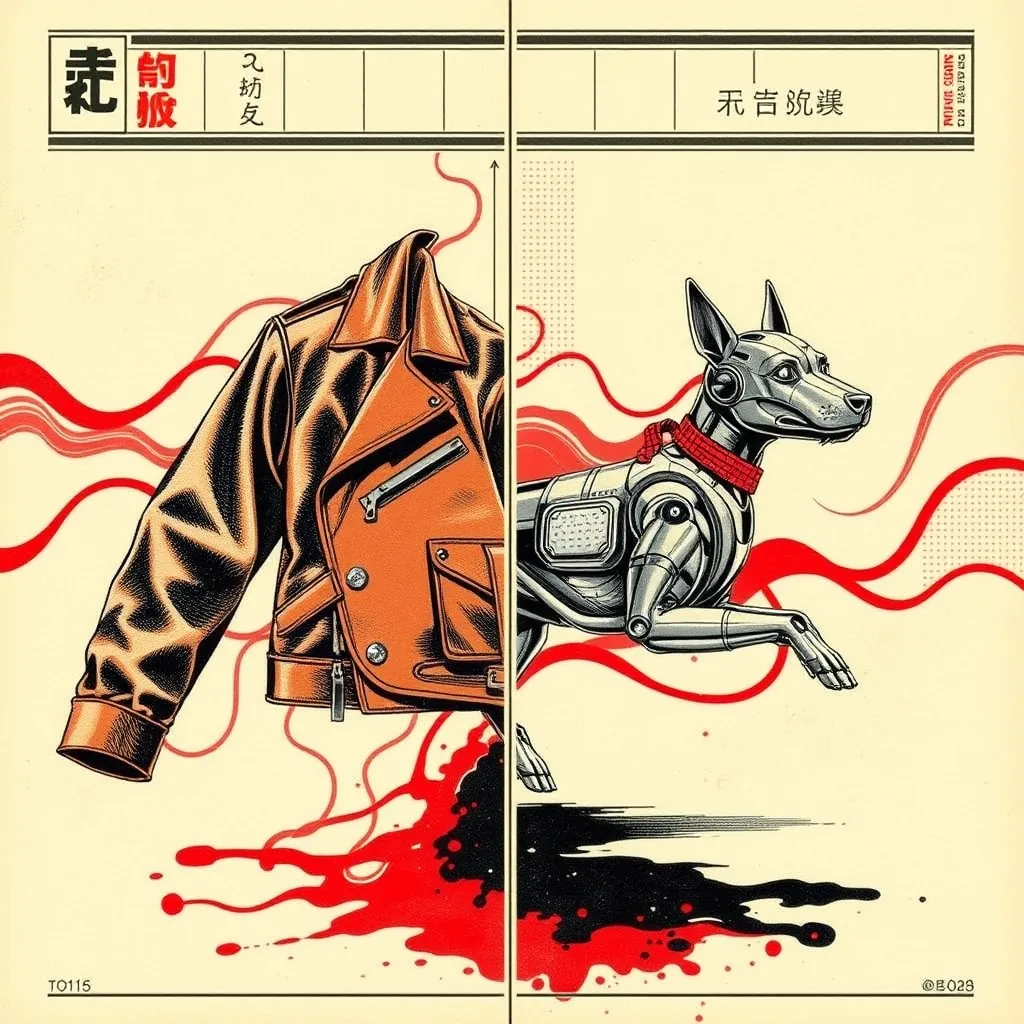
Let's set the scene. Jensen Huang — the leather-jacketed CEO of NVIDIA, the man whose company effectively prints money by selling the picks and shovels of the AI gold rush — has been making eyes at China's robotics scene. And the object of his affection isn't some state-backed mega-consortium. It's Unitree, a Hangzhou-based startup founded in 2016 by Wang Xingxing (王兴兴), a former engineer who reportedly built his first robot dog in a dorm room. This is the robotics equivalent of the quarterback asking the quiet kid to prom.
So why Unitree? Why now? And what does this tell us about where Chinese tech is actually competitive?
The robot that broke the internet (multiple times)
If you've spent any time on Douyin (抖音) or Bilibili (B站) in the past 18 months, you've seen Unitree's creations. Their H1 humanoid robot became a viral sensation in 2024 when it performed a backflip on stage — a feat that made Boston Dynamics' Atlas look like it was standing still. The G1, their consumer-grade model, retails for around $1,500 and can be controlled via smartphone. In a market where humanoid robots from companies like Honda or Tesla's Optimus are still firmly in "cool demo, call us in five years" territory, Unitree is shipping products that actual people can buy.
This matters enormously. While Western coverage obsesses over Tesla Optimus prototypes being manually operated, Unitree has quietly sold thousands of robot dogs and humanoids to research labs, factories, and — yes — individual tech enthusiasts across China. The company's B2 quadruped robot is already patrolling industrial sites. Their robots danced in the opening ceremony of a major Chinese tech expo. They're not conceptual. They're operational.
The NVIDIA connection: it's about the ecosystem, stupid
Here's what the Toutiao speculation gets right: NVIDIA isn't just looking for a hardware partner. They're building an ecosystem. The company's Isaac platform for robotics — which includes simulation tools, AI models, and the Jetson edge computing hardware — needs real-world robots to run on. And in China, Unitree offers something nobody else does at scale: affordable, production-ready humanoid bodies.
Think of it this way: NVIDIA builds the brain. Unitree builds the body. Together, they create something that can actually do things in physical space. This is the missing link in the AI revolution that chatbot enthusiasts keep ignoring. Language models are impressive, but they can't restock shelves, inspect pipelines, or carry boxes. For that, you need legs, hands, and sensors — and a company willing to sell them at a price point that doesn't require a defense contract.
China's robotics moment
The broader context here is that China is experiencing a robotics infrastructure boom that Western observers routinely underestimate. While the U.S. debates whether AI will take our jobs, Chinese factories are already deploying robots at an unprecedented scale. The government's Made in China 2025 initiative explicitly targeted robotics as a strategic sector, and the results are showing up in companies like UBTech (优必选), Fourier (傅利叶) with their GR-1 humanoid, and Agibot (智元) with their Yuanzheng series.
But Unitree occupies a sweet spot that's uniquely valuable: they're scrappy enough to move fast, technically sophisticated enough to impress NVIDIA, and commercially viable enough to have real revenue. They're not a research project dressed up as a company. They're a company that happens to do research.
The cultural subtext: why China cares so much
The virality of this headline on Toutiao reveals something deeper about Chinese tech culture right now. There's a hunger for validation from global tech leaders — particularly NVIDIA, whose GPUs are the lifeblood of every Chinese AI lab from DeepSeek (深度求索) to Alibaba's Qwen team. When Jensen Huang publicly engages with a Chinese company, it's treated as confirmation that China's tech ecosystem has arrived.
There's also genuine pride in Unitree's origin story. Wang Xingxing represents the scrappy, self-made engineer archetype that resonates deeply with China's tech-savvy youth. He's not a returned Harvard MBA. He's a homegrown talent who built something world-class from scratch. In a Chinese internet culture that oscillates between cynicism and fierce patriotism, Unitree is a rare unifying force: a company everyone can root for.
My take: this is bigger than people think
Here's the uncomfortable truth for Western tech observers: the next phase of AI isn't going to be won by whoever has the biggest language model. It's going to be won by whoever can physically deploy AI in the real world at scale. And China has structural advantages here that no amount of GPU export controls can fully neutralize.
China has the manufacturing base to produce robots cheaply. It has the factory infrastructure to test them at scale. It has a domestic market hungry enough to tolerate early-stage products. And now, thanks to companies like Unitree, it has the technical capability to build machines that can compete with anything coming out of Boston or Silicon Valley.
The NVIDIA-Unitree partnership — whatever its final shape — is a signal flare. It says that the world's most important AI company sees Chinese robotics as a credible platform for its technology. And it says that China's robotics ecosystem has matured past the copycat phase into genuine innovation.
The leather jacket chose the robot dog. Pay attention.