China's Humanoid Robot Race Just Hit Escape Velocity
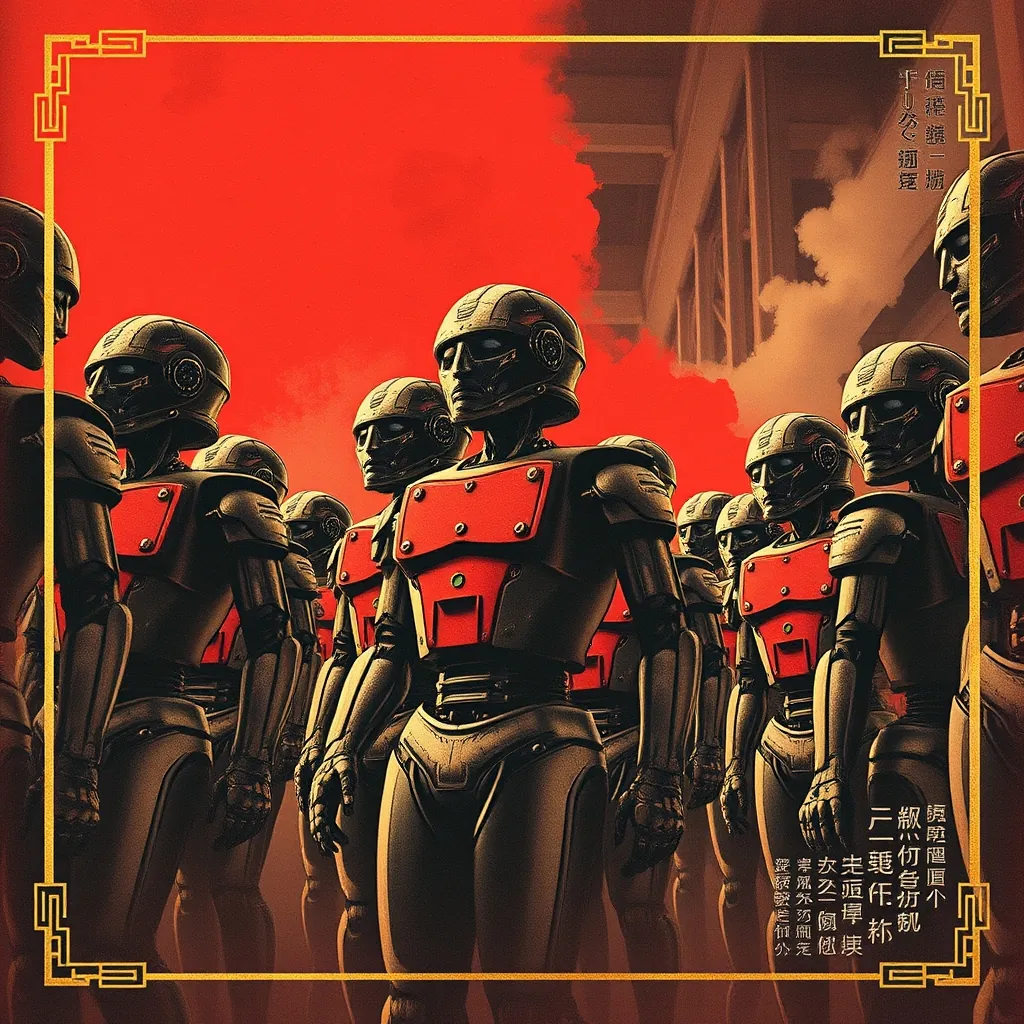
The headline reads like a Hollywood pitch: "The world's first full-size hyper-bionic humanoid robot has arrived." And right now it's scorching up Toutiao (今日头条) with a hot score pushing 963,000 — the kind of number that says Chinese netizens are very much paying attention.
Let's be clear: China's humanoid robot scene has gone from "interesting science project" to "genuine arms race" in roughly eighteen months, and the marketing rhetoric has escalated accordingly. "World's first" is the favorite phrase in Chinese tech PR right now — we heard it when DeepSeek (深度求索) dropped R1, we heard it when various labs claimed benchmark victories, and now we're hearing it in robotics.
But here's the thing: in humanoids, Chinese companies might actually have a legitimate claim to leading the pack.

The cast of characters is genuinely impressive. Unitree (宇树科技) — the Hangzhou outfit that went viral for robot dogs doing backflips — now has its H1 humanoid strutting across trade show floors. Fourier (傅利叶) shipped its GR-1 last year and has been quietly selling units to research labs worldwide. Agibot (智元), founded by a former Huawei (华为) wunderkind, raised billions on the promise of "embodied AI." UBTech (优必选) has been grinding longest and is now China's closest thing to a publicly-listed pure-play humanoid play.
And then there's the new wave — EngineAI (众擎机器人), Booster, Robot Era (星动纪元) — all sprinting to build full-size humanoids that walk, grasp, and ideally don't faceplant on camera.
The "hyper-bionic" (超仿生) framing is telling. Chinese robotics firms have moved past simply cloning Boston Dynamics choreography. They're now competing on aesthetics, motion fluidity, and that ineffable quality of looking... right. The uncanny valley is real, and Chinese engineers are burning serious R&D money trying to set up camp on the correct side of it.
Here's what fascinates me: the Chinese approach to embodied AI is structurally different from America's. In the US, you have a handful of heavily-funded companies (Figure, 1X, Tesla's Optimus) moving carefully, almost nervously. In China, you have dozens of companies — many backed by local government funds and Beijing's "new productive forces" (新质生产力) industrial push — all sprinting simultaneously. It's the same dynamic that made China dominant in solar panels, batteries, and consumer electronics: throw enough companies at a technology, and eventually one cracks the cost curve.
The economic logic is brutal in a very Chinese way. Humanoids are expensive now — we're talking hundreds of thousands of RMB per unit. But the Chinese manufacturing cost curve is relentless. The same supply chain that turned Shenzhen into the world's electronics factory is now being pointed at actuators, sensors, and servo motors. Give it three years and a functional humanoid will cost less than a Pop Mart (泡泡玛特) collection.
Three years ago, the Western narrative was "China can't build advanced chips" and "China just copies American AI." Now DeepSeek is matching frontier models on reasoning benchmarks, Alibaba's (阿里巴巴) Qwen (通义千问) is arguably the best open-weight model family on the planet, and the humanoid scene is shipping actual hardware while Tesla's Optimus is still doing PowerPoint presentations at investor days.
What the Toutiao reaction reveals: Chinese consumers are ready to be impressed by domestic robotics in a way they simply weren't two years ago. The comment sections on these posts are a theater — Terminator jokes, demands for robot maids, the inevitable cynics comparing Chinese robots unfavorably to imaginary foreign competitors, and the patriots ratio-ing them into oblivion. Full Chinese internet drama, exactly as ordered.
The honest assessment: Chinese humanoids are in the "impressive demo, limited utility" phase. They walk across stages, pick up objects, and perform coordinated dances at Chinese New Year galas. They cannot yet reliably fold laundry or cook dumplings — which, let's be honest, is the actual bar for consumer relevance in a country that invented jiaozi.
But the velocity is real. When Fourier announced GR-1 pricing at around $100,000, competitors immediately started whispering about halving that figure. Unitree's component costs have dropped roughly 40% year-over-year. The consolidation will be swift — not every humanoid startup survives — but the survivors will be building at a price point that makes Western competitors sweat.
My prediction: within 18 months, we'll see a Chinese humanoid priced under 200,000 RMB doing genuinely useful factory work. Within three years, one will be deployed commercially — not at a trade show, an actual business paying actual money for actual labor. And the "world's first" headlines will keep coming, because in 2025, Chinese tech PR has discovered that bold claims plus actual shipping products is an absolutely lethal combination.
The robot revolution isn't coming from Silicon Valley. It's being manufactured, component by component, in Chinese industrial parks — and Toutiao's 963,000 users are already here for it.