Donnie Yen Rings The Bell For China's Humanoid Robot Fight Club
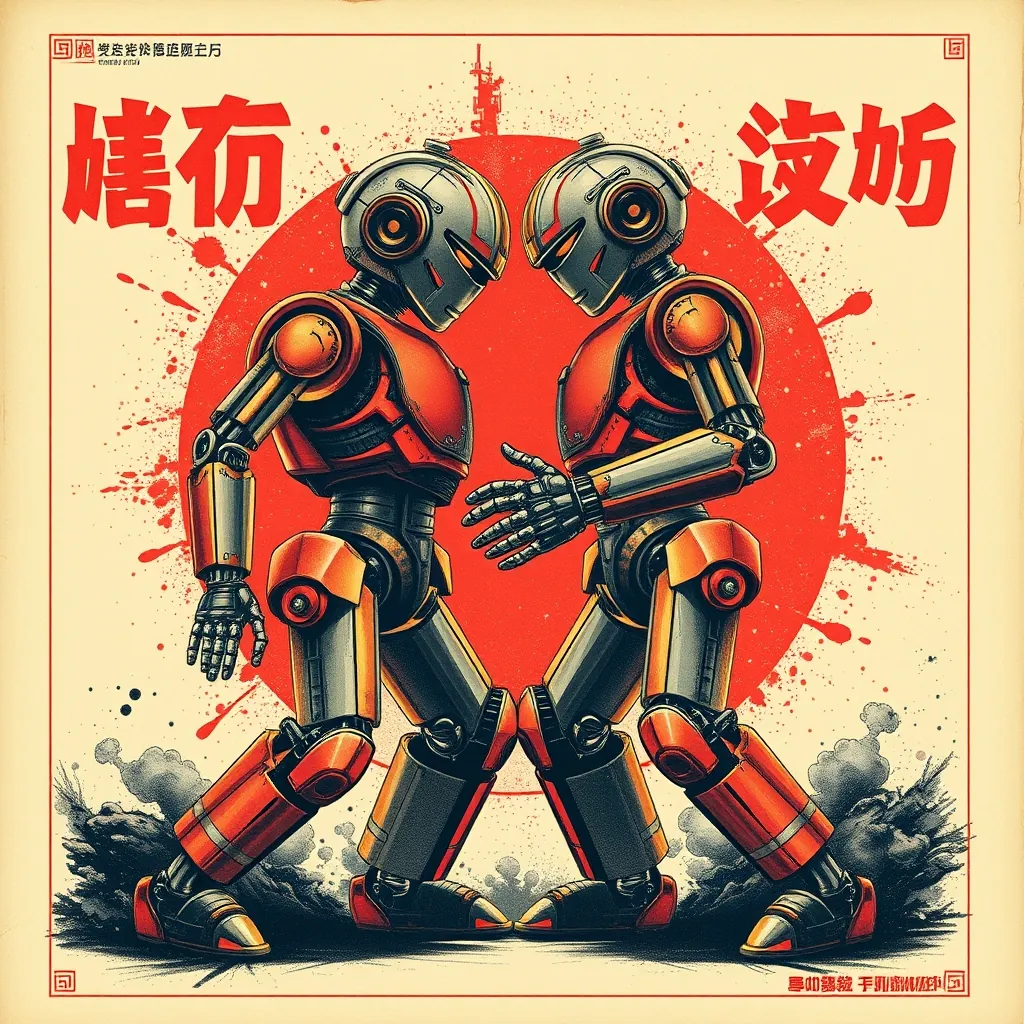
China's humanoid robots have gone from dancing at galas to punching each other in the face — and they've enlisted Donnie Yen (甄子丹) to make sure you noticed.
The action megastar — still best known globally for the Ip Man franchise — showed up at what Toutiao (今日头条) is calling a "humanoid robot fighting opening match" (人形机器人格斗揭幕赛), and the Chinese internet promptly lost its collective mind. Over 21.5 million 热度 on the Toutiao hot board as of this morning, tagged "new," meaning it's still climbing.
Here's why this isn't just a celebrity photo-op.

The Robot Fight Club Era Has Arrived
For the past two years, Chinese robotics firms have been locked in an escalating spectacle arms race. Unitree (宇树科技) had its robot dogs breakdancing at the Spring Festival Gala. Fourier (傅利叶) put its GR-1 humanoid through rehabilitation demos. Agibot (智元) talked up factory deployment. UBTech (优必选) sent Walker robots to wander shopping malls.
But actual combat? That's a new escalation.
The headline doesn't specify which models are squaring up — but given China's current humanoid lineup, the usual suspects include Unitree's H1 and G1 series (the ones that went viral doing backflips last year), possibly Fourier's GR-1, and entries from newer players like EngineAI, Booster (星动纪元), and Robot Era. These are robots that cost anywhere from 100,000 to over 700,000 RMB apiece, now presumably being asked to throw hands for entertainment.
Why Donnie Yen?
The casting is perfect, and not just because he's famous. Donnie Yen represents a very specific fantasy of Chinese martial arts mastery — the Ip Man films grossed over $400 million globally and turned Wing Chun into a cultural export. Having him present at a robot fighting event draws a direct line: human martial arts tradition → Chinese engineering → robotic combat.
It's also shrewd marketing. China's humanoid robotics companies are still in the pre-revenue, hype-driven phase for most consumer applications. Getting a celebrity of Yen's caliber involved signals: This isn't a lab demo anymore. This is entertainment. This is mainstream.
The Chinese internet seems to agree — the Toutiao heat index of 21.5 million is healthy but not viral-apocalypse level, meaning it's trending organically among tech and entertainment audiences rather than being force-pushed.
What This Reveals About China's Robotics Culture
A few things stand out:
Spectacle fills the gap. China's humanoid robot industry is still figuring out what these machines are actually for. Factory automation? Elder care? Companion robots? Nobody has a revenue model yet. In the meantime, combat entertainment fills the void — it's visually spectacular, instantly shareable on Douyin (抖音) and Bilibili (B站), and generates the viral moments that attract investor attention and government grants.
The competition format matters. This isn't just an exhibition — the word 揭幕赛 (opening match) implies a tournament structure. China has been building robot competition infrastructure for years (DJI's RoboMaster draws massive university participation and millions of viewers). Extending that to humanoid combat creates rankings, narrative arcs, and — crucially — a reason for companies to keep iterating under pressure.
The West isn't doing this. Boston Dynamics does choreographed dance routines. Tesla's Optimus waves awkwardly at investors. Figure AI demonstrates warehouse tasks. Nobody in the American or European robotics scene is organizing robot fight nights with celebrity hosts. Is that because they think it's beneath them? Probably. But China's willingness to turn cutting-edge robotics into mass entertainment is itself a strategic advantage — it builds public familiarity, normalizes humanoid robots in everyday life, and cultivates a consumer market before the consumer product fully exists.
The Real Question
How good is the fighting, actually?
Are we talking clumsy shoving between bipedal robots that can barely balance? Or have some of these machines gotten good enough to throw coordinated strikes, dodge, and recover from impacts? The difference is enormous. If it's the former, this is pure spectacle — a tech demo in cosplay. If it's the latter, we're watching a genuine inflection point in humanoid dexterity and real-time motion control.
China's robotics labs have been making real progress. Unitree's G1 demonstrated surprisingly fluid movement last year at a price point that shocked the industry. Multiple Chinese teams have published papers on dynamic balancing and impact recovery. The combat format — if taken seriously — could become a genuine benchmark for whole-body control, reaction time, and durability under stress.
But let's be honest: the most likely outcome is somewhere in between. Good enough to look impressive on camera. Not good enough to retire Donnie Yen. Yet.
Bottom Line
Donnie Yen showing up at a humanoid robot fight in China is simultaneously ridiculous and significant. It's ridiculous because these are six-figure research platforms being asked to pretend they're in a kung fu movie. It's significant because it signals China's determination to make humanoid robotics a mass cultural phenomenon — not just an industrial tool locked behind factory doors.
The Ip Man himself — fictional or not — would probably approve. As he said in the films: the martial arts should be shared with the world.
China's humanoid robots are taking that literally.