100,000 Humanoids: China's Robot Army Goes Vertical
The headline from Toutiao (今日头条) is deceptively simple, but the number hits like a freight train: China's humanoid robot production is expected to crack 100,000 units. Not prototypes. Not demo units. A hundred thousand bipedal machines rolling off actual assembly lines in the world's factory.
If you've been sleepwalking through 2024 thinking humanoid robots were still Boston Dynamics' dancing dogs and Tesla's Optimus doing awkward waves, wake up. China is scaling, and scaling fast.
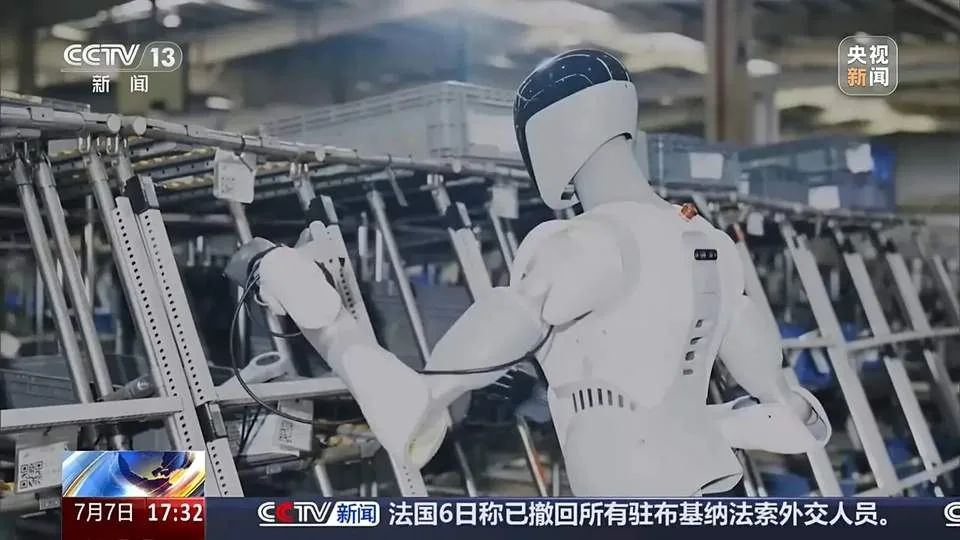
The global humanoid race just got a Chinese curveball
For years, the West treated humanoid robotics as a prestige science project—impressive lab demos, eye-watering unit costs, and deployment timelines measured in decades. Boston Dynamics made machines that could do backflips but cost more than a luxury sedan. Tesla's Optimus became a meme for looking like a guy in a spandex suit. Figure AI raised billions but shipped to exactly one warehouse.
Meanwhile, Chinese companies were quietly building supply chains, crushing component costs, and lining up industrial customers. The 100,000-unit headline isn't a forecast from some think tank—it's a production milestone that multiple Chinese manufacturers are gearing up to hit.
Meet the roster
The Chinese humanoid scene has exploded from curiosity to credible in under 24 months. The players:
Unitree (宇树科技) — The Hangzhou darlings who built their reputation on robot dogs before pivoting into humanoids with the H1 and G1. Their pricing has been the industry's worst-kept secret: aggressive enough to make Western competitors break into cold sweats. When Unitree shows up at international trade fairs, the crowd forms for a reason.
Fourier (傅利叶) — Their GR-1 humanoid looks less "lab experiment" and more "ready for deployment," with a design language that screams commercial intent. They've been carving out rehabilitation and healthcare niches while everyone else fights over factory floor space.
Agibot (智元) — Founded by a former Huawei talent, their Yuanzheng (远征) series has been gaining industrial traction. When Huawei alumni build hardware, the supply chain connections run deep.
UBTech (优必选) — The publicly traded veteran, partnered with Foxconn and basically everyone who runs a factory in southern China. They've been embedding robots in manufacturing lines and educational settings for years.
XPeng IRON — Yes, XPeng also makes cars (we don't cover those—head to hype404 for your EV fix), but their humanoid division has been showing IRON at events, and the cross-pollination between automotive manufacturing and robotics is real.
Then there's the new wave: EngineAI, Booster, Robot Era—names you probably haven't heard yet, burning through Series A rounds and R&D budgets at a pace that suggests their investors know something the rest of us are still processing.
Why 100,000 units actually matters
Here's the thing about manufacturing that Western analysts consistently underestimate: producing one robot is engineering. Producing ten is validation. Producing 100,000 is a completely different game—it's supply chain mastery.
To hit six-figure production, you need actuators by the millions. You need AI models that can actually run locomotion and manipulation pipelines—and that's where Chinese LLMs like Qwen/Tongyi (通义千问), GLM/Zhipu (智谱清言), and DeepSeek (深度求索) come in. You need factory customers willing to deploy unproven hardware. And you need capital with enough patience to fund a multi-year build-out.
China has all four. The actuators? Domestic suppliers are scaling. The AI? Chinese labs have proven they can compete globally. The customers? Foxconn alone could absorb thousands of units for assembly line work. The capital? Government directives at national and municipal levels have designated humanoid robots as a strategic "future industry," with subsidies flowing from Shanghai to Shenzhen.
The reality check nobody wants to hear
Now for the skepticism, because someone has to say it: "Expected to break through 100,000 units" is not the same as "100,000 robots doing useful work." China is very good at hitting production targets—sometimes suspiciously good. Whether these humanoids will be genuinely productive or end up as showroom showpieces and Douyin (抖音) content fodder is an open question.
The honest truth: today's humanoids are still clumsy. They can walk (mostly), carry boxes (sometimes), and perform choreographed demonstrations (definitely). The dream of a robot that folds your laundry, cooks hotpot, and looks after your aging parents? Still years out.
But here's what 100,000 units does signal: China is building the infrastructure for a humanoid economy. The factories, the supplier networks, the cost curves, the talent pipelines. This is the "prepare the ground" phase, even if the harvest is still seasons away.
What this reveals about Chinese tech culture
This headline trending hard on Toutiao's hot board tells you something about mainland internet sentiment: there's genuine hunger for stories about Chinese innovation leading, not following. After a decade of "China copies" narratives, the feed is desperate for flex moments.
DeepSeek proved Chinese labs could compete on AI software. Humanoid robots are the hardware counterpart—and they're visual, physical, cinematic. Perfect for Douyin virality. Perfect for national pride. Perfect for the kind of "look what we built" content that drives engagement.
Expect robot content to flood Chinese social platforms in coming months. Expect production milestones to keep climbing. Expect Western coverage to pivot from dismissal to concern-trolling.
The humanoid wars aren't coming. They're here. And China isn't just participating—it's trying to set the tempo.