Vision Realizers: China's Obsession With Making Dreams Concrete
Toutiao (今日头条) is currently pulsing with a six-character headline earning north of 16 million heat units: 「实现愿景的非凡能力」— "the extraordinary ability to realize a vision." Stripped of context, it reads like a LinkedIn motivational poster translated by someone who has never suffered through a Monday. Placed inside the Chinese algorithm, however, it is catnip — a compact expression of the single cultural reflex that explains, depending on the week, why DeepSeek (深度求索) can ship R1 and upend the global AI leaderboard, why Unitree (宇树科技) can put a humanoid on stage at a CES afterparty, and why a Pop Mart (泡泡玛特) Labubu can sell out in São Paulo.
The phrase matters because Chinese internet culture has a peculiar relationship with ambition. In Silicon Valley English, "vision" is often a punchline — the much-mocked founder TED-talk adjective, the thing WeWork's Adam Neumann had too much of. In Mandarin internet discourse, 愿景 (yuànjǐng, literally "wishing-scene") is treated with a straight face. The ability to 实现 — to materialize — that vision is treated as a measurable, laudable, almost physical skill. Toutiao's comment sections under this headline are full of users tagging founders, tagging themselves, tagging their college-age kids: Do you have it? Does your CEO?

This is the cultural substrate underneath every Chinese AI lab sprint. When DeepSeek dropped its R1 open-weight reasoning model in January and sent Nvidia's market cap into a wobble, Western coverage focused on the technical feat and the cost. What it often missed was the cultural script: a small Hangzhou team, spun out of a quant fund, publicly stating a 愿景 of open AI for everyone, then actually shipping the weights. The Chinese internet's response was not "cool model" — it was awe at the realization. The gap between saying and doing, measured in weeks, is the only KPI that matters.
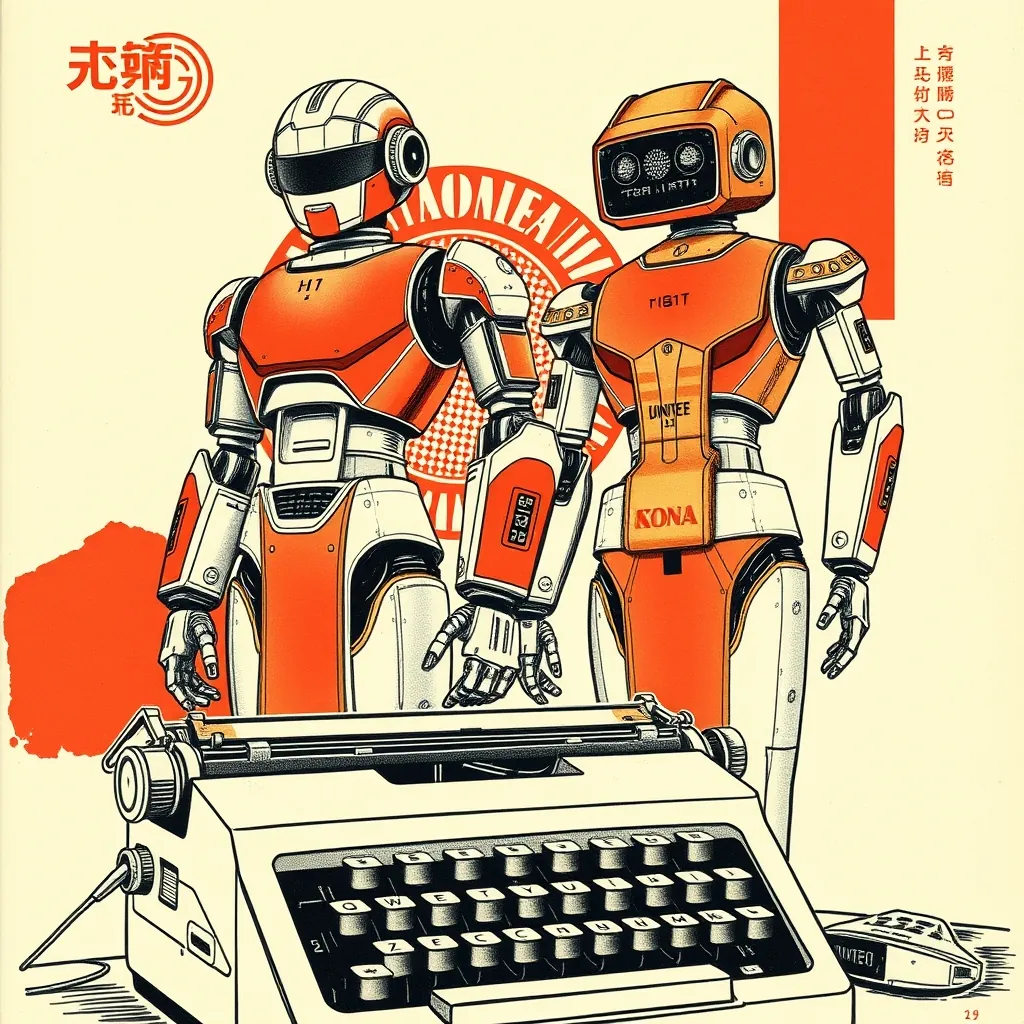
The same reflex explains the humanoid-robot explosion. Fourier (傅利叶) announcing the GR-01, Agibot (智元) shipping the 远征 A2, UBTech (优必选) putting Walker S on a BYD assembly line — none of these are treated as demos. They are treated as evidence of 实现愿景的非凡能力, and the Toutiao feed ranks them accordingly. When EngineAI's PM-01 does a forward run in Shenzhen, the comment section does not ask "is this useful?" It asks "who else can realize a vision this fast?" Speed of materialization is the virtue.
This is also why Western observers chronically misread Chinese consumer-internet arcs. Dong Yuhui (董宇辉) did not go viral because he was a poetic ex-tutor selling soba noodles on East Buy (东方甄选). He went viral because he articulated a vision — of dignified rural commerce, of literature over hype — and then, crucially, executed on it, walking out of East Buy and building his own venture (与辉同行) that reportedly crossed 10 billion yuan in GMV inside roughly a year. Chinese audiences reward the follow-through more than the pitch. The Douyin (抖音) algorithm, which is essentially a giant A/B test on attention, has learned this preference and feeds it back.
There is, of course, a dark side worth naming. The same cultural reflex that celebrates "realizing the vision" also enables the scammers, the fake-AI startups, the PPT-driven fundraises that haunt every tech cycle. When execution is the only metric, performative execution — a slick product video, a founder with good posture on CCTV — can paper over substance for quarters. The current wave of Chinese AI startups is in the middle of this sorting now: the模型 war of 2024 is becoming the 应用 war of 2025, and the labs that can move from benchmark scores to actual daily-active users — Qwen (通义千问), Doubao (豆包), Kimi (月之暗面) — are the ones getting the Toutiao heat. Those shipping only papers are quietly dropping off the trending boards.
What the headline ultimately captures is something the China-watch crowd should tattoo on their notebooks: in the Chinese internet economy, vision is cheap, realization is currency. A founder who says they will build a domestic alternative to GPT-4 is a press release. A founder who ships one, open-weights it, and does it for $5.6 million in training compute is a Toutiao god. The extraordinary ability being praised is not imagination. It is the unglamorous, repetitive, suffocatingly hard work of turning a 愿景 into a product that ships, scales, and survives contact with a billion users who have zero patience for vapor.
So the next time a Chinese lab, robot maker, or consumer brand drops something that feels like it came out of nowhere — don't ask where the vision came from. Ask how fast they realized it. That is the only question the algorithm is answering.