Has China Finally Started Rewarding People Who Actually Do the Work?
Something strange is happening on the Chinese internet. A philosophical question — not a celebrity scandal, not a product launch, not a geopolitical hot take — has exploded across Toutiao (今日头条) with over 5.7 million engagement signals. The headline? "Has this world started to reward people who do things seriously?" (这个世界开始奖励认真做事的人了吗)
That's it. That's the whole post. And China'snetizens lost their collective minds over it.
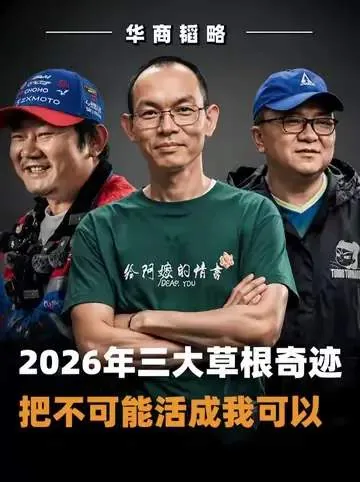
Let's be clear about why this hits different in 2025. For years, the dominant narrative on the Chinese internet was that the grifters won. The shortcut-takers. The hype merchants. The people who figured out how to game algorithms, manufacture controversy, and turn attention into cash without delivering anything of actual substance. The entire "involution" (内卷) discourse — the feeling that you could work yourself to death and still fall behind someone who just... performed well on Douyin (抖音) — was basically a national mood.
But something shifted. And you can see it across every sector that matters.
The AI Labs Proving Substance Beats Spectacle
Look at what's happening in Chinese AI right now. DeepSeek (深度求索) didn't become the most talked-about lab in China because of slick marketing or celebrity endorsements. They became the story because they quietly built models that punched way above their weight class — and then open-sourced them. While other labs were playing benchmark games and cooking evaluation scores, DeepSeek just... did the work. Published papers. Shared weights. Let the results speak.
Or consider Kimi (月之暗面/Moonshot), which gained a cult following not through bombastic claims about AGI, but by making a product that could actually handle long-context tasks when users needed it most. No Super Bowl ads. No Elon-style tweetstorms. Just functional engineering that respected people's time.
This is the "serious work" the headline is talking about. And the market IS rewarding it. DeepSeek's R1 model didn't just trend on tech forums — it became a cultural touchstone, the thing your cousin who doesn't care about AI suddenly knew about. Because actual capability cuts through noise.
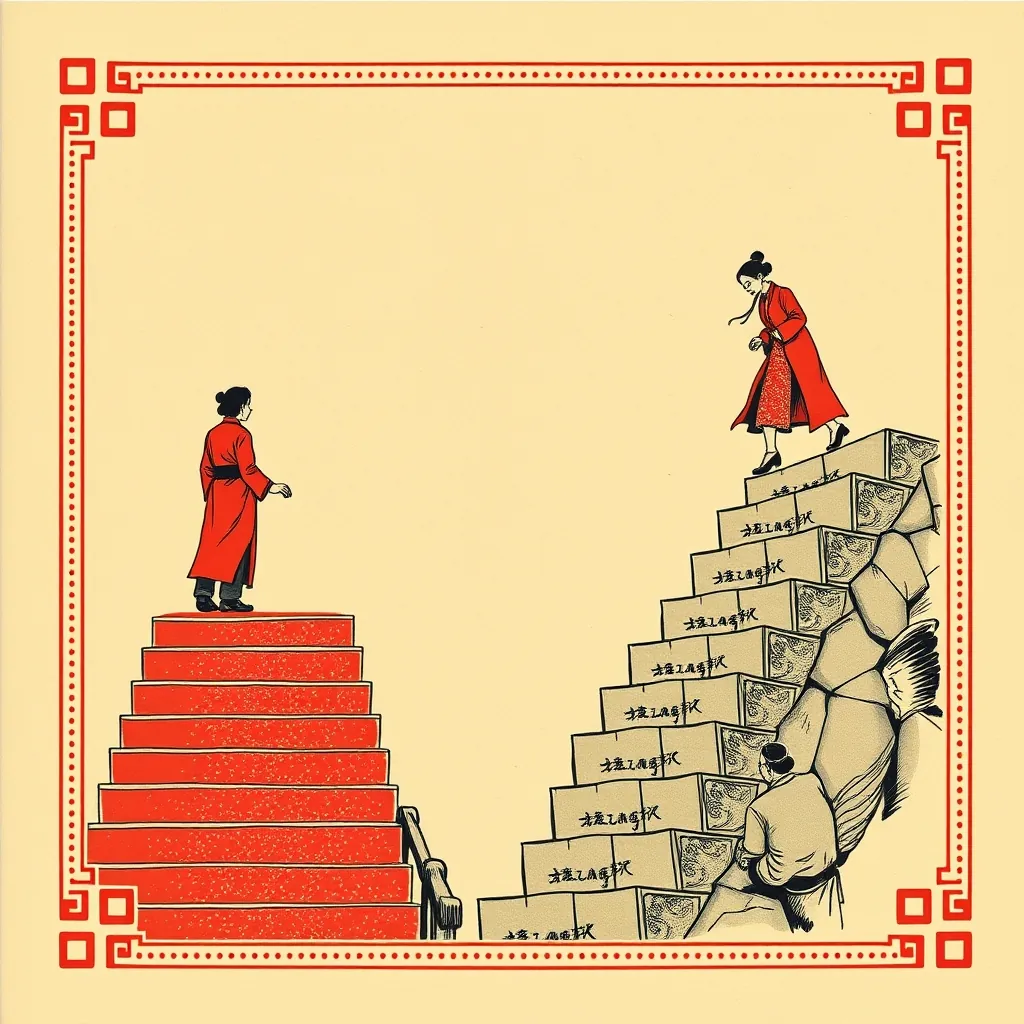
The Dong Yuhui Effect and the Authenticity Pivot
You can't talk about this trend without mentioning Dong Yuhui (董宇辉) and the East Buy (东方甄选) saga. Here's a guy who became China's most unlikely livestream superstar not by screaming "buy now" or doing theatrical stunts, but by... quoting poetry and discussing literature while selling agricultural products. The internet rewarded earnestness. And when corporate drama threatened to sideline him, the public rallied so hard that the company had to backtrack.
That was the moment. The inflection point where China's internet culture collectively said: "Actually, we prefer this."
Since then, the trend has accelerated. On Bilibili (B站), the creators gaining the most traction aren't the ones churning out clickbait — they're the ones spending months on meticulously researched video essays, the engineering students documenting genuine build projects, the history nerds doing 2-hour deep dives that somehow keep you glued to the screen.
Xiaohongshu (小红书) has become less about aspirational flexing and more about genuinely useful product reviews and life hacks. The "studygram" and "workhard" aesthetics have replaced the pure luxury flex. Users want substance.
The Hardware Renaissance
In robotics, the same pattern. Unitree (宇树科技) didn't hype their H1 and G1 humanoid robots with vague concept videos — they showed them doing things. Falling down and getting back up. Carrying boxes. Navigating obstacles. The internet went viral for the real stuff, not the promised stuff.
Meanwhile, companies working on China-built chips — Huawei Ascend, Cambricon (寒武纪), Moore Threads — are finally shipping products that compete in real workloads, not just slide decks. The narrative around domestic semiconductors has shifted from "patriotic duty" to "actually useful," and that shift matters enormously.
Why This Question, Why Now
The 5.7 million engagement on that Toutiao post isn't just engagement-bait metrics. It's a genuine cultural exhale. A collective sense that maybe, finally, the people who put their heads down and build things — rather than the ones who optimize for clout — are starting to win.
Part of this is economic pragmatism. In a slowing economy, you can't afford hype that doesn't deliver. Companies buying AI solutions want actual ROI, not bragging rights. Consumers spending谨慎 want genuine quality, not brand cachet. The "serious workers" are being rewarded because the market can no longer afford to reward anyone else.
Part of it is generational fatigue. The post-95 and post-00 generations who grew up saturated with influencer culture have developed remarkably sensitive BS detectors. They've seen too many products over-promised and under-delivered. Too many "thought leaders" exposed as frauds. Too many viral moments manufactured by agencies. They're hungry for the opposite.
And part of it is just... timing. Enough serious people have accumulated enough wins that the pattern is undeniable. DeepSeek's open-source dominance. Dong Yuhui's cultural moment. Bilibili's longform creators building sustainable careers. Unitree's robots actually working. The evidence is mounting.
The Cynical Take (Because You Came Here for That)
Is China ACTUALLY rewarding serious work? Or is this just another aesthetic being commodified? The danger is that "seriousness" becomes the new performance — that we get a wave of influencers performing "earnestness" the same way they previously performed luxury.
Already on Douyin, you can see the copycats emerging. People staging "hard work" montages. Startups branding themselves as "DeepSeek-style" without the substance. The grifters always adapt.
But here's why I think this moment is different: the 5.7 million people engaging with that headline aren't engaging with a brand or a product. They're engaging with a HOPE. A hope that their own unglamorous, non-viral, serious work might actually lead somewhere. That the countless hours spent actually learning, building, creating — rather than content-farming — might compound into something meaningful.
In a culture that spent the last decade obsessed with overnight success and viral fame, that hope is quietly revolutionary.
The answer to the question? Not yet. Not fully. But more than yesterday. And for a nation of 1.4 billion people grinding through an economic transition, that trajectory matters more than any single reward.