China's Top Economist Says the Gold Party Is Over
If you've been anywhere near Chinese social media lately, you've seen the golden glow. Middle-aged aunties hoarding gold bangles. Twenty-somethings buying 'gold beans' (金豆豆) on Taobao (淘宝) like they're collecting Pokemon. Livestreamers on Douyin (抖音) hawking 999-purity chains with the fervor of apocalypse preppers selling bunkers. Gold has been the obsession, the personality trait, the entire identity of China's retail investor class for the better part of two years.
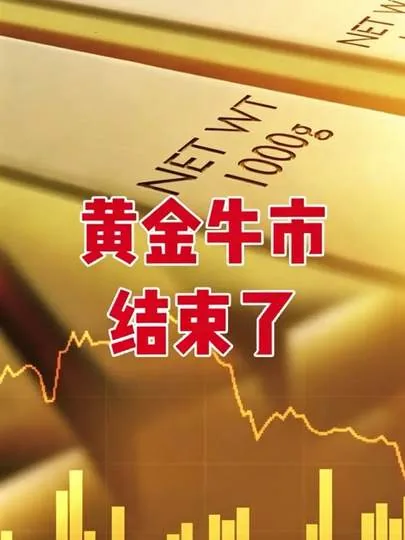
And now here comes Ma Guangyuan (马光远) — one of China's most recognizable independent economists, a guy who's built a personal brand on saying provocative things about markets on Weibo (微博) and getting millions of engagement for it — to tell Toutiao (今日头条) users that the bull run is done. Finished. Kaput. The headline blares: 'Ma Guangyuan: The Gold Bull Market Has Ended.' Over 4.4 million heat score. Everyone's listening.
So let's talk about why this matters, and what it says about where Chinese consumer psychology is right now.
First, some context. Gold has been on an absolute tear. Spot prices have been setting records like they're trying to qualify for the Olympics. In China specifically, the fascination has gone beyond mere investment — it's become cultural. The 'Chinese-style gold buying' phenomenon isn't just about wealth preservation anymore. It's a aesthetic. It's a lifestyle flex. Walk into any Wuyue Plaza (吾悦广场) shopping mall in a tier-3 city and you'll see young women photographing themselves outside Chow Tai Fook (周大福) and Laofengxiang (老凤祥) stores like they're visiting tourist landmarks. Gold has replaced the designer bag as the ultimate 'I made it' purchase for the post-pandemic Chinese consumer.
The numbers back this up. China's gold consumption in 2023 hit over 1,000 tonnes. The Shanghai Gold Exchange saw record volumes. Bank of China (中国银行) and ICBC (工商银行) were practically giving out gold investment accounts like candy. And the narrative was everywhere: 'Gold never falls.' 'Gold is the only real money.' 'Your grandmother's gold bracelet was the best investment she ever made.' It became conventional wisdom, and as anyone who's watched markets for more than five minutes knows, conventional wisdom is usually a contrarian indicator.
Which brings us back to Ma.
Ma Guangyuan isn't just some random talking head. He's carved out a space as China's most prominent 'mass market economist' — think Jim Cramer meets a Weibo influencer, but with actual academic credentials. He's got over 7 million followers on Weibo. His Toutiao videos regularly pull millions of views. When he speaks, retail investors listen, panic, or both — often simultaneously.
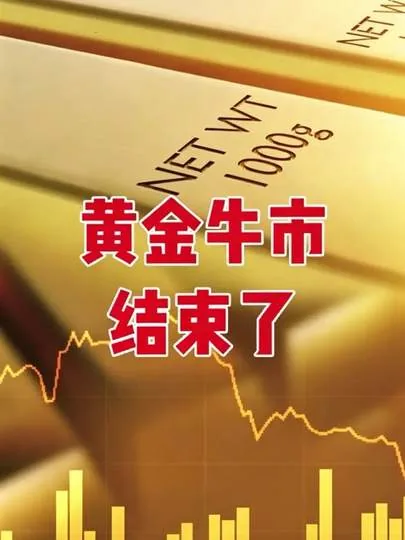
His call that the gold bull market is over is essentially a bet that several things are happening simultaneously: that the Federal Reserve's rate trajectory will strengthen the dollar (making gold less attractive), that geopolitical anxiety has peaked (less safe-haven demand), and most importantly for the China angle, that the retail frenzy has created a classic blow-off top. When your auntie who's never invested in anything starts telling you to buy gold, the smart money is usually heading for the exits.
But here's what's really interesting about this moment: the Chinese internet's reaction.
Scroll through the Toutiao comments and Weibo hot search discussions, and you'll see a fascinating split. On one side: the gold bugs, absolutely furious, calling Ma a mouthpiece, accusing him of trying to manipulate prices so 'big capital' can buy in cheaper. This is a classic Chinese internet finance trope — the idea that any negative analysis is secretly a conspiracy to hurt retail investors. On the other side: a growing chorus of people saying they've already been quietly selling, locking in profits, moving to... well, that's where it gets interesting.
Where does the money go? Some is flowing into bank deposits — China's 'flight to safety' trend continues despite record-low interest rates. Some is going into A-shares, though the stock market remains about as popular as a cold shower. But increasingly, younger Chinese investors are parking money in something even more telling: AI-themed ETFs and tech funds. The same people who were buying gold beans in 2023 are now asking on Xiaohongshu (小红书) whether they should invest in AI-focused mutual funds. The pivot from tangible to digital, from precious metals to algorithmic hype, is happening in real time.
This is the deeper story. China's retail investor class — hundreds of millions of people with savings burning holes in their pockets and limited good options — is constantly searching for the next narrative. For two years, gold was that narrative. It was tangible. It was culturally resonant. It felt safe in a world where real estate was imploding, stocks were stagnant, and crypto was (officially) banned. But narratives end, and Ma Guangyuan is essentially planting a flag: this one's done.
Will he be right? Honestly, who knows. Gold bulls have been declared dead more times than Jason Voorhees, and the metal keeps coming back. Geopolitical risk isn't going anywhere. Central banks — including the People's Bank of China (中国人民银行) — have been net buyers for years. The structural case for gold isn't terrible.
But the cyclical case? The one that says the retail blow-off top is in, that Chinese aunties buying gold pendants on livestream is the modern equivalent of Joe Kennedy's shoeshine boy giving stock tips? That case is... not crazy.
What Ma's call really represents is the end of a certain mood. The gold hysteria of 2022-2024 was a symptom of Chinese consumer anxiety — a desire for something real, something solid, something that couldn't be devalued by policy or destroyed by a market crash. That anxiety isn't gone, but it's morphing. The new anxiety is about missing the AI boat. About being left behind in the technology race. About watching DeepSeek (深度求索) and Kimi (月之暗面/Moonshot) reshape the landscape while you're sitting on a pile of metal that hasn't moved in months.
The gold bugs will rage. The contrarians will nod smugly. And Ma Guangyuan will keep posting, keep provoking, keep being the mirror that China's internet holds up to its own financial psyche. Love him or hate him, he's captured something real: a moment where China's millions of retail investors are pivoting from the safety of the past to the promise — and peril — of the future.
Place your bets accordingly.