1.6T Optical Modules Hit Mass Production — China's AI Plumbing Goes Supersonic
Toutiao's (今日头条) hottest trending tech headline right now — 「1.6T光模块量产 测试设备迎黄金时代」 — translates to something like: "1.6-Terabit Optical Modules Enter Mass Production — Testing Equipment Enters a Golden Age." Buried in those eleven dry Chinese characters is one of the most consequential AI-infrastructure stories of 2025. This isn't about a chatbot benchmark. This is about the plumbing — the physical glass-and-laser pipes that make training large models possible. And China just turned the faucet wide open.
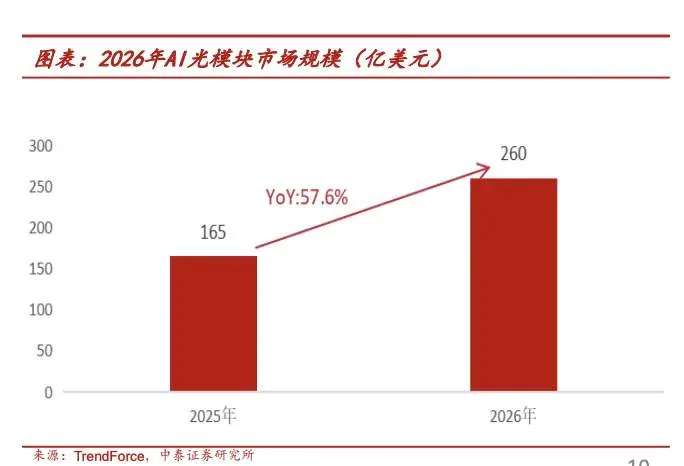
What the hell is a 1.6T optical module and why should you care?
An optical module is the little miracle box that converts electrical signals into light, shoots that light down a fiber-optic cable, and converts it back. Every AI data center on the planet is packed with millions of them. The "1.6T" refers to throughput — 1.6 terabits per second. To put that in perspective: that's roughly 200 gigabytes per second through a module roughly the size of a USB stick. One module. One second. The complete works of Shakespeare downloaded about 800 times.
The previous generation — 800G — was the standard through 2023 and most of 2024. The jump to 1.6T is the kind of generational leap that separates data centers that can train frontier models from those that can't. When you're running thousands of GPUs or Huawei (华为) Ascend chips in parallel for weeks on end, the interconnect bandwidth between them becomes the single biggest bottleneck. It doesn't matter if you have the best accelerator silicon on Earth if the pipes between them are too narrow.
This is why DeepSeek (深度求索), Alibaba's (阿里巴巴) Qwen (通义千问), ByteDance's (字节跳动) Doubao (豆包), and Moonshot's Kimi (月之暗面) all depend on optical infrastructure just as much as they depend on compute. The model might be the product, but the optical module is the factory floor.
Why mass production — right now — matters
The headline's first half announces mass production. This is a very big deal. 1.6T modules have existed in labs and limited pilot runs for over a year. But "量产" — chǎnliàng, mass production — means yield rates are now commercially viable, unit costs are dropping, and the supply chain can deliver at scale. Chinese optical-module giants like Zhongji Innolight (中际旭创), Eoptolink (新易盛), Accelink Technologies (光迅科技), and Huawei itself have been racing to get here first. Innolight in particular has been the global volume leader in high-speed optical modules for AI data centers — not just in China, globally.
The timing is not coincidental. China's AI labs are in a bare-knuckle infrastructure arms race. DeepSeek's V3 and R1 models forced every major Chinese tech company to accelerate their training-cluster buildouts. Alibaba is going hyperscale with Qwen 3. ByteDance is plowing billions into Doubao infrastructure. Zhipu (智谱), MiniMax, Baichuan (百川), and 01.AI (零一万物) all need more compute, more bandwidth, and more interconnect. The optical-module market is the physical substrate underneath all of that competition — and China just signaled it can manufacture the bleeding edge at volume.

The "golden age" for testing equipment — the real story
But here's the part that most Western coverage will miss. The headline's second clause — 测试设备迎黄金时代 — is about testing equipment. And that's where this gets genuinely interesting.
Every 1.6T optical module that rolls off a production line has to be tested. Not sort of tested. Brutally, exhaustively, military-grade tested. At 1.6 terabits per second, you're pushing the physical limits of laser modulation, signal integrity, and thermal performance. A module that works fine at room temperature might degrade catastrophically when the data center hits 40°C. A hairline defect in the silicon photonics die might cause bit errors that only show up after 72 hours of continuous traffic. The testing requirements for 1.6T are an order of magnitude more complex than for 800G.
This means the companies that make optical-module test systems — signal generators, bit-error-rate testers, optical spectrum analyzers, thermal chambers, automated probe stations — are about to see explosive demand. Chinese test-equipment specialists like Zhongjin (中际), ChampionX, and a clutch of Shenzhen-based instrumentation startups are positioned to capture this wave. The "golden age" framing in the headline is an explicit signal to investors and industry insiders: the picks-and-shovels play here isn't the modules themselves, it's the equipment that validates them.
What this reveals about the Chinese tech conversation
Here's what I find revealing. A headline about optical-module mass production and testing equipment is sitting at the top of Toutiao's hot board with 1.47 million engagement signals. That tells you something important about the current Chinese internet's information diet: the audience for deep-tech, infrastructure-level stories has grown enormously. Two years ago, Toutiao's trending list was dominated by celebrity gossip, consumer dramas, and viral human-interest clips. Today, a headline about 1.6-terabit optical transceiver yield rates can out-trend entertainment news.
This mirrors what's happened across the Chinese tech discourse since DeepSeek's breakthrough in January 2025. AI has become a mainstream obsession — not just the chatbots, but the entire stack underneath them. People on Douyin (抖音) discuss GPU shortages. Xiaohongshu (小红书) influencers explain silicon photonics. Bilibili (B站) tech channels do deep-dives into optical interconnect architectures. The Chinese internet has gone full infrastructure nerd, and platforms like Toutiao are feeding that appetite.
My take
The Western narrative about Chinese AI still fixates on model capabilities and chip sanctions. Both matter. But stories like this one reveal the third dimension of the competition: manufacturing depth. The United States can restrict advanced lithography equipment. It can limit GPU exports. It cannot easily restrict the manufacturing of optical modules, because Chinese companies are already global leaders in that supply chain. And as AI models scale, optical interconnect becomes progressively more important relative to raw compute. The module might be less glamorous than the chip. But in the infrastructure marathon, the module wins races.
The testing-equipment angle is even more telling. It signals that Chinese manufacturers aren't just producing at the frontier — they're building the quality-assurance infrastructure to do it reliably and at scale. That's a manufacturing maturity marker that takes decades to develop. And it's arriving at exactly the moment when the global AI buildout demands it most.
Golden age, indeed.