How Far Can the A-Share Rebound Go? China's Retail Army Wants Blood
The headline torching Toutiao (今日头条) this week—「下周A股反弹能走多远」, roughly "How far can next week's A-share rebound run?"—isn't really about valuation models or earnings multiples. It's a 4.2-million-engagement mood ring for roughly 200 million Chinese retail investors who've spent three years getting absolutely cooked.
A-shares (A股)—China's domestically listed equities, denominated in renminbi—have been the most punishing asset class on Earth for anyone who bought the 2021 top. The Shanghai Composite spiraled while the S&P 500 threw a party. Every time China's retail traders (散户, literally "scattered investors") thought they'd spotted a floor, the market discovered a basement beneath the basement. The CSI 300 large-cap index is still down around 40% from its peak. Brutal.
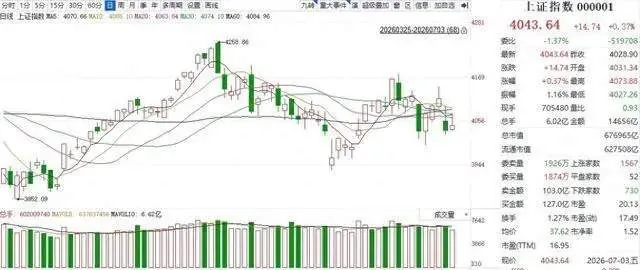
But this week's trending Toutiao hot-board entry flips the script. The question isn't "will it crash again?" anymore—it's "how high can this thing fly?" That's a sentiment tell. Optimism, however fragile and possibly delusional, is creeping back into the chat.
Here's what's actually powering the buzz—and why it matters far beyond stock prices.
1. The Policy Put Is Loud Right Now
Chinese regulators have spent months desperately trying to restart animal spirits. Stamp duty cuts. Margin-funding loosened. A shadowy "national team" of state-backed funds quietly vacuuming up ETFs. The signals from Beijing scream: we want this market higher. When the policy wind blows this aggressively, retail money chases—fundamentals be damned.
2. AI and Tech Narrative Contagion
This is where it gets juicy for anyone tracking the China tech beat. The same week DeepSeek (深度求索) is setting the global AI world on fire and Qwen/Tongyi (通义千问) is dropping benchmark bombs, Chinese retail traders are reconnecting the dots with electrifying speed: maybe Chinese tech isn't a value trap after all.
The STAR Market (科创板)—China's Nasdaq-clone for tech listings—has seen ferocious volume spikes in AI, semiconductor, and robotics names. Cambricon (寒武纪), China's homegrown AI-chip darling, explodes every time the AI narrative reignites. Humanoid robot plays connected to companies like UBTech (优必选) and Fourier (傅利叶) get sucked into the frenzy whenever a new demo video goes viral.
The investing logic is nonexistent. The emotion is overpowering: if Chinese AI labs are closing the gap with OpenAI and robot startups are commanding global attention, maybe the domestic tech trade finally has legs. Retail doesn't need a discounted cash flow analysis. It needs a story that moves.
3. Where Else Are You Going to Put the Money?
Here's the ugly structural truth beneath every A-share cycle. Chinese households face a menu of genuinely terrible options. Bank deposit rates sit at generational lows. The property market—the vessel for roughly 70% of Chinese household wealth—remains in structural decline. Capital controls make diving into Nvidia or Bitcoin a bureaucratic headache for anyone without an offshore account.
When real estate stops working and savings yield nothing, the money has to go somewhere. It sloshes into stocks. It always does.
4. The Discourse Has Been Fully Algorithm-ified
What's genuinely new is where this conversation happens. A decade ago, market commentary lived on CCTV evening broadcasts and in ossified party newspapers. Now it's Toutiao hot boards, Xueqiu (雪球)—China's closest analog to a StockTwits-style investing community—and East Money (东方财富), the dominant retail brokerage app, where engagement metrics are exploding.
Even Xiaohongshu/RED (小红书) is suddenly drowning in stock-picking content from 23-year-olds who've been trading for four months. When lifestyle influencers pivot to P/E ratios, sentiment has officially flipped. Bilibili (B站) finance influencers are cranking out "rebound playbook" videos at a furious pace. The information ecosystem is democratized, chaotic, and extremely online.
5. The ETF Revolution Makes It Democratic—and Dangerous
One structural shift deserves attention: Chinese retail is finally embracing ETFs at scale. The national team's buying has concentrated in broad-market index funds, meaning casual investors can ride the policy wave without researching individual stocks. This makes rallies feel inclusive. It also makes them more fragile, because ETF flows reverse instantly when the vibe sours.
What This Actually Reveals
The 4.2 million engagement signals on a single market-prediction headline expose something deeper about Chinese internet psychology right now. Consumers and investors have been battered—property anxiety, job-market nerves, deflationary drift, a pervasive funk that no amount of stimulus seems to fully cure.
A stock rebound, even a speculative mirage, delivers a rare dopamine hit. It's not rational investing. It's collective emotional hedging against a moment that feels economically uncertain. The Toutiao trending feed captures this better than any analyst report: China's retail army isn't just trading stocks. It's trading hope.
My Take
How far can this bounce run? History suggests A-shares can rip 15-20% on pure sentiment before fundamentals crash the party. Whether this leg holds depends entirely on whether policy support translates into actual earnings growth—or whether it's another liquidity sugar high that combusts in six weeks.
But the real story isn't the index number. It's that 200 million Chinese retail investors remain locked in the arena, still swinging, still convinced the next big rally is one government announcement away. That's not a market thesis. That's a cultural condition.
And as long as Chinese AI labs keep launching models and robot startups keep stealing global headlines, the narrative fuel for the next speculative surge isn't drying up. The rebound question isn't going anywhere. Neither is the mania.