China's A-Share Tech Stocks Are Melting Up — Smart Money or Dumb Money?
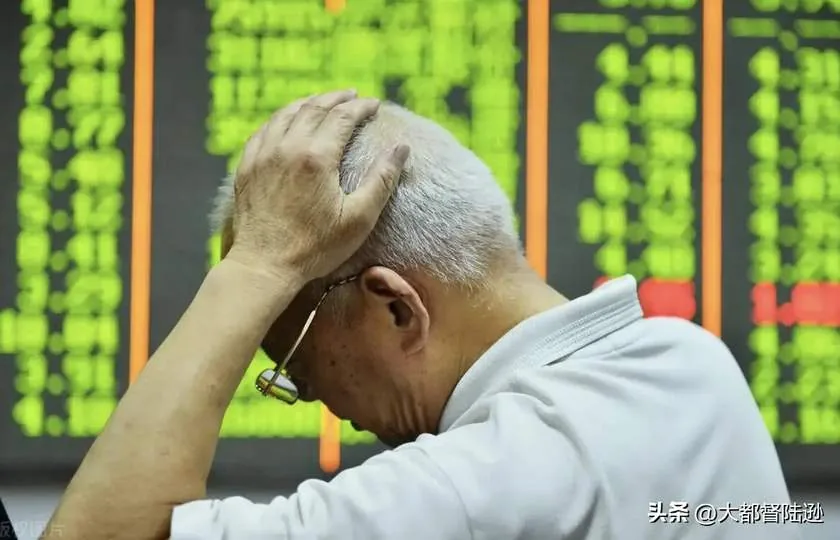
Fourteen million Toutiao (今日头条) users clicked on one question this week: Are A-share tech stocks actually overheated? When that many Chinese retail investors simultaneously pause to ask whether the stove is hot, you already know the answer.
The Shanghai Composite's tech sub-index has been on an absolute tear since late 2024. Cambricon (寒武纪) — the AI chip champion that spent years burning cash — saw its stock multiply several times over. Moore Threads (摩尔线程), the GPU hopeful, surged on listing. Anything tangentially touching artificial intelligence, robotics, or domestic semiconductors has been bid up like it's 1999 in San Francisco, except the trading floor is in Shenzhen and everyone's auntie is suddenly an AI analyst.
Here's what's actually driving the mania, and why it matters beyond portfolio statements.
The DeepSeek catalyst
Everything changed in late January 2025. DeepSeek (深度求索) dropped R1 and rattled Silicon Valley's confidence that China was permanently behind on frontier models. Never mind that DeepSeek itself is a private company you cannot buy on any exchange. Investor logic went: Chinese AI exists → Chinese AI will be huge → therefore every Chinese company with the word "tech" in its prospectus is now NVIDIA.
This is the specific flavor of Chinese retail-investing culture that Western observers consistently underestimate. A-share markets are still roughly 60-70% retail-driven. When a narrative catches fire on Douyin (抖音) finance channels and Weibo (微博) trending topics, money moves in waves that make Wall Street look glacial. Your dentist in Chengdu is buying Cambricon. The guy who sells hotpot franchise licenses is loading up on "robotics concepts."
What's actually being valued
Let's name names. Zhipu AI (智谱清言), Moonshot's Kimi (月之暗面), MiniMax, 01.AI (零一万物), Baichuan (百川) — none of these AI labs are public. DeepSeek certainly isn't. Alibaba (阿里巴巴), which houses the Qwen (通义千问) team, trades in Hong Kong and New York, not on A-shares. ByteDance (字节跳动), owner of Doubao (豆包), remains stubbornly private.
So what are A-share investors actually buying? Mostly proxies, picks, and shovels — plus a lot of hopium. Cambricon makes AI chips but remains unprofitable. Huawei's Ascend chip supply chain leaks into various listed entities. Manufacturing automation plays tied to humanoid robotics — Unitree (宇树科技) is private too, but component suppliers trade publicly. Investors are placing bets three layers removed from the actual technology, then praying the layers don't collapse.
The humanoid robotics frenzy deserves special mention. Fourier (傅利叶), Agibot (智元), UBTech (优必选) — these names circulate in retail investor groups with the intensity of crypto tokens in 2021. UBTech actually is listed in Hong Kong and saw its stock whip around violently. The promise is real, the timelines are not. But try explaining that to someone who just made 40% in two weeks.
The structural story underneath
Here's where I'll defend the bulls, partially. There is a genuine, massive policy push behind domestic tech self-sufficiency. The semiconductor independence drive isn't going away. AI infrastructure investment is real. Chinese enterprise adoption of models from Qwen, DeepSeek, and Zhipu is happening faster than most Western analysts predicted. The applications layer in China — everything from customer service to coding assistants — is going to be enormous because the consumer base is enormous.
But valuations have detached from any reasonable near-term earnings expectation. Price-to-earnings ratios on some AI-adjacent A-share names exceed 200x. That's not investing; that's momentum trading with extra steps.
What the mania reveals
This fever tells you three things about Chinese consumer-investor culture right now.
First, the savings glut is desperate for returns. Years of property market decline crushed the old wealth-building playbook. Chinese households parked trillions in deposits earning roughly 1-2%. Now they're rotating into anything with growth potential. Tech is the new apartment.
Second, national pride and markets are now intertwined in ways that create dangerous feedback loops. DeepSeek wasn't just a tech story; it became a civilizational vindication narrative. When patriotism meets speculation, rational analysis exits the chat.
Third, Chinese retail investors are sophisticated about narratives but less sophisticated about valuation. They understand which sectors matter. They cannot necessarily tell you whether Cambricon at 50x revenue makes sense. The gap between thematic awareness and financial literacy is where bubbles inflate.
My take
Is it overheated? Obviously. That's not the interesting question. The interesting question is whether the underlying technology justifies the exuberance once you strip out the noise.
And the honest answer: partially, yes, for real — but not for every company, not at these multiples, and not without serious volatility that will vaporize retail capital along the way. Some of these stocks will be ten-baggers. Most won't survive the cycle. Telling them apart requires actually understanding the technology, not just the ticker symbol.
The fourteen million people asking if it's overheated are already answering their own question. They're just hoping they can exit before everyone else realizes it too.
That's not investing. That's musical chairs with better phones.