China's 10x Chip Stock Is an AI Fever Dream
The Chinese internet is losing its collective mind over a single headline: 半导体板块迎来一只十倍股 — "The semiconductor sector just produced a ten-bagger."
For the uninitiated, a 十倍股 (ten-bagger) is Peter Lynch's famous term for a stock that returns 1,000%. It's the holy grail of Chinese retail investing — the thing every armchair trader on Weibo (微博) and Toutiao (今日头条) dreams about while refreshing their brokerage app at 3 a.m.
And now, semiconductors have delivered one.
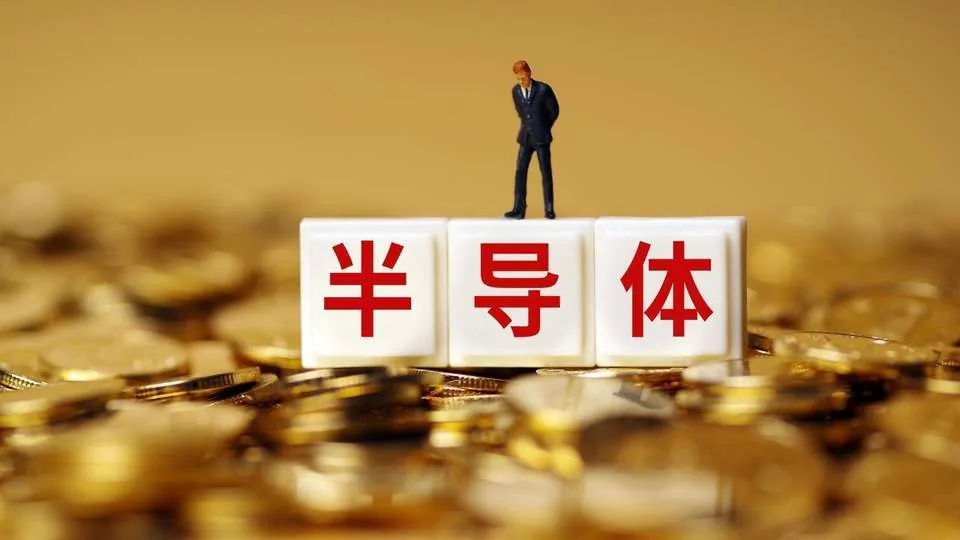
Here's why this matters beyond the stock chart: China's chip sector has become the single most explosive corner of the entire Chinese stock market, and it tells you exactly where the country's tech money, consumer-investor psychology, and AI ambitions all violently intersect.
The stock everyone's whispering about is almost certainly Cambricon (寒武纪) — China's closest thing to a pure-play AI chip company. Founded in 2016 by brothers Chen Tianshi and Chen Yunji, Cambricon was once an AI accelerator supplier to Huawei (华为) before going solo. It IPO'd on Shanghai's STAR Market (科创板) in 2020 at 64.39 yuan. Then it spent years in the wilderness — burning cash, posting losses, watching its stock drift sideways while investors yawned and moved on to flashier bets.
Fast forward to late 2024: the stock exploded. We're talking a move from the low 100s to north of 700 yuan — and if you measure from its pandemic-era trough, a clean ten-bagger. Market cap bursting past 300 billion RMB. For a company that posted annual losses for five consecutive years.
Why? Three words: AI compute hunger.
When DeepSeek (深度求索) dropped its V3 and R1 models and detonated a bomb under the global AI establishment, the conversation inside China pivoted overnight. The question shifted from "can Chinese labs match OpenAI?" to "can we actually run all these models on domestic silicon?" The answer, increasingly, is "we don't have a choice but to try."
The collision is spectacular. On one side: an explosion of AI model development from labs like DeepSeek, Alibaba's Qwen/Tongyi (通义千问), Zhipu's GLM (智谱清言), Moonshot's Kimi (月之暗面), and ByteDance's Doubao (豆包) — all ravenously consuming compute for training and inference. On the other: the stark reality that high-end chip access is constrained, making domestic alternatives not just nice-to-have but existentially urgent.
Investors aren't buying current fundamentals. They're buying a narrative with teeth: China must build its own AI silicon, and whoever's standing closest to that fire gets a valuation that defies gravity.
But here's where it gets genuinely fascinating from a culture-of-the-feed perspective: this isn't just institutional money driving the rally. Chinese retail investors — the same army of app-based day traders who've chased everything from baijiu stocks to lithium mines to Pop Mart (泡泡玛特) shares — have piled into semiconductor names with characteristic zero restraint.
On Xueqiu (雪球), China's investing social platform — think Reddit meets StockTwits with Mandarin subtitles — semiconductor threads are generating tens of thousands of comments. Toutiao hot-board posts about chip stocks routinely pull millions of views. The phrase "半导体十倍股" has become a meme in its own right: a symbol of the conviction that China's chip independence moment has arrived, and that stock prices will tell the story before the technology catches up.
And let's be honest about the mania: not all of this passes a smell test. Cambricon's price-to-sales ratio at its peak was north of 200x. The company only recently turned its first quarterly profit. SMIC (中芯国际), China's largest contract chipmaker, trades at multiples that would make value investors need medical attention. Moore Threads (摩尔线程), a GPU startup that hasn't even IPO'd, was reportedly valued north of 25 billion RMB in its latest private round — for a company whose chips are still proving they can handle modern AI workloads at meaningful scale.
This is what Chinese markets do best — or worst, depending on your perspective. They take a genuine structural trend — domestic chip development is real, necessary, and accelerating at breakneck speed — and pour aviation fuel on it until the valuation fire burns ten stories high and visible from space.
But here's my opinionated take: beneath the froth, something genuinely transformative is happening. China's semiconductor sector is being funded at levels that would have been unimaginable five years ago. The STAR Market has become a relentless capital-raising machine for chip companies — over 100 semiconductor firms have listed there since its 2019 launch. Local governments from Shanghai to Hefei are throwing subsidies, tax holidays, and cheap land at fab projects. Engineering talent that once booked one-way tickets to Silicon Valley is increasingly finding competitive offers in Shenzhen, Zhangjiang, and the Beijing-Zhongguancun corridor.
The ten-bagger stock is the headline that trends on Toutiao. The actual industrial transformation — from import-dependent to building a credible domestic chip stack — is the story that'll matter in five years. And the retail-investing frenzy, messy and speculative as it is, is the mechanism funneling hundreds of billions of RMB from ordinary Chinese savers into companies building the physical infrastructure for China's AI future.
So yes, it's a bubble. Parts of it will pop spectacularly. Some of these companies will incinerate capital and leave retail investors holding the bag. But the capital allocation, the talent concentration, and the sense of existential urgency aren't going anywhere — because the compute demands from models like DeepSeek R1 and Qwen 2.5 aren't slowing down. If anything, they're accelerating.
The stock chart looks insane. The strategy underneath it does not.
And in China's particular flavor of techno-capitalism — where retail mania, industrial policy, and genuine innovation all feed each other in a chaotic positive feedback loop — that might be exactly how it's supposed to work.