Chinese Companies to Investors: Please Stop Buying Us
There's a headline blazing across Toutiao (今日头条) right now with over 3.1 million热度: 「多家A股公司提示风险」 — "Multiple A-share companies issue risk warnings." And if you don't understand what's happening here, you're missing one of the most absurd rituals in Chinese capitalism.
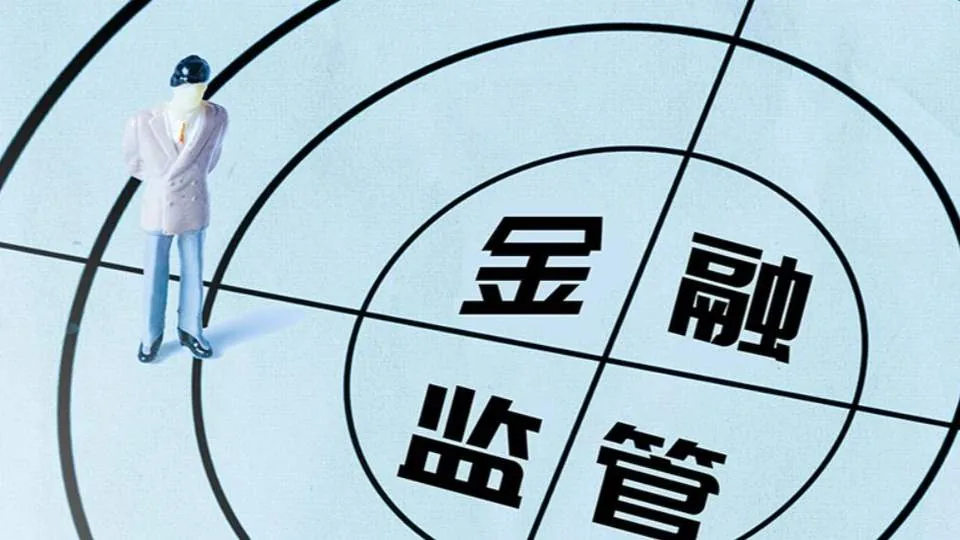
Here's the setup. In China's domestic A-share market — the stock exchanges in Shanghai and Shenzhen — when a company's stock price rockets upward for no fundamental reason, usually because retail investors have convinced themselves it's connected to whatever the hot concept of the week is, regulators and exchanges essentially force the company to publish a 风险提示公告. The company then has to publicly declare, in formal legal language: "Dear frothing investors: nothing has changed about our business. We are not secretly building the next DeepSeek (深度求索). Our revenue is still flat. Please calm down."
It's the financial equivalent of a store manager begging Black Friday shoppers to stop breaking down the door — except the shoppers are 200 million retail investors (散户) and the store is the Shanghai Composite Index.
The Current Frenzy: AI Everything
Why are so many companies issuing warnings simultaneously? Because Chinese retail investors are currently in full-blown AI mania mode. Ever since DeepSeek detonated across global headlines, every stock with even a whisper of "artificial intelligence," "large language model," or "intelligent robotics" in its business description has been getting pumped to the stratosphere on Chinese social media.
On Weibo (微博) and Xiaohongshu (小红书), self-proclaimed stock gurus (大V) dissect company filings looking for any mention of AI, machine learning, or robotics — then blast "analysis" posts to millions of followers. On Bilibili (B站), finance influencers make videos titled things like "These 5 A-Share AI Stocks Will 10x in 2025" with thumbnail images of rocket ships. Toutiao's algorithm pushes stock-tip content to anyone who so much as glances at a finance headline.
The result? Companies that make industrial valves or agricultural chemicals suddenly see their stock surge 30% in three days because someone on Douyin (抖音) noticed they filed a patent with the word "intelligent" in it.
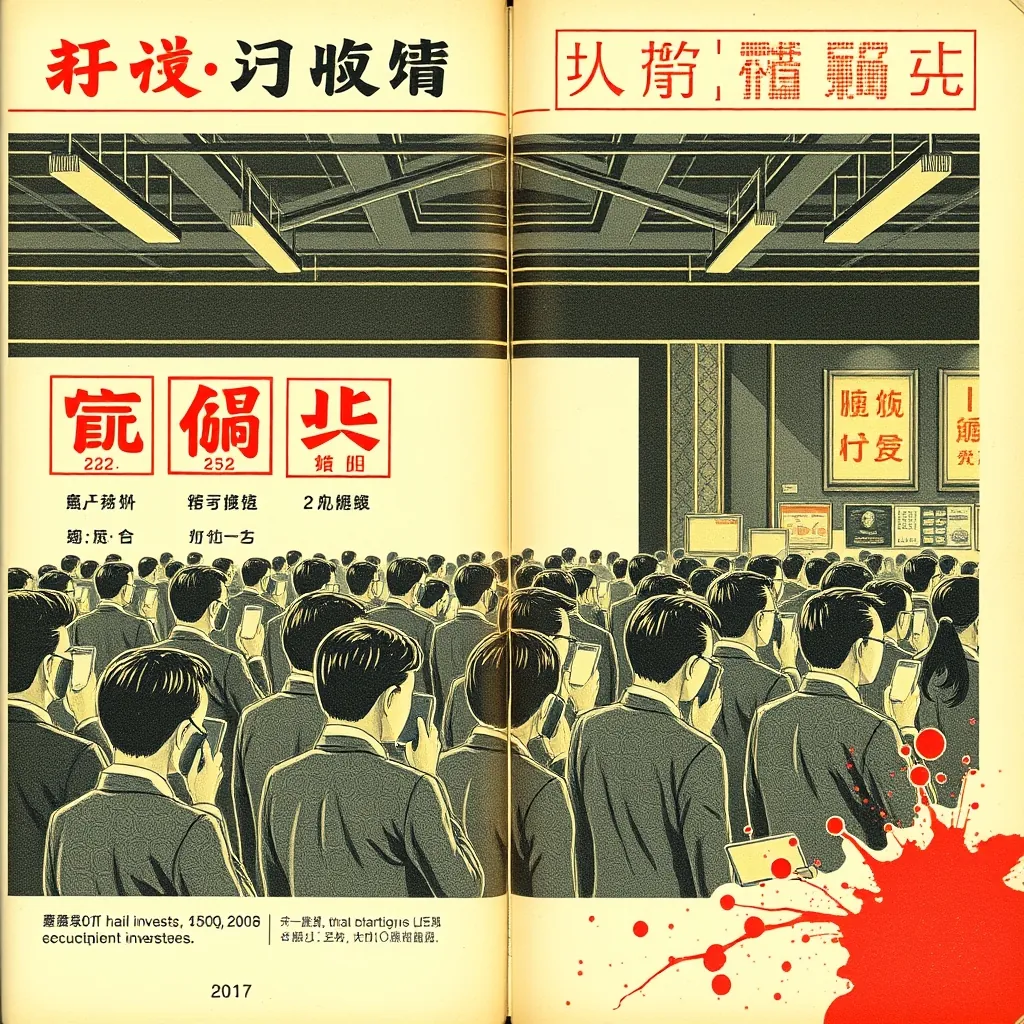
And then the company has to issue a statement: "We would like to clarify that our 'intelligent irrigation system' is not related to artificial intelligence in any meaningful way. Our core business remains the manufacturing of water pumps. Please invest rationally."
The Beautiful Irony
What makes this phenomenon so distinctly Chinese isn't just the speculation — every market has speculation. It's the bureaucratic theater of the risk warning itself. In American markets, companies issue bland forward-looking statement disclaimers and call it a day. In China, the 风险提示 is a whole genre of corporate communication. It's performative. It's mandatory. And everyone knows it changes absolutely nothing.
The Shenzhen Stock Exchange and Shanghai Stock Exchange have rules: if your stock moves too much in too short a time, you must explain yourself. If the explanation is "we genuinely have no idea why people are buying our stock," you have to say that — on the record, with your company seal, filed publicly. The existential absurdity of a company publicly begging people to stop giving it money is peak Chinese market culture.
What This Reveals About Chinese Internet Culture
The A-share risk-warning ritual sits at the intersection of everything that makes Chinese internet culture fascinating:
Social media as stock pump machine. Chinese platforms — Douyin, Weibo, Xiaohongshu, Bilibili — are essentially distributed stock-tip engines. Unlike Reddit's WallStreetBets, which is at least nominally contained in one subreddit, Chinese stock speculation bleeds across every major platform simultaneously. A single viral Toutiao post about a "robotics breakthrough" can move an entire sector before lunch.
The retail investor army. China has over 200 million retail stock investors. They're not institutional players — they're teachers, delivery drivers, factory workers, and college students who trade on their phones during lunch breaks. They chase narratives, not fundamentals. When DeepSeek went viral, they couldn't buy DeepSeek (it's not public) — so they bought anything that sounded adjacent.
The concept-stock merry-go-round. Chinese markets have a long tradition of 概念股 — companies whose stock prices move based on association with a trending topic rather than actual business results. AI concept stocks. Robot concept stocks. Metaverse concept stocks. Whatever's hot on Chinese social media this week, there's a basket of A-share companies getting pumped because their name contains a vaguely related character.
The regulatory whack-a-mole. Chinese regulators are perpetually trying to cool speculative frenzies without crashing the market. Risk warnings are the softest tool — a gentle "hey, maybe don't" before they escalate to trading halts, investigations, or outright finger-wagging editorials in financial media.
The Numbers Tell the Story
When this headline trends with 3+ million热度 on Toutiao, it means this isn't a niche finance story — it's mainstream conversation. Ordinary Chinese people are talking about stock risk warnings the way Americans argue about fantasy football. The engagement metrics suggest millions of people are not just passively reading; they're commenting, sharing, arguing in comment threads about whether the warnings are "real" or just a pretext before the next pump.
And here's the kicker: the risk warnings almost never work. Retail investors have learned to treat them as noise — or worse, as confirmation. "The company is being modest, which means there must be something real coming." It's a completely rational response to an irrational system.
Bottom Line
The trending 「多家A股公司提示风险」 isn't really about financial caution. It's a window into how Chinese internet culture, retail investing mania, and regulatory theater collide in real time. Every AI hype cycle, every robotics viral moment, every DeepSeek detonation doesn't just move the conversation — it moves the market. And the market, in true Chinese internet fashion, doesn't wait for permission.
The companies know it. The regulators know it. The investors definitely know it. And nobody is stopping.