China's AI Talent Pipeline Is a Factory Assembly Line
A headline is buzzing on Toutiao (今日头条) right now with a scorching 78 million+ hot score: 「这块“试验田”,产业和教育一起“种”」 — "This experimental field, where industry and education plant together." Sounds wholesome, right? Sounds like some gentle policy document about vocational training. Wrong. This is the blueprint for how China is systematically manufacturing its AI dominance, one student at a time.
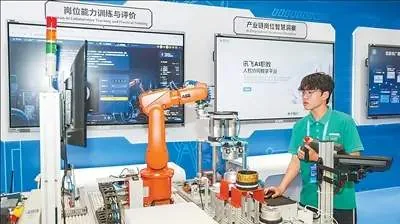
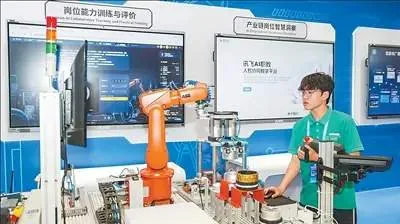
Let me translate what's actually happening. China has spent the last five years building what amounts to an industrial-scale talent pipeline for artificial intelligence. The "experimental field" metaphor isn't cute agricultural nostalgia — it's describing a network of joint laboratories, co-developed curricula, and embedded corporate mentors that has been quietly constructed across hundreds of Chinese universities. And it's working terrifyingly well.
Consider the numbers. China produced approximately 35,000 AI-related graduates in 2023. The United States? Roughly 28,000. But here's where it gets painful for Western observers: Chinese AI companies aren't waiting for graduates to show up at career fairs. They're inside the classrooms, sometimes literally writing the textbooks.
Take DeepSeek (深度求索), the Hangzhou-based AI lab that shocked Silicon Valley in January 2025 with its cost-efficient models. What fewer people noticed was that DeepSeek had been running joint research programs with Zhejiang University for over two years before their breakthrough. Their engineers weren't just alumni — they were co-authors on papers, co-advisors on theses, co-designers of course syllabi. The "experimental field" was already bearing fruit.
Or look at Alibaba's (阿里巴巴) Tongyi Qianwen (通义千问) team. They've established something called "联合实验室" — joint laboratories — with Tsinghua University, Peking University, and at least a dozen other top institutions. Students in these programs don't just study machine learning theory. They work on actual production models, real deployment challenges, genuine scaling problems. By graduation, they've essentially already been working for Alibaba for two years. The company gets trained talent. The students get credentials and experience. The university gets research output and corporate funding. Everyone wins — especially China's AI competitiveness.
ByteDance (字节跳动), the parent company of Douyin (抖音), has taken this even further with its Doubao (豆包) AI assistant. They've created what amounts to a talent farm system that would make professional sports franchises jealous. Selected undergraduates get mentored by ByteDance engineers, work on real products, and receive fast-tracked job offers upon graduation. It's not an internship program — it's a multi-year assimilation process. The company identifies promising students in their sophomore year and by the time they're seniors, they're culturally and technically integrated.
Now, here's why this Toutiao headline matters beyond just being interesting corporate strategy. This "industry and education planting together" model is being replicated across Chinese humanoid robotics companies too. Unitree (宇树科技), the company whose H1 robot went viral globally, actively recruits from specialized robotics programs at Shanghai Jiao Tong University and Harbin Institute of Technology. Fourier (傅利叶), maker of the GR-1 humanoid, has similar arrangements. UBTech (优必选) literally sponsors robotics competitions for middle schoolers. They're not just hiring — they're cultivating future employees from adolescence.
The cultural undercurrent here is distinctly Chinese. There's a Confucian reverence for education combined with a very modern pragmatism about applied knowledge. The phrase "产学研结合" — integration of industry, academia, and research — has been a policy buzzword for decades. But what we're seeing now is the mature, scaled-up version where it's actually functioning as designed. Western universities celebrate theoretical breakthroughs in prestigious journals. Chinese universities increasingly measure success by whether their graduates can immediately contribute to national AI champions.
Is there a downside? Absolutely. Critics within China worry about academic independence. When corporate engineers help design curricula, does education become overly narrow? When students spend their university years essentially pre-training for a specific employer, do they lose the creative chaos that produces genuinely novel insights? These are legitimate concerns echoed on Zhihu (知乎), China's Quora-like platform, where discussions about "学历贬值" — credential devaluation — regularly trend.
But here's my take: while Western tech companies are fighting over a limited pool of experienced AI researchers and offering million-dollar compensation packages to poach from each other, Chinese companies are playing a longer game. They're building the supply chain for talent itself. The "experimental field" isn't just a metaphor. It's an agricultural approach to human capital — systematic, patient, and designed for scale.
The next time you read about a Chinese AI model matching or beating Western counterparts, remember: that model wasn't just built with compute and data. It was built by people who were cultivated in a system designed specifically to produce them. The field was planted years ago. Now it's harvest time.