When Playing Health Cop Gets You Cancelled: China's Bizarre Anti-Smoking Saga
Here's a story that tells you everything you need to know about the current state of Chinese internet culture, civic duty, and the absolute galaxy-brain logic of online mob justice.
A Chinese citizen — reportedly a woman — saw someone smoking in a public space. She asked them to stop. That's it. That was her crime. For this deeply reasonable act of pointing out that public smoking is, you know, literally against the law in most Chinese cities, local police allegedly stripped her. Not just her dignity — we're talking physically stripped. And now? She's being "socially cancelled" by Chinese netizens.
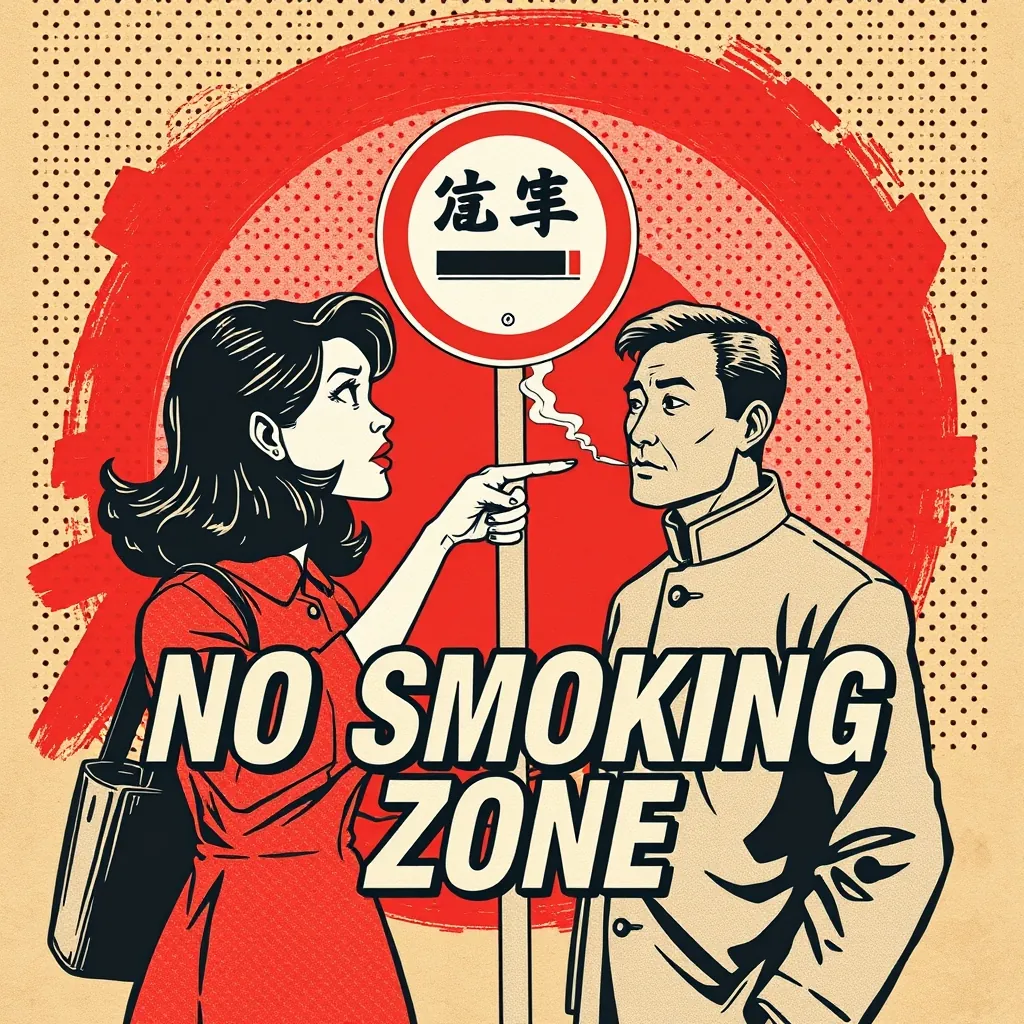
Welcome to 2025, where doing the right thing in China gets you treated like a criminal while the actual lawbreaker becomes the victim. Peak internet. Peak everything.
Let's break down this beautiful disaster.
The Incident That Launched a Thousand Hot Takes
The details, as they've been circulating on Chinese social media and picked up by the Reddit/China community, go something like this: a woman confronted someone smoking in a clearly designated no-smoking area — the kind you find in restaurants, train stations, or shopping malls across China. When the smoker refused to cooperate, things escalated. Police were called. And somehow, she ended up being the one disciplined — physically humiliated by being stripped — rather than the person actually breaking the law.
The irony is thick enough to spread on toast. China has some of the most comprehensive anti-smoking regulations on paper. Beijing's strict smoking ban, implemented in 2015, was supposed to be a game-changer. Shanghai followed suit. Major cities across the country have enacted similar rules. Fines for violators can reach 200 yuan (about $28). Establishments that look the other way can face penalties up to 30,000 yuan.
But anyone who has spent more than five minutes in China knows the reality: enforcement is spotty at best, performative at worst. You'll still see uncles casually puffing away in restaurant bathrooms, hospital stairwells, and — my personal favorite — right under the "No Smoking" signs. It's a national pastime.
So when someone actually tries to enforce the rules that the government itself wrote? They become the problem. Not the smoker. Not the broken system. The person pointing out the broken system.
The Cancellation Economy
But here's where it gets truly wild: the internet pile-on wasn't against the police for alleged abuse of power. It wasn't against the smoker for breaking the law. It was against her — the woman who dared to speak up.
On platforms like Douyin (抖音) and Weibo (微博), commenters dug into her personal life. They found her social media accounts. They weaponized old posts. They called her a "troublemaker," a "Karen" (yes, that term has fully crossed into Chinese internet slang), someone who "deserved what she got."
This is the Chinese cancellation machine in full swing — and it reveals something deeply uncomfortable about online culture in the world's largest internet ecosystem.
In China's hyper-connected society, where platforms like Xiaohongshu (小红书) and Bilibili (B站) can make or break reputations overnight, cancellation isn't just a possibility — it's a feature. The mob decides who's righteous and who's radioactive, often with zero regard for facts, context, or basic fairness.
What makes this case particularly galling is the inversion of moral logic. The person enforcing an actual law — a law designed to protect public health — becomes the villain. The smoker and the police who allegedly abused their authority become, if not heroes, then at least victims of this woman's "audacity."
What This Says About Chinese Society Right Now
This incident crystallizes several trends happening simultaneously in mainland China:
1. The Gap Between Law and Reality — China is excellent at writing regulations and terrible at consistently enforcing them. From food safety to intellectual property to yes, public smoking, the rules exist on paper but dissolve the moment they inconvenience anyone with connections or confidence.
2. The Anti-Whistleblower Reflex — There's a deep cultural current in China that runs against those who rock the boat. The phrase "多一事不如少一事" (better to have one fewer problem than one more) captures this perfectly. People who speak up — whether about smoking, corruption, or injustice — are often viewed as troublemakers rather than heroes.
3. Platform-Weaponized Morality — Chinese social media platforms have become courts of public opinion where actual facts matter less than narrative momentum. Once the mob picks a side, good luck changing their minds.
4. The Selective Outrage Machine — Chinese netizens can mobilize incredible outrage, but it's often directed at the wrong targets. A woman asking someone not to smoke generates more fury than systemic issues that affect millions.
The Bigger Picture
Look, I'm not naive. Confronting strangers about their behavior carries risks everywhere, not just in China. But the fact that this woman was physically punished by police for citing a law, and then socially destroyed by the internet for being right — that's a uniquely depressing cocktail of institutional failure and mob psychology.
China has over 300 million smokers — the largest smoking population on Earth. Tobacco-related diseases kill roughly 1 million Chinese people annually. The government knows this is a crisis. They've written the laws. They've launched the campaigns. But when a citizen tries to actually implement those laws? She becomes public enemy number one.
The message is clear: don't rock the boat. Don't enforce rules that the enforcers won't enforce. Don't be the nail that sticks up, because you will get hammered down — by the police, by the internet, by the entire apparatus of social conformity.
And then the same internet that cancelled her will go back to complaining about secondhand smoke in restaurants. Because of course they will.
This is China in 2025: a place where the rules are sacred until someone tries to follow them, and where the quickest path to social destruction is giving a damn about anything that inconveniences someone else.
Smoke 'em if you got 'em, folks. Apparently, the law — and basic public health — can wait.