Gold Bugs in Panic Mode as Prices Slide — China's 'Auntie Army' Holds the Line
International gold prices have retreated to around $4,500, and nowhere is the collective anxiety more palpable than on China's Toutiao (今日头条) hot board, where this headline racked up a scorching 2.39 million热度. That's not just financial news — that's a cultural event.
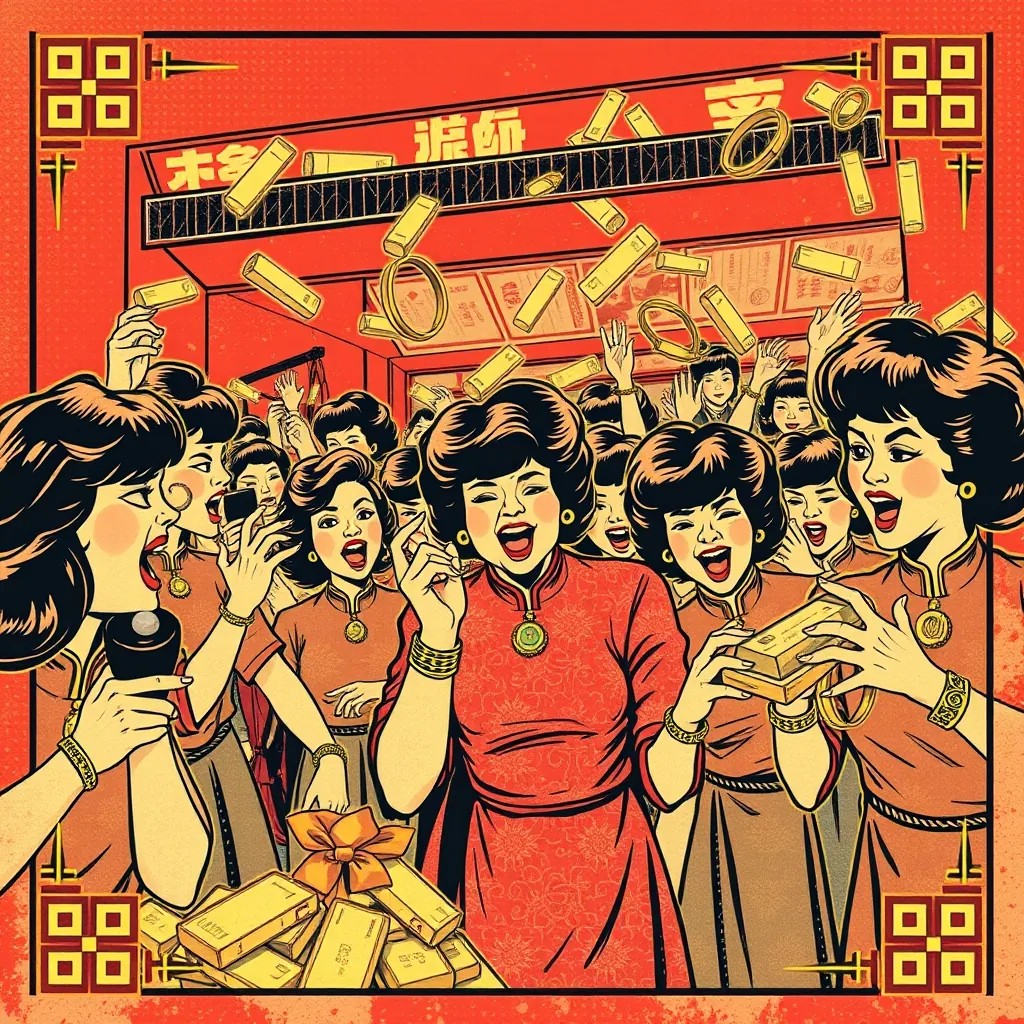
Let's be clear about what's happening: gold isn't just a commodity in China. It's a religion. It's the thing your grandmother stuffed under the floorboards. It's what you buy when your daughter gets married because property prices are insane and stocks are a casino run by wolves. When gold moves, China's retail investor class — a sprawling, opinionated, deeply online army — moves with it.
The legendary 中国大妈 (zhōngguó dàmā, literally "Chinese aunties") became a global meme in April 2013 when they stormed jewelry stores across the country, reportedly snapping up over 300 tons of gold as prices crashed below $1,400/oz. Western hedge funds were shorting. The aunties were hoarding. Bloomberg coined a term for it. The Wall Street Journal estimated they spent roughly $16 billion in just two weeks. A decade later, the auntie army hasn't retired — it's just gotten savvier, and it's got WeChat groups now.
Here's why this $4,500 retrace is eating up Chinese internet oxygen:
1. The "Safe Asset" Myth Just Got Complicated
For years, the narrative on Chinese social media — pushed by everyone from Xiaohongshu (小红书) finance influencers to Bilibili (B站) explainers — was simple: gold always goes up. It's the one thing that doesn't lie. It's the anti-yuan hedge, the anti-chaos bet, the asset that survives everything from property developer collapses to local government debt crises.
Except now it's sliding, and the mood on Toutiao comment sections is somewhere between denial and existential crisis. One top comment with 4,000+ likes reads: "我4,800买的,割肉还是死扛?" ("I bought at $4,800. Should I cut losses or hold?") The replies are split between uncle-level analysis drawing on 30-year gold charts and pure emotional wreckage.
The psychology on display mirrors what you see over on Reddit's r/wallstreetbets, where one user recently posted about going from a combined $3.3 million (across taxable and IRA accounts) down to roughly $53,000 by relentlessly chasing SPY options — including a single trade that lost over $90,000. The poster admitted they "basically had financial freedom" if they'd just held index funds, but kept swinging for the fences. That's the same demon whispering to China's gold bugs right now: just one more trade and I'll make it back.
2. The ETF Generation Meets the Physical-Gold Generation
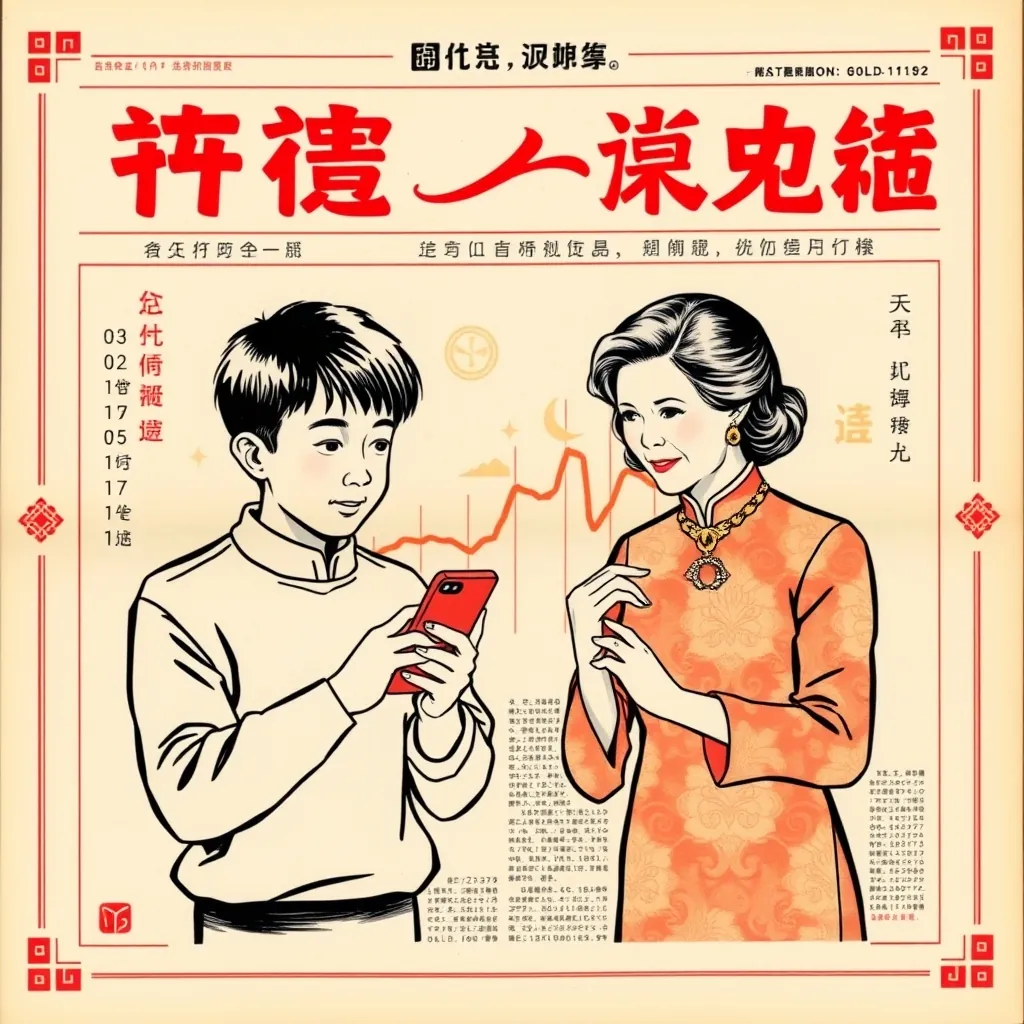
This isn't just aunties buying bangles anymore. Young Chinese investors — the same cohort that trades stocks on their phones between bubble tea orders — have piled into gold ETFs and digital gold products offered by platforms like Alipay (支付宝) and Tencent's (腾讯) WeChat Pay. China's gold ETF inflows hit record levels in recent months, with assets under management exceeding ¥100 billion for the first time.
So when prices pull back, the pain is distributed across demographics. Your mom's wedding gold collection took a hit. Your 28-year-old coworker's "lazy investment" portfolio took a hit. Everyone's stressed simultaneously, and they're all venting about it on the same platforms.
3. The Central Bank Signal Everyone's Reading Into
China's People's Bank has been on a massive gold-buying spree — adding over 200 tons in 2024 alone, making it one of the largest central bank accumulators globally for consecutive months. Toutiao commentariat loves reading tea leaves here: "央行都在买,为什么价格还在跌?" ("If the central bank is buying, why are prices falling?") becomes a gateway to discussions about dollar strength, Fed policy, and geopolitical de-risking that somehow always circles back to "should I buy more or sell everything?"
The PBOC's gold reserves matter because they're seen as a proxy for state confidence. When the state buys and prices dip anyway, it creates cognitive dissonance that Chinese internet commenters absolutely cannot handle gracefully.
4. The Jewelry-Wedding Complex
Here's the cultural layer that Western financial analysts consistently miss: gold jewelry in China isn't decorative — it's monetary. Wedding gold (嫁妆金饰) remains a massive category, with some families spending ¥100,000-300,000 on gold gifts alone. Families buy 999.9 pure gold necklaces, bangles, and bars as part of marriage negotiations. A price drop of a few hundred dollars per ounce can mean thousands of yuan difference in wedding costs.
On Xiaohongshu, brides-to-be are posting wedding gold hauls with price comparisons. The engagement season calculus is real: do you lock in now or gamble on further dips? The comments under these posts are wilder than any Wall Street analyst call.
5. What This Says About Chinese Consumer Confidence Right Now
The obsessive tracking of gold prices on Toutiao isn't really about gold. It's about a broader anxiety that has no other safe outlet. Property values are softening in tier-2 and tier-3 cities. The stock market has been a rollercoaster of disappointment for years. Bank deposit rates keep getting cut — major banks dropped 1-year deposit rates below 1.5% in 2025.
Gold was supposed to be the one thing. The uncomplicated bet. The grandma-approved asset that wouldn't betray you. When even gold wobbles, it triggers something deeper — a sense that there's nowhere to hide.
That's why 2.39 million people clicked on a headline about gold pulling back to $4,500. It's not curiosity. It's fear wearing the mask of market analysis.
The auntie army will probably buy the dip again. They always do. But this time, they're doing it while refreshing their phones every ten minutes, checking spot prices, arguing in comment threads, and wondering if the one asset they trusted is just another volatile number on a screen.
Welcome to investing in 2025, Chinese style. The gold's still shiny. The anxiety's just louder.