China's 3.2 Million-Person Egg Debate Nobody Can Win
Here's the thing about the Chinese internet: while Western tech Twitter is busy arguing about whether AI will destroy humanity, Toutiao (今日头条) — ByteDance's (字节跳动) news aggregator that serves as China's cultural pulse-taker — is currently melting down over eggs. Specifically, over 3.2 million people have tuned into a debate asking: "Who is healthier: someone who eats eggs every day, or someone who rarely eats eggs?"
The answer, obviously, is "it depends," which is exactly the kind of unsatisfying non-answer that drives Chinese comment sections absolutely feral.
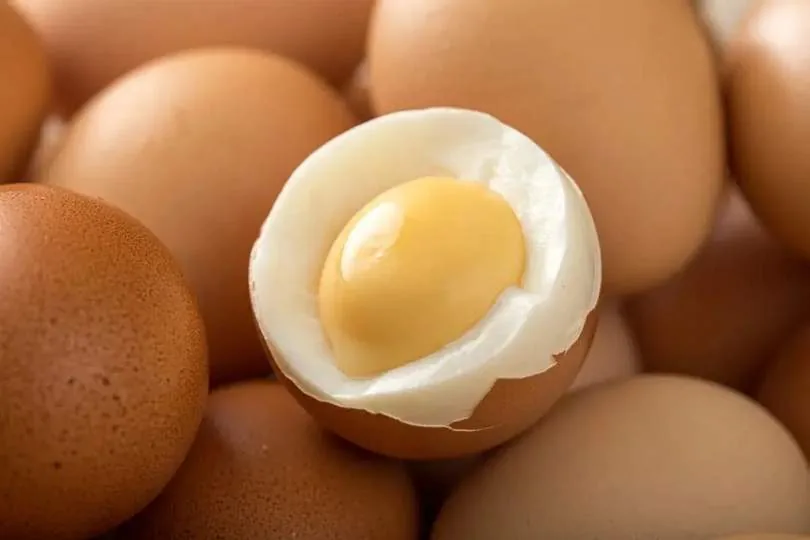
Let me set the scene. The headline 「天天吃鸡蛋和很少吃鸡蛋谁更健康」 has been simmering on Toutiao's hot board with a heat index of 3,220,660 — for context, that's higher than most celebrity divorce announcements and roughly on par with a moderately successful livestream-commerce moment. Over three million people have decided that egg discourse is where they want to spend their attention budget today.
And honestly? I get it.
Eggs occupy a weirdly emotional space in the Chinese cultural psyche that Westerners might not fully appreciate. For older generations who lived through the lean years — your parents' generation, your grandparents' generation — eggs weren't just breakfast. They were luxury. They were the thing you got on your birthday. The thing your grandmother would press into your hands before a big exam, whispering that the protein would make you smart. Eggs, in the Chinese imagination, are tied up with love, sacrifice, and thepromise of a better life.
So when someone asks "should you eat eggs every day?" they're not really asking about nutrition. They're asking about identity. About whether you trust the old ways or the new science. About whether you're the kind of person who listens to their mom or the kind of person who listens to a Douyin (抖音) influencer in a lab coat.
The comment section — and I've read deeply, perhaps too deeply — splits into roughly four camps:
Camp 1: The Traditionalists. These are your aunties and uncles who will not be told that eating two eggs every morning for forty years was somehow wrong. They point to their own blood test results. They mention their neighbor's grandpa who ate eggs daily and lived to 97. They are immune to RCTs and meta-analyses. Anecdote is king.
Camp 2: The Cholesterol Fearers. This camp read an article circa 2010 about dietary cholesterol and have been terrified ever since. They eat egg whites only. They are also, statistically, the most likely to share articles about "10 foods that are slowly killing you" on WeChat. They want you to know that one egg yolk has 186mg of cholesterol and they have numbers, people.
Camp 3: The Fitness Bros. These are the guys who follow bodybuilders on Bilibili (B站) and will not shut up about protein density and amino acid profiles. They eat six eggs a day, minimum. They will call you weak for questioning this. They are, ironically, the least healthy people in this debate but the most confident.
Camp 4: The "Everything in Moderation" Boring People. They're right and everyone hates them.
Here's what makes this genuinely revealing: the egg debate is a perfect microcosm of Chinese internet health culture in 2024, which exists at a strange intersection of traditional Chinese medicine (TCM), Western nutritional science, wellness influencers, and platforms designed to maximize engagement through controversy.
Toutiao, in particular, has mastered the art of the health-debate headline. The format is always the same: two options presented as oppositional, both plausible, both slightly wrong. Is it better to walk 10,000 steps or swim for 30 minutes? Should you drink hot water or warm water? (Cold water is not on the menu — this is China, we're not monsters.) The algorithm knows these questions generate maximum comments because everyone has an opinion and nobody can be definitively proven wrong.
The egg question specifically resonates because it touches on something deeper happening in Chinese consumer culture right now: a full-blown wellness anxiety epidemic. Post-pandemic China is obsessed with health — but not in the Western goop-y, Gwyneth Paltrow crystal-healing way. It's more like a collective anxiety about invisible threats. About food safety scandals that have eroded trust over decades. About the fact that your grandparents probably ate simpler food and lived longer than your generation will, despite all your supplements.
Xiaohongshu (小红书) is full of posts dissecting egg quality — free-range versus caged, DHA-enriched versus regular, the supposedly superior "native eggs" (土鸡蛋) that cost three times as much because the chickens lived a better life. The wellness industry has turned eggs into a class marker now.
And then there's the AI angle, because there's always an AI angle. Chinese health apps powered by everything from Alibaba's (阿里巴巴) Qwen (通义千问) to smaller startups have gotten into the habit of giving contradictory nutritional advice, trained on datasets that include both peer-reviewed research and that one Weibo (微博) post your aunt shared about eggs being poison. Users screenshot these AI responses and add them to the debate as evidence, creating a whole meta-layer of unreliability.
Meanwhile, moonshot-scale AI companies like Moonshot AI (月之暗面) and Zhipu (智谱清言) have yet to crack the code on consistent health guidance. Kimi, Moonshot's chatbot, will happily analyze egg nutrition data but won't tell you what to eat because nobody wants legal liability for your breakfast choices.
The bottom line: nobody wins the egg debate, but Toutiao wins every time someone comments. The platform doesn't need you to resolve your health anxieties — it needs you to keep having them, loudly, in a thread with good ad inventory.
So go ahead. Eat your eggs. Or don't. Just know that somewhere in China, 3.2 million people are ready to argue about it.
And they're just getting started on whether cold water is bad for you.