Pay the Workers, Not the Suits: China's Wage Wake-Up Call
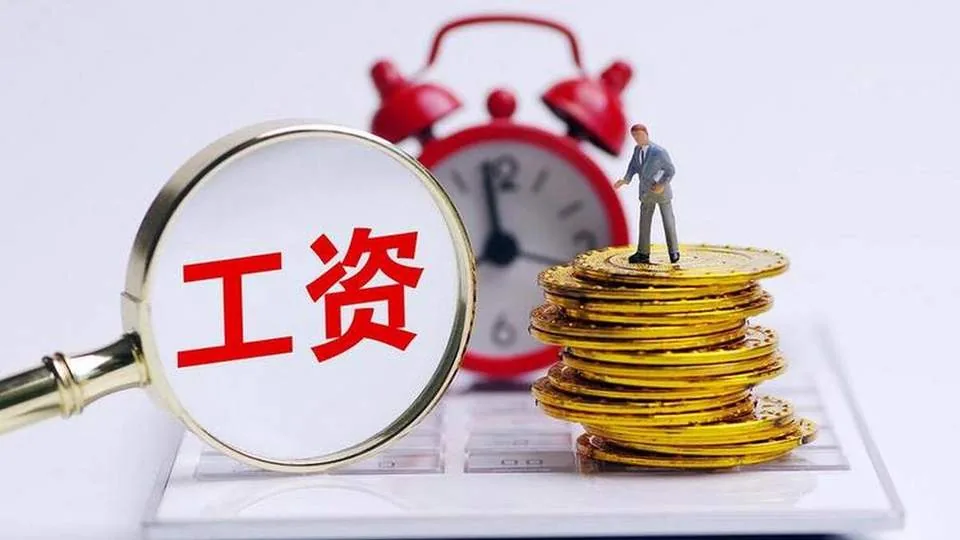
The Ministry of Human Resources and Social Security (人社部) just dropped what might be the most relatable government directive of the year: companies should tilt wage distribution toward front-line workers.
Translation: pay the people who actually do the work, not the five layers of middle management sitting above them.
The headline — "Guide wage distribution to tilt toward front-line positions" — is trending on Toutiao (今日头条) with over 5.1 million heat points. That's not viral by accident. It's viral because every delivery rider, factory worker, and 996 coder who's ever watched their boss's boss upgrade to a newer SUV understands this viscerally.
The Math That Hurts
Here's what the ministry is diplomatically not saying: China's front-line wage gap is structural and it's wide. Manufacturing workers earn roughly 60,000–80,000 RMB annually. Mid-level managers at major tech firms pull 300,000–600,000. Delivery drivers for Meituan (美团) and Ele.me (饿了么) earn 5–8 RMB per order, working ten to twelve hour days, six days a week, in cities where rent eats half their income.
Meanwhile, the people designing the algorithms that compress those delivery times sit in air-conditioned offices at ByteDance (字节跳动) headquarters earning six figures plus stock options. The people actually annotating the training data for AI models like DeepSeek (深度求索)? They're gig workers in Chengdu office parks making 15 RMB per hour.
The ministry's directive essentially says: this is mathematically unsustainable. And the Chinese internet agrees.
The Cynicism Is Palpable
Hop onto Weibo (微博) or Bilibili (B站) and the reactions are a masterclass in Chinese netizen cynicism. "Guiding" is doing a lot of heavy lifting in that headline — it's the bureaucratic equivalent of "thoughts and prayers."
Top comments read like they were written by people who've been through the wringer:
- *"Define 'front-line.' Because HR will find a way to classify the CEO's assistant as front-line."
- *"I'll believe it when my paycheck changes, not when a ministry issues a guideline."
- *"Great, so my boss will read this, nod thoughtfully, and give himself a raise for 'supporting front-line workers.'"
This is the same internet culture that birthed "lying flat" (躺平) and "involution" (内卷) as the defining generational buzzwords. It's the same demographic that watches AI labs like Qwen (通义千问) from Alibaba (阿里巴巴) and Kimi (月之暗面) from Moonshot build billion-dollar valuations while rank-and-file engineers negotiate for marginally better equity packages.
The AI Angle Makes It Sharper
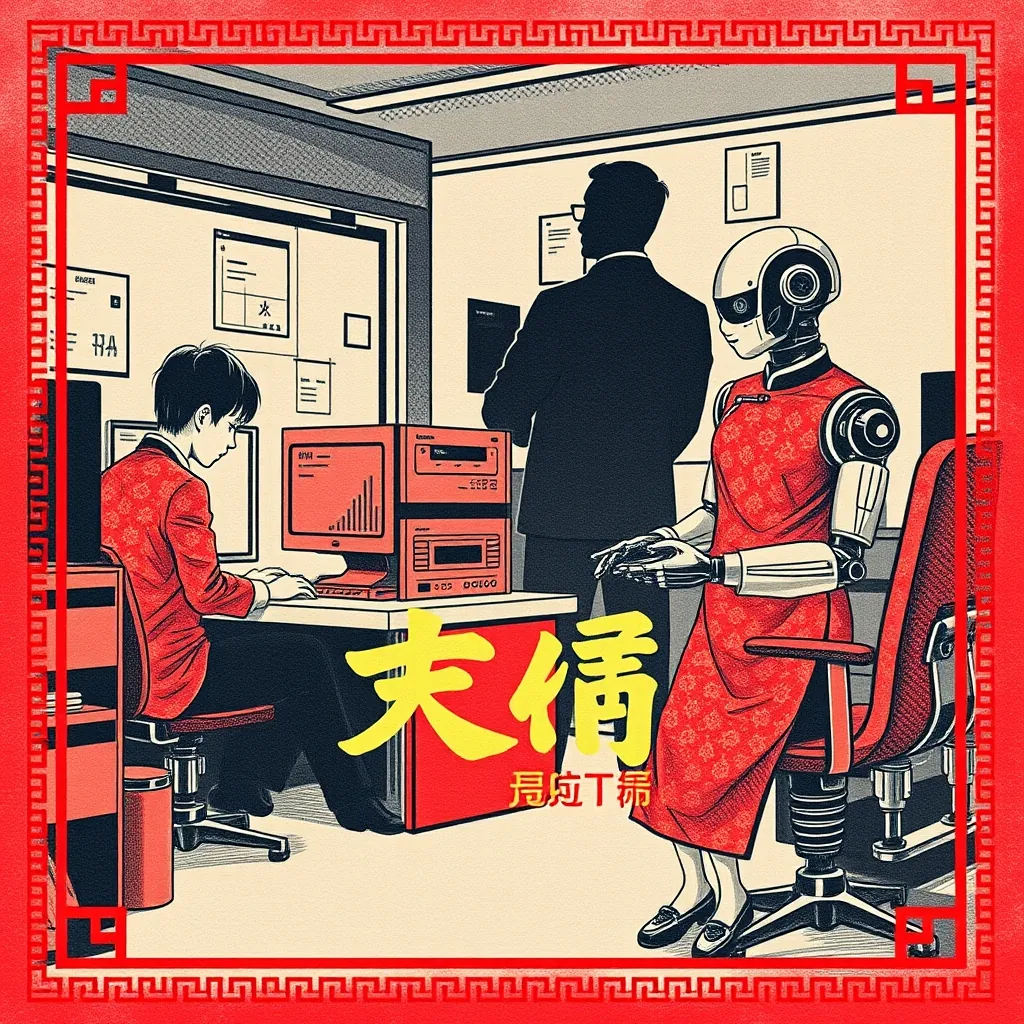
Here's where it gets genuinely interesting from a tech-watching perspective. The wage directive lands precisely when China's AI industry is exploding. DeepSeek's R1 model shocked Silicon Valley. Doubao (豆包) from ByteDance is becoming the default AI assistant for ordinary Chinese consumers. Zhipu (智谱清言) and MiniMax are closing gaps with Western frontier models.
But who counts as "front-line" in this new economy? The PhD researcher training the model? The data labeler? The factory worker assembling parts for Unitree (宇树科技) humanoid robots? The directive doesn't clarify, and that ambiguity is the story — because China's economy is now a bizarre three-layer cake of cutting-edge AI labs, brutal gig work, and factory floors that look like 2010 with smarter machines.
What This Actually Reveals
Three things:
1. The consumption problem is real. China needs domestic spending to offset weak exports and a property slump. Workers who can't afford Pop Mart (泡泡玛特) collectibles or frequent milk tea runs are a structural economic liability, not just a social one. The entire consumer-internet ecosystem — from Douyin (抖音) livestream commerce to Xiaohongshu (小红书) lifestyle content — depends on people having disposable income.
2. The talent drain is accelerating. Young Chinese professionals increasingly prefer stable government jobs (考公) over private-sector grinding. Factory owners report persistent labor shortages. You can't build a tech superpower when your best engineers would rather work for the state Planning Bureau.
3. The internet is watching and judging. Those 5.1 million heat points aren't passive scrolling — they're collective acknowledgment. Chinese netizens are deeply engaged with economic fairness discourse, from Dong Yuhui (董宇辉) and the East Buy (东方甄选) livestream drama to factory-worker Douyin accounts racking up millions of followers by showing the unglamorous reality of assembly-line life.
The Bottom Line
The directive is a signal flare, not a solution. "Guiding" is not "mandating," and China's policy implementation gap between Beijing pronouncements and factory-floor reality is legendary.
But the viral traction tells you what matters: Chinese workers — from the DeepSeek engineer to the Meituan delivery rider to the Unitree assembly worker — know the distribution is broken. They're watching to see if anyone actually fixes it. And the internet ensures that whatever happens next will be documented, screenshotted, memed, and judged in real time.
Guideline issued. Internet skeptical. Let's see who blinks first.