China's Not Just Exporting Products—It's Exporting Services Now
Here's a headline that should make Silicon Valley sweat: "Chinese Services" Accelerate Going Global ("中国服务"加速出海). With nearly 13 million views on Toutiao (今日头条), China's internet is buzzing about something the Western tech world hasn't fully processed yet—China is no longer just the world's factory. It's becoming the world's service provider.
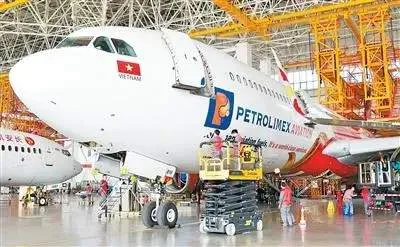
Let's be clear about what we're watching. When your average Chinese netizen sees "Chinese services going overseas," they're not thinking about some abstract macroeconomic trend. They're thinking about the apps on their phone, the AI assistants they chat with daily, the bubble tea they drink, and the livestream shopping they're addicted to—and realizing these are all going viral globally.
The App Tsunami, Round Two
Remember when TikTok (the international version of Douyin 抖音) was the lone Chinese app making Western teenagers dance? Those days are done.
Pinduoduo's (拼多多) international sibling Temu has become a cultural phenomenon in the US and Europe with its "shop like a billionaire" gambit. WeChat Pay and Alipay are now accepted everywhere from Parisian luxury boutiques to Tokyo ramen shops. Bilibili (B站) content creators are finding international audiences. Xiaohongshu (小红书), the lifestyle-sharing platform often called "China's Instagram," is quietly building user bases across Southeast Asia.
But here's what the Toutiao headline is really pointing at: this is just the beginning.
AI: China's Next Great Export
The real firepower behind "Chinese services going global" is artificial intelligence. And this is where things get spicy.
DeepSeek (深度求索) sent shockwaves through global tech when it demonstrated competitive AI capabilities at a fraction of the cost of Western models. Qwen/Tongyi (通义千问), Alibaba's large language model, is being adopted by developers worldwide. ByteDance's Doubao (豆包) is proving that consumer AI assistants can achieve massive scale. Kimi (月之暗面/Moonshot) is showing the world that Chinese AI startups can compete on reasoning and long-context tasks.
These aren't just domestic tools anymore. Chinese AI companies are actively pursuing international markets, offering APIs, open-source models, and consumer applications that compete directly with OpenAI, Google, and Anthropic. The open-source strategy is particularly clever—by giving away powerful models, Chinese AI labs are building developer ecosystems worldwide, creating dependence and loyalty that no tariff can touch.
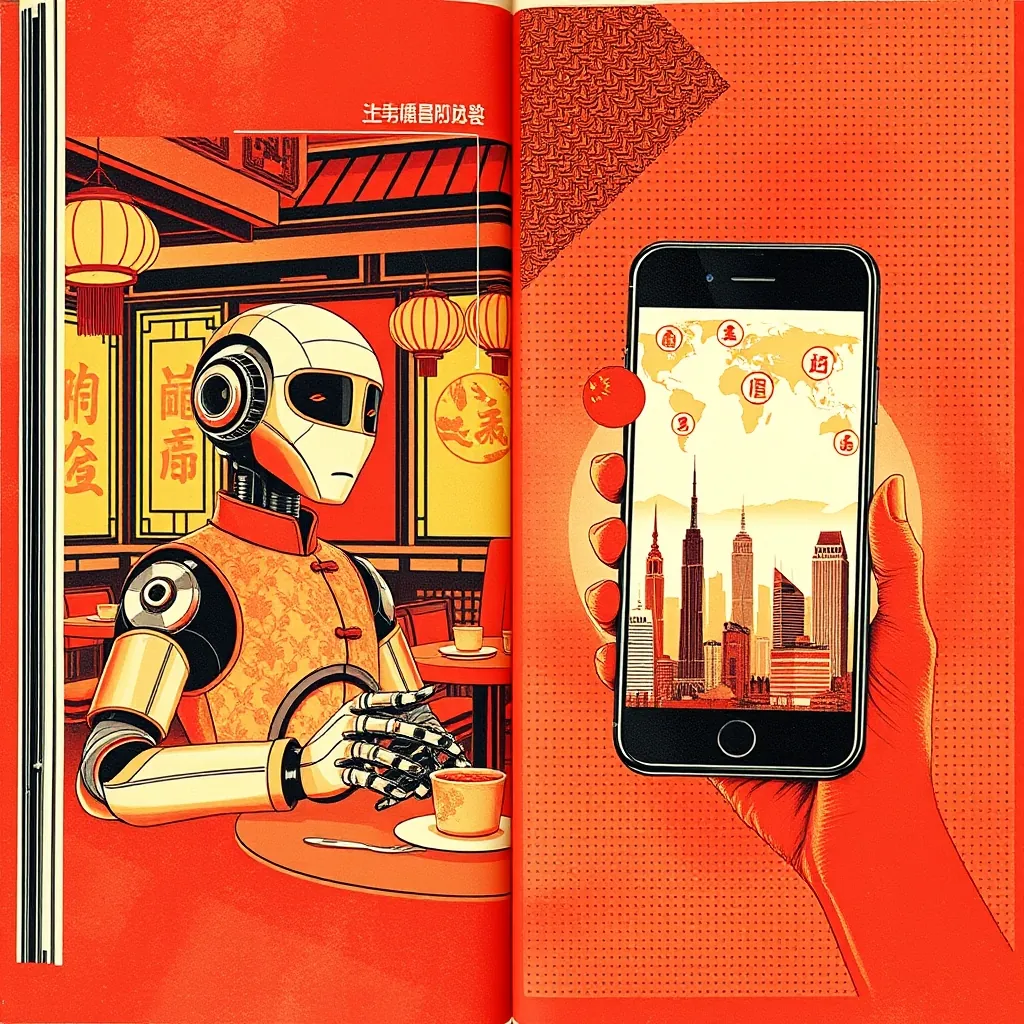
The Soft Power of Bubble Tea and Robot Waiters
But "services" in the Chinese context isn't just tech. It's the entire consumer experience economy.
Pop Mart (泡泡玛特), the blind-box toy empire behind the Labubu frenzy, now operates stores from London to Los Angeles. Chinese hotpot chains like Haidilao are legendary for their over-the-top service—nail painting, noodle dancing, phone screen-wiping—and they're expanding aggressively overseas. Mixue (蜜雪冰城), the budget bubble tea chain with the earworm jingle, has opened thousands of stores across Southeast Asia.
What's fascinating is that these brands aren't just exporting products. They're exporting service culture—the relentless customer obsession, the theatrical flair, the integration of digital and physical experiences. When a Haidilao opens in Dubai, it's not just selling soup. It's selling the entire Chinese service philosophy.
And then there's the robotics layer. Unitree (宇树科技) humanoid robots are appearing in international tech demos. Fourier (傅利叶 GR-1) is exploring rehabilitation markets globally. UBTech (优必选) service robots are already rolling through hospitals and hotels worldwide. Chinese robotics companies aren't just building hardware—they're offering service solutions that compete with Western integrators.
Why This Matters Now
The timing isn't coincidental. With geopolitical tensions making hardware exports increasingly complicated, Chinese companies have realized that services are harder to tariff, easier to localize, and more resilient to political headwinds.
An AI model doesn't care about import restrictions. A cloud service can route through multiple jurisdictions. A mobile app can be downloaded anywhere. Software and services are the ultimate sanctions-proof export.
The 12.8 million Toutiao viewers understand this instinctively. There's pride in seeing Chinese products succeed abroad, but there's something deeper here—a recognition that China is moving up the value chain. The narrative is shifting from "China makes things cheaply" to "China provides services brilliantly."
The Opinions Nobody Asked For
Look, I'll be honest: this trend is both exciting and slightly terrifying.
Exciting because competition drives innovation. Chinese AI labs pushing open-source models forces everyone to move faster. Chinese consumer apps obsessed with user experience raises the bar globally. The world benefits when the best ideas win regardless of origin.
Terrifying because the geopolitical implications are massive. When millions of global users depend on Chinese AI models, Chinese payment systems, and Chinese platforms, we're creating digital interdependencies that policymakers haven't begun to think through. The TikTok battles of today are just a preview of much larger conflicts tomorrow.
And let's not pretend Chinese services don't have challenges. Trust deficits, data privacy concerns, cultural localization failures—these are real obstacles. Not every Chinese app will be a TikTok. Most will fail overseas, as most startups do everywhere.
But the direction is undeniable. China is systematically building services for the world—not just products. And with AI as the new frontier, this "services going global" story is really just getting started.
The 13 million people who clicked on that Toutiao headline? They already know what's coming. The question is whether the rest of the world is paying attention.