China's Token Capital: The AI Inference Gold Rush
When a Chinese headline screams 「'Token之都'现状调研」 — "Field Report: The State of China's 'Token Capital'" — and racks up over 1.1 million hits on Toutiao (今日头条), you pay attention.
No, this isn't crypto. This is the other token economy — the one measured in API calls, GPU hours, and the relentless inference output of large language models. The "Token Capital" (Token之都) in question isn't a single city. It's an aspirational title that multiple Chinese megacities are fighting to claim: ground zero for AI inference, where compute meets commerce and every chatbot interaction becomes a billable unit.
Welcome to China's AI infrastructure gold rush, where municipal budgets and GPU clusters are the new oil fields.
The Great Token Price War
To understand why "Token Capital" matters, you need to understand the bloodbath that Chinese AI pricing became.
When DeepSeek (深度求索) launched its V2 model in May 2024 at roughly 1 yuan per million input tokens — a fraction of what competitors charged — it detonated what Chinese tech media dubbed the "token price war" (token价格战). Within weeks:
- ByteDance's Doubao (豆包) slashed prices to 0.8 yuan per million tokens
- Alibaba's Qwen/Tongyi (通义千问) followed with aggressive cuts across its lineup
- Baidu's (百度) ERNIE Bot (文心一言) announced free tiers and dramatic reductions
- Moonshot's Kimi (月之暗面) held firm on quality but expanded context windows to 2 million tokens
- Zhipu's GLM (智谱清言) cut prices while pushing open-source models
This wasn't charity. It was a land grab. The logic: whoever controls the most token flow — whoever processes the most inference calls — wins the platform war. Tokens became the new MAU. And the cities hosting the data centers, the talent, and the GPU clusters became valuable real estate.
Beijing vs. Hangzhou: The Real Rivalry
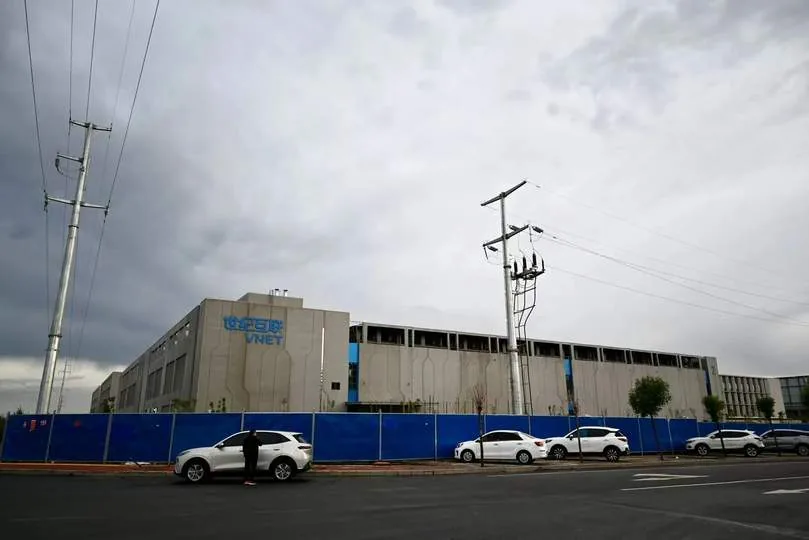
The "Token Capital" investigation isn't hypothetical. It's documenting a very real two-city race.
Beijing (北京) has the density. Zhipu (智谱), Moonshot/Kimi, Baichuan (百川), MiniMax, and 01.AI/Yi (零一万物) all cluster here. ByteDance (字节跳动) runs its Doubao infrastructure from Beijing. The city's Zhongguancun (中关村) district and emerging AI parks in Haidian (海淀) and Yizhuang (亦庄) house China's densest AI talent pool. When you ask Kimi a question, there's a solid chance the tokens are being generated inside the Beijing municipal boundary.
Hangzhou (杭州) has the heavy hitters. Alibaba (阿里巴巴) and Alibaba Cloud (阿里云) run the Qwen model family from here. DeepSeek — the company that sent global markets into a tailspin in January 2025 with its R1 model — is also Hangzhou-based. The municipal government has been aggressively subsidizing GPU cluster development and cutting deals for data center energy costs.
The Toutiao investigation suggests both cities are now in a silent infrastructure arms race: who can bring more Huawei Ascend (昇腾) 910B clusters online, who can offer cheaper power to AI companies, and who can poach the most PhDs from Tsinghua (清华) and Zhejiang University (浙大).
The Compute Bottleneck
Here's what the "investigation" framing actually reveals: China's token economy runs on hardware that's in critically short supply.
U.S. export controls have choked off access to Nvidia's most advanced chips. Chinese AI labs increasingly depend on domestically produced processors — Huawei's Ascend line, plus emerging alternatives from Cambricon (寒武纪) and Moore Threads (摩尔线程). The companies that secure the most compute, at the best price-to-performance ratio, will determine which city processes the most tokens.
This is why the "Token Capital" question isn't academic. It's about:
- GPU cluster capacity: Who has the most Ascend 910B units operational?
- Energy economics: Token generation is electricity-intensive. Cities with cheaper power and better grid infrastructure win.
- Talent pipelines: Beijing's universities versus Hangzhou's Alibaba-trained alumni network.
- Government subsidies: Which municipal budget office will underwrite the electric bill for a 50,000-GPU data center?
What the Trending Headline Actually Means
The "Token Capital" framing tells you three things about where Chinese AI culture sits right now.
First, the conversation has moved past "can we build models?" to "can we deploy them at scale, profitably?" The era when every lab raced to publish benchmarks is maturing. The new war is infrastructure. It's boring. It's unsexy. And it's where the actual money will be made or lost.
Second, the price war reveals a brutal commercial reality. Chinese AI labs are burning cash to acquire token market share. DeepSeek's aggressive pricing, mirrored by Doubao and Qwen, means most Chinese LLM APIs operate at margins that would make Silicon Valley investors reach for smelling salts. The bet is that volume justifies the burn — but the "Token Capital" investigation suggests not every player survives that transition.
Third — and this is the one Western observers consistently miss — Chinese consumers and businesses are actually using these tools. A trending headline about "token cities" wouldn't exist if the Chinese internet wasn't consuming AI services at massive scale. Doubao reportedly surpassed 50 million monthly active users. Kimi became a genuine productivity tool for Chinese students and knowledge workers. DeepSeek's R1 launch caused a national moment that spilled over into global markets. The token economy isn't vapor — it's real inference traffic from real users running on real domestic chips.
The Bottom Line
The "Token Capital" story is ultimately about one question the entire Chinese tech world is grappling with: in the AI era, whoever controls the infrastructure controls the future. Beijing has the startups. Hangzhou has the giants. Shenzhen (深圳) has the hardware ecosystem. Shanghai (上海) has the capital.
But tokens don't care about geography. They care about compute, cost, and latency. The city that solves that equation — maximum tokens, minimum cost, domestic chips, zero dependency — wears the crown.
The investigation is ongoing. The war is just beginning. And Toutiao's 1.1 million readers are watching every move.