China's 120,000 Datasets: The Boring AI War Front
The headline burning up Toutiao (今日头条) today reads: "全国已建成高质量数据集12万个" — "China has built 120,000 high-quality datasets nationwide."
This is, on its face, the most boring headline you will read this week. Possibly this month. It has zero drama, zero personalities, zero viral hooks. But if you care about who actually wins the AI arms race, this number matters more than any benchmark score or model release that crossed your feed.
Here's why: Everyone's been obsessing over algorithms and compute. Can DeepSeek (深度求索) match GPT-4? Can Qwen (通义千问) beat Llama? Can Huawei's Ascend (昇腾) chips replace NVIDIA? But the dirty secret of AI is that none of it works without data — specifically, high-quality, labeled, domain-specific data. And China just announced it has 120,000 such datasets ready to feed into the machine.
What Even Is a "High-Quality Dataset"?
Raw data is crude oil. A high-quality dataset is refined aviation fuel. It's data that's been cleaned, labeled, structured, and validated — whether that's millions of annotated medical scans, parallel translation corpora, tagged manufacturing defect photos, or structured legal documents ready for model training.
For context: Hugging Face, the world's largest open AI model hub, hosts roughly 150,000 datasets globally. China has essentially built a parallel data universe at national scale — and these are just the ones the government counts as meeting a quality bar.
This didn't happen overnight. China has been treating data as a "factor of production" (生产要素) since 2020 — officially placing it alongside land, labor, capital, and technology as an input to economic growth. In Silicon Valley, data is what your app generates as a byproduct. In Beijing's framework, data is something you consciously engineer, govern, and allocate like a strategic resource.
The Infrastructure Nobody Covers
This number connects to two mega-projects Western media barely mentions:
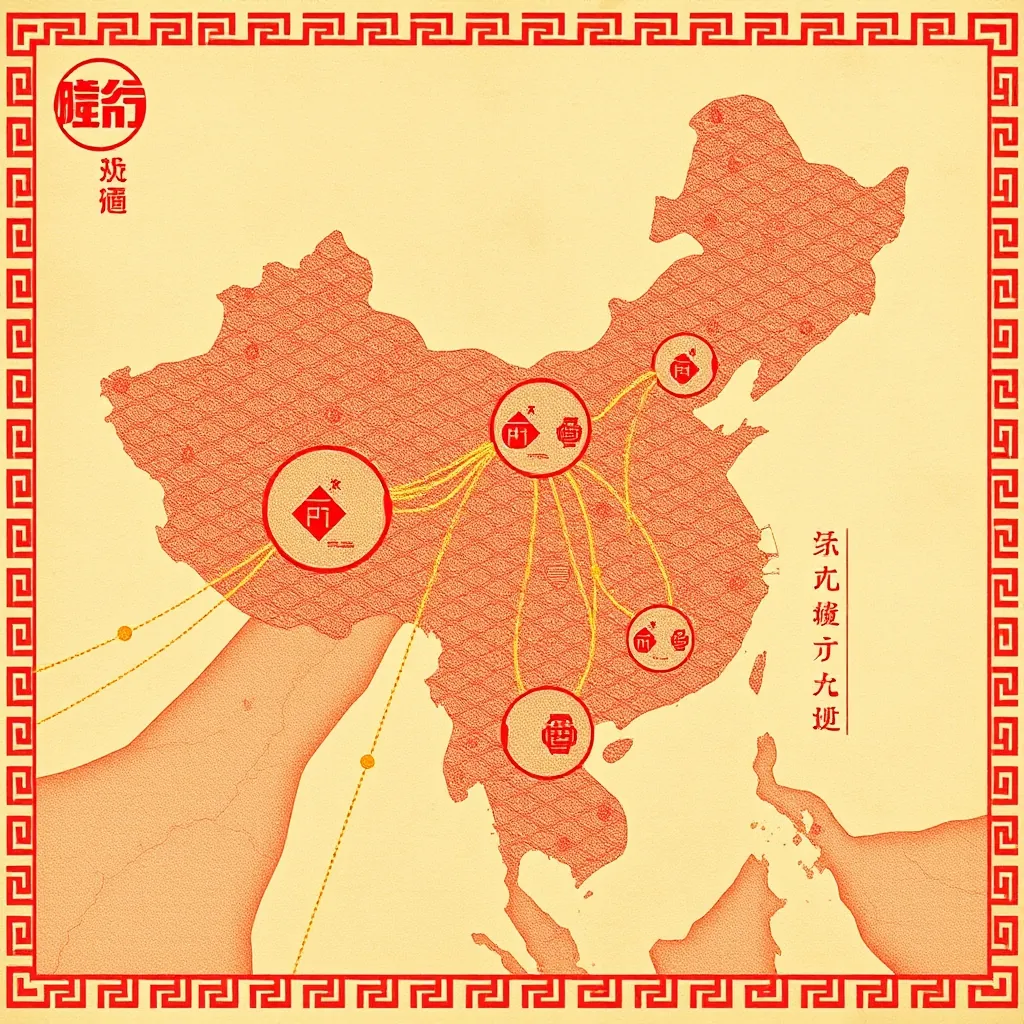
First: "Eastern Data Western Computing" (东数西算) — China's plan to route data center capacity from the wealthy eastern coast to the energy-rich western provinces like Guizhou and Inner Mongolia. Think of it as a data-era Three Gorges Dam, but distributed.
Second: Data trading exchanges (数据交易所). Since 2021, over 50 of these have popped up across China — from Shanghai to Beijing to Shenzhen — where companies can actually buy and sell datasets like commodities. The 120,000 datasets are the inventory sitting on those digital shelves.
While American outlets cover chip bans and model releases, China is building the picks and shovels: renewable-powered data centers, regulated data marketplaces, government-procured training data for public-good AI models, and industry consortiums pooling data across healthcare, finance, manufacturing, and agriculture.
Who Benefits? Every Chinese AI Lab
- DeepSeek (深度求索) — the Hangzhou lab that shocked everyone with cost-efficient models — needs specialized training data to keep punching above its weight against trillion-dollar competitors.
- Alibaba's Qwen (通义千问) — which has quietly released some of the best open-weight models globally — trains on Chinese-language and multilingual datasets that simply don't exist in Western repositories.
- ByteDance's Doubao (豆包) — China's most-downloaded AI chatbot — feeds on conversation data and behavioral patterns from Douyin (抖音) and beyond.
- Kimi (月之暗面), Zhipu/GLM (智谱清言), MiniMax (稀宇科技), Baichuan (百川) — every lab is downstream of this data infrastructure.
Even the robotics players benefit. Unitree (宇树科技), Fourier (傅利叶 GR-1), Agibot (智元) — training humanoid robots requires massive multimodal datasets of physical interactions, sensor readings, and demonstration recordings. China's dataset push isn't just about language models. It's about embodied AI too.
The Cynical Read (Half Right)
When a headline says "120,000 high-quality datasets," your first question should be: Who defines "high quality"? China's statistical claims trend toward the aspirational. Some datasets are probably thin. Some are redundant. Some data providers are absolutely padding numbers to hit government KPIs and qualify for subsidies.
But even if only 30% are genuinely useful, that's still 36,000 domain-specific datasets — more than most countries' entire AI ecosystems have access to. And China's structural advantage isn't just volume. It's coordination. The government can mandate hospitals share medical data. It can push factories to pool quality-control images. It can require universities to contribute research corpora. In the US and EU, that kind of data-sharing crashes into privacy law, corporate secrecy, and institutional inertia.
What to Watch
The next time DeepSeek drops a model that outperforms expectations, or Qwen climbs a leaderboard, or a Chinese AI app suddenly dominates a vertical — don't just look at the algorithm. Look at the data behind it. The 120,000 datasets are why China's AI trajectory is a marathon, not a sprint.
If you're tracking China's AI story, stop obsessing over chip stockpiles and start watching data infrastructure. That's where the real compounding advantage lives — quietly, boringly, 120,000 datasets at a time.