China's 'Six Networks' Infographic Goes Viral—And It's Really About Powering the AI Arms Race
A dry infrastructure explainer just became one of the most-read things on Toutiao (今日头条), and if you think that's boring, you're not paying attention.
The headline「一图读懂"六张网"之新型电网」 — roughly, "One Infographic to Understand the 'Six Networks': The New-Type Power Grid" — has been simmering on the Toutiao hot board with a heat score north of 46.5 million. For a nation that runs on hot takes about Pop Mart (泡泡玛特) and Dong Yuhui (董宇辉) livestreams, that's a lot of attention being paid to... electricity distribution policy.
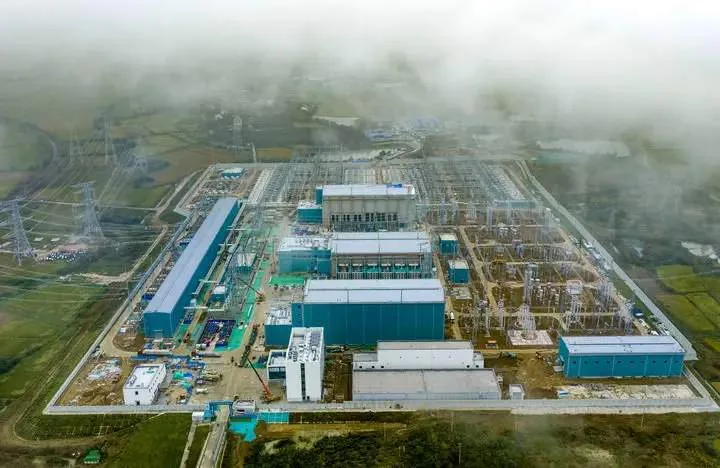
But here's the thing: the "Six Networks" (六张网) concept is the most underrated story in Chinese tech right now. It refers to six interlocking national infrastructure grids the country is racing to upgrade: power, transportation, water, communications, logistics, and energy storage. The infographic that just went viral focuses specifically on the new-type power grid (新型电网) — and the reason it's blowing up isn't because Chinese netizens suddenly developed a passion for transformer substation engineering.
It's because everyone's finally connecting the dots between electricity and the AI race.
The Hidden Cost of the Model Wars
Here's what the infographic doesn't say out loud but everyone in Chinese tech circles knows: DeepSeek (深度求索), Qwen (通义千问), Doubao (豆包), Kimi (月之暗面), and the rest of the Chinese AI model zoo are ravenous electricity consumers. Training a frontier model like DeepSeek-V3 or Qwen2.5 requires data center capacity that would have sounded absurd three years ago. China's data center power consumption surpassed 300 billion kWh in 2024 — more than the entire annual electricity use of Argentina — and it's growing double digits annually.
The "new-type grid" in the infographic refers to China's massive pivot toward: (1) ultra-high-voltage (UHV) transmission lines that move renewable energy from the west to the coast; (2) smart grid systems with AI-driven load balancing; (3) energy storage integration — especially battery and pumped hydro; and (4) distributed power architecture that can handle the wildly fluctuating demands of AI compute clusters.
This is the unsexy infrastructure that determines whether Chinese AI labs can keep scaling. You can have the cleverest mixture-of-experts architecture in the world — and DeepSeek genuinely does — but if the grid can't deliver stable gigawatts to your training run, you're done.
Why Toutiao Users Actually Care
The viral spread of this infographic reveals something interesting about Chinese internet culture: there's a genuine appetite for "hard infrastructure" explainers when they're packaged well. The "一图读懂" (one infographic to understand) format is a staple of Chinese state media and corporate communications — but it usually dies in obscurity. This one took off because it taps into three things trending simultaneously on the Chinese internet:
First, there's a growing pride narrative around Chinese engineering capability. The same netizens who dunk on benchmarks showing DeepSeek matching GPT-4 also want to see the physical backbone that makes it possible. The "Six Networks" framing makes infrastructure feel like a coherent national project rather than a bunch of random construction projects.
Second, electricity anxiety is real. China experienced notable power crunches in 2021 and 2022, and despite rapid capacity additions, regional shortages still pop up during extreme weather. The idea that there's a plan — a smart, modernized grid — is reassuring content.
Third — and this is the spicy take — the infographic format itself is perfectly tuned for Toutiao's algorithm and audience. Toutiao skews older, more male, more inland than Xiaohongshu (小红书) or Bilibili (B站). Its users genuinely enjoy technical breakdowns and patriotic infrastructure flexing. This isn't a viral meme; it's a viral white paper.
The Stakes Nobody's Mentioning
What the infographic won't tell you: China's grid modernization is now a bottleneck in the global AI race. US hyperscalers — Microsoft, Google, Amazon — are openly panicking about power constraints on their AI buildouts. They're cutting deals with nuclear plant operators and reviving Three Mile Island. China has a different problem: it has the political capacity to build grid infrastructure at a speed the West can't match, but it's racing against the same physics of transformer lead times and copper shortages.
The new-type grid matters for Chinese AI labs specifically because they're increasingly concentrated in a few regions — Anhui for iFlyTek (科大讯飞), Hangzhou for Alibaba's (阿里巴巴) Qwen team and DeepSeek, Beijing for Zhipu (智谱) and Moonshot (月之暗面). Cluster power demand in these areas is growing faster than local grid capacity. The "Six Networks" buildout is, in practice, the precondition for the next generation of Chinese foundation models.
It's also quietly relevant to the robotics boom. Unitree (宇树科技), Agibot (智元), and Fourier (傅利叶) are building humanoid robots that will eventually need massive manufacturing scale — and that means factories, and factories mean power. The same grid that enables Douyin (抖音) recommendation algorithms also enables the industrial base for the robotics sector.
My Take
This infographic going viral is a signal, not a curiosity. The Chinese internet is maturing beyond pure consumer entertainment obsession toward a kind of techno-nationalist infrastructure literacy. The same people who made Labubu (拉布布) a global phenomenon also want to understand grid load-balancing — because they understand, at a gut level, that the AI story is ultimately an energy story.
Western coverage of Chinese AI fixates on model releases and benchmark scores. The Toutiao audience is several steps ahead: they know the real contest is being fought over gigawatts, not parameters.
That's why 46 million people just read a power grid explainer. And frankly, that's why anyone serious about the global AI landscape should probably read it too.