China's Power Crunch Is Way Worse Than Markets Think
A Toutiao (今日头条) hot-board post with 2.2 million engagement is making a very uncomfortable argument: everyone is sleeping on how bad China's electricity shortage actually is.
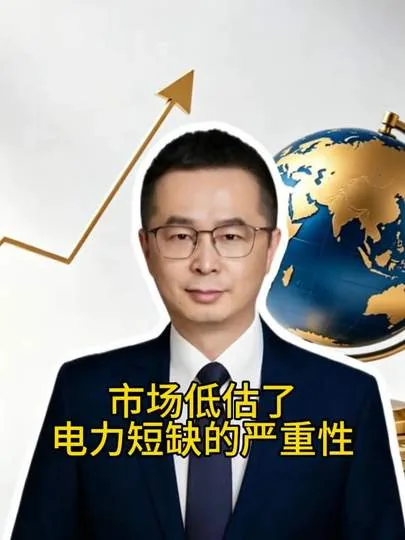
The headline — from an anonymous finance blogger — reads bluntly: "市场低估了电力短缺的严重性" — the market is underestimating the severity of the power shortage. Not "could worsen." Not "may impact growth." Underestimating. As in: pricing it wrong. As in: the trade is still wrong-footed.
Let's talk about why this is blowing up right now — and why Chinese internet users, not just equity analysts, are the ones sounding the alarm.
The AI Boom Has a Dirty Little Secret: It Eats Electricity
Here's what Western AI discourse keeps dancing around: every single Chinese AI lab currently in a benchmark war — DeepSeek (深度求索), Qwen/Tongyi (通义千问 by Alibaba), Doubao (豆包 by ByteDance), Kimi (月之暗面), GLM/Zhipu (智谱清言), MiniMax, Baichuan (百川), 01.AI (零一万物) — needs data centers. Lots of them. Enormous ones. And data centers are not cute server closets. They are industrial-scale electricity hogs that make steel mills look frugal.
The Chinese AI arms race of 2024-2025 has triggered a buildout so aggressive that provincial grids are groaning. We're talking about facilities drawing hundreds of megawatts each, running 24/7, with cooling systems that alone could power small cities. When DeepSeek dropped V3 and R1 and sent the entire global AI narrative into a tailspin, nobody asked: where does the juice come from? The Toutiao blogger is asking. Loudly.
And it's not just training runs. Inference — the actual serving of models to hundreds of millions of users across Douyin (抖音), WeChat (微信), Baidu Search, Xiaohongshu (小红书) recommendation feeds — is arguably more power-intensive in aggregate. Every Chinese app that bolts on an AI assistant is signing a utility bill nobody budgeted for.
Industrial China + AI China = The Grid's Worst Nightmare
Here's the structural problem the market is supposedly mispricing: China's electricity demand is being squeezed from both ends simultaneously.
On the industrial side — manufacturing, chemicals, materials processing — China's factory economy already runs hot. Sichuan's hydropower-dependent grid famously buckled during the 2022 drought heatwave, forcing factory shutdowns. Guangdong's manufacturing corridor faces summer crunches every year. The margins are thin.
On the digital side — AI data centers, cryptocurrency-adjacent compute, cloud infrastructure for Tencent Cloud (腾讯云), Alibaba Cloud (阿里云), Huawei Cloud (华为云) — the demand curve is going essentially vertical. China's cloud providers are in an arms race to offer inference capacity for enterprise clients, and each new GPU cluster is a new vampire on the grid.
The blogger's implicit thesis: the market is treating power shortage risk as cyclical (summer heat, drought) when it's becoming structural (permanent new demand from compute). That's a pricing error with real money consequences.
What Chinese Internet Culture Reveals Here
What's interesting culturally is who is raising the alarm. In Western markets, power-grid anxiety lives in utility analyst notes and Bloomberg terminals. In China, it's trending on Toutiao — a platform whose user base skews toward ordinary consumers, retail investors, small business owners, factory managers in Tier 3-4 cities. These are people who feel power rationing directly. They run the workshops that get told to shut down during peak hours. They pay the electricity bills that quietly climbed.
This isn't abstract macro to them. It's operational. A Dongguan factory owner who sees production lines idled every July reads "the market is underestimating this" and thinks: no kidding. A Chengdu resident who lived through rolling blackouts reads it and remembers the sweat.
The fact that this framing is going viral — 2.2 million engagement, hot board placement — suggests ordinary Chinese internet users are connecting dots the equity markets haven't: the AI boom they read about daily is colliding with an infrastructure ceiling they experience physically.
My Take: The Trade Nobody's Running
Here's my read: the blogger is directionally right, but the framing is incomplete.
Yes, the market is underestimating power demand growth from AI compute buildout — in China and globally. The difference is that China's grid is already tighter, the industrial base is already hungrier, and the AI acceleration post-DeepSeek is faster than anyone modeled eighteen months ago. Coal still powers roughly 55-60% of Chinese electricity. Renewables are scaling impressively — China installs solar and wind at multiples of the rest of the world combined — but transmission, storage, and grid flexibility lag badly.
The trade implications, if the blogger is right: coal prices stay structurally elevated longer than expected; power generator stocks get re-rated; data center operators face margin pressure from rising electricity costs; and — critically — the Chinese AI labs fighting margin wars on model pricing discover that their biggest constraint isn't GPU access, it's kilowatt-hours.
That last point matters. Everyone obsesses over chip export controls and Ascend (华为昇腾) supply chains. But the real bottleneck for Chinese AI in 2025-2026 might not be silicon. It might be the wall socket.
The Toutiao blogger deserves credit for surfacing what most AI commentary — both Western and Chinese — treats as boring background infrastructure. Power grids aren't sexy. They don't trend. They don't have benchmark leaderboards. But as every Chinese factory owner knows: when the lights go out, nothing else matters.
Markets are apparently still pricing electricity like it's 2022. The Chinese internet — sweaty, cranky, and increasingly AI-obsessed — is telling them to wake up.