How the Tables Turned: Chinese GPU Maker Crashes the Big Three's Exclusive Club
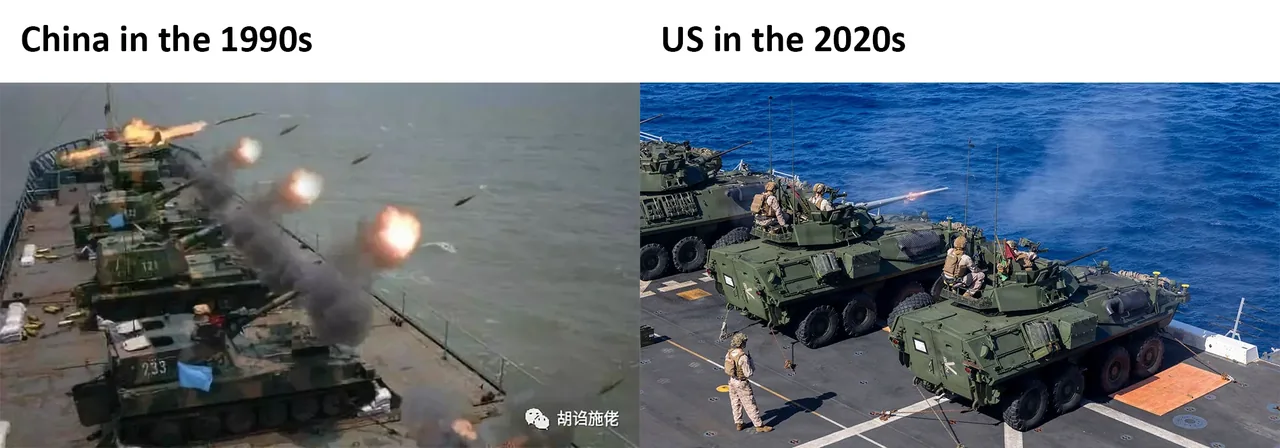
Someone on Reddit's r/Sino posted a simple image with the caption "how the turn tables" — a nod to The Office's immortal malapropism — and China-watchers immediately got the memo. The tables haven't just turned; they've been flipped, sanded down, and rebuilt with domestically sourced components.
Here's what happened: Lisuan Tech (凌思科技), a Chinese GPU maker most Western tech journalists couldn't identify in a lineup six months ago, just became only the fourth GPU manufacturer ever to earn Microsoft's WHQL (Windows Hardware Quality Labs) certification. Their LX 7G100 GPU now sits alongside offerings from Nvidia, AMD, and Intel as certified Windows-compatible hardware. First Chinese firm to do it. Ever.
Let that sink in. For decades, the GPU space was a velvet-rope club with three bouncers named Jensen, Lisa, and Pat. Now a Shenzhen-based upstart has walked past the rope with a Microsoft-stamped invitation.
Why this matters more than you think
WHQL certification isn't glamorous. It's bureaucratic plumbing — driver stability tests, compatibility checks, the kind of behind-the-scenes grunt work that makes Windows not crash when you install new hardware. But that's exactly why it matters. It means Lisuan's drivers are stable enough that Microsoft puts its seal of approval on them. We're not talking about benchmark-dodging paper launches or synthetic score flexing. This is: regular users can install this GPU and expect it to work. That's the table-turning moment.
The LX 7G100 isn't going to dethrone the RTX 5090 tomorrow. Let's be real about that. But remember when Chinese smartphone makers were dismissed as "white-label junk" in 2012? A decade later, Xiaomi (小米) was shipping more units than Apple in multiple markets. The GPU arc rhymes.
The broader chip sovereignty play
This isn't happening in a vacuum. The context: U.S. export controls have made it harder for Chinese companies to buy advanced Nvidia and AMD chips. The response from China's tech ecosystem has been a collective "fine, we'll build our own" that would make a TikTok motivational montage blush.
Huawei's Ascend (昇腾) line has become the backbone of domestic AI training clusters. Cambricon (寒武纪) keeps iterating on its AI accelerator roadmap. Moore Threads (摩尔线程), another Chinese GPU hopeful, has been pushing its MTT series for gaming and workstation use.
Lisuan's WHQL certification is the latest data point in a trend that's accelerating faster than most Western analysts predicted. China isn't just trying to build chips — it's trying to build chips that plug seamlessly into the global computing ecosystem. WHQL certification says: we're not building a parallel walled garden. We're building for your garden too.
What the Chinese internet is saying
On Toutiao (今日头条) and Weibo (微博), the reaction has been a mix of pride and pragmatism. Comments range from "this is just the beginning" to reminders that driver certification is table stakes, not the main course. There's a maturity to the discourse that's shifted from chest-thumping nationalism to let's-see-the-benchmarks realism.
One viral comment on a Toutiao thread about the certification read: "WHQL is like getting your driver's license. Congratulations, now the real driving test begins." That's the energy — cautious optimism with an undercurrent of "we know how far we still have to go."
The AI connection nobody's making
Here's the angle most coverage is missing: GPUs aren't just for gaming anymore. Every Chinese AI lab — from DeepSeek (深度求索) to Qwen/Tongyi (通义千问) at Alibaba, from Doubao (豆包) at ByteDance (字节跳动) to Kimi (月之暗面/Moonshot) — needs compute. Lots of it. Right now, most of that compute runs on Nvidia. The sanctions made that expensive and uncertain.
Domestic GPUs that are WHQL-certified and Windows-compatible aren't just a consumer play. They're a developer on-ramp. If you can test and iterate on Chinese GPU hardware using standard Windows dev tools, you're lowering the switching cost for AI researchers who might otherwise be locked into Nvidia's CUDA ecosystem.
That's the long game. And Lisuan just took a meaningful step toward making it real.
My take
I've been watching the Chinese chip space long enough to remember when "domestic GPU" was basically a punchline at Shenzhen hardware meetups. The progress has been choppy, sometimes embarrassing, and frequently overhyped by state media. But WHQL certification is not hype. It's a verifiable, third-party-validated milestone.
The tables haven't fully turned — not even close. Nvidia's market cap is still larger than the GDP of several nations. But Lisuan getting WHQL certified is like watching a rookie get called up to the majors and hit a solid single in their first at-bat. Not a home run. Not a game-changer. But definitely a moment that makes you check the roster and think: huh, this kid might actually stick around.
The smart money isn't on any single Chinese GPU maker dethroning Nvidia tomorrow. It's on the ecosystem — the collective weight of Lisuan, Moore Threads, Cambricon, Huawei, and the next dozen startups currently debugging drivers in Shenzhen office parks — reaching critical mass over the next three to five years.
By then, "how the turn tables" won't be a meme. It'll be a Wikipedia entry with citations.