CXMT's Long Wait: China's Memory Chip Underdog Finally Catches Lightning
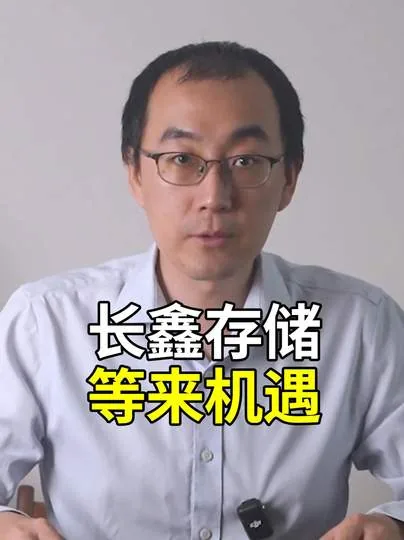
Toutiao (今日头条) is buzzing right now about a question that sounds boring but is actually wild: How did CXMT (长鑫存储), China's homegrown DRAM memory champion, finally catch its break?
The headline — "How CXMT Waited For Its Opportunity" — has racked up over 3.5 million热度 on the platform, and it's not because Chinese netizens suddenly developed a passion for memory semiconductor supply chains. It's because CXMT represents something the Chinese internet craves right now: a domestic underdog story where patience, money, and geopolitics collide to create a genuine global contender.
Here's the setup for the uninitiated. DRAM — the memory in your phone, laptop, and every AI server rack on earth — has been a brutal three-company oligopoly for over a decade. Samsung (三星), SK Hynix (SK海力士), and Micron (美光). That's the club. Three companies. South Korea, South Korea, America. China buys more chips than any nation on earth but has been essentially locked out of manufacturing the memory that makes those chips actually work.
Enter CXMT, founded in 2016 and headquartered in Hefei (合肥) — the unassuming Anhui provincial capital that has quietly become one of China's most important tech hubs. While Shenzhen gets the consumer hardware glory and Beijing grabs the AI headlines, Hefei has been methodically building deep-tech infrastructure: quantum computing labs, EV battery research, and yes, memory chip foundries that cost tens of billions of yuan to stand up.
The "waiting" in that headline is the real story. CXMT didn't burst onto the scene — they lurched. Years of R&D burn. Technical talent poached from the established players. Patent thickets to navigate. Production yields that made investors wince. The company has consumed an estimated 100+ billion yuan (roughly $14 billion) in investment since inception, with the Hefei municipal government and state-backed funds providing much of the runway.
So what changed? Why is Toutiao suddenly treating CXMT like a protagonist who finally got their montage moment?
Three words: export control chaos.
When Washington began tightening semiconductor restrictions — limiting what tools and technologies could flow to Chinese fabs — the immediate narrative was devastation. And yes, companies like SMIC (中芯国际) faced genuine constraints. But for CXMT specifically, the restrictions on selling advanced memory into China created a vacuum. Domestic buyers — from smartphone makers to data center operators — suddenly needed non-Korean, non-American suppliers. Not as a patriotic gesture. As a supply chain survival mechanism.
CXMT was positioned, imperfectly but persistently, to fill that gap.
Their DDR4 and LPDDR4X products aren't cutting-edge by global standards — Samsung and Hynix are already pushing DDR5 and HBM3E for AI workloads. But "good enough" domestic memory is dramatically more valuable than no domestic memory, especially when you're Huawei (华为) trying to build Ascend AI servers or a Chinese cloud provider calculating supply chain risk.
This is what the Toutiao commentariat finds so compelling. The story isn't "Chinese chip beats American chip." It's "Chinese chip company survives decade of doubt, gets handed an opportunity by geopolitical disruption, and now has to actually execute." The drama is in the execution.
And there's a cultural dimension here that's worth naming. Chinese internet audiences love the "卧薪尝胆" narrative — the ancient tale of King Goujian of Yue, who slept on brushwood and tasted gall for years while plotting revenge. It's the ultimate patience-rewarded archetype. CXMT has become a modern Goujian: absorbing humiliation, burning capital, waiting for the moment when external forces finally crack open the door.
The Chinese comments sections reflect this. Top-voted responses on the Toutiao thread aren't technical analyses — they're emotional. "十年磨一剑" ("ten years sharpening one sword"). "终于等到了" ("finally the wait is over"). This is the language of vindication, not just business analysis.
But here's my honest take: CXMT's window is real but narrow. The company still trails the global frontier by roughly one to two generations. HBM (high-bandwidth memory), which is critical for AI training and inference, remains dominated by SK Hynix with Samsung and Micron scrambling. If CXMT can't close that gap within the next 3-5 years, the geopolitical window could close — either through diplomatic shifts, technology diffusion, or simply being permanently relegated to the "domestic alternative" tier rather than genuine global competitiveness.
The Toutiao hype machine often oversells these stories. But this one has substance. CXMT represents something structural in China's tech strategy: patient capital, state-backed conviction, and a willingness to lose money for a decade if the strategic asset is important enough. Whether that model produces a global champion or just a expensive national champion remains genuinely uncertain.
What's undeniable is that Chinese internet users are paying attention to semiconductor stories that would have been considered snooze-fest material five years ago. Memory chips trending alongside Pop Mart (泡泡玛特) drops and Douyin (抖音) drama? That's a cultural shift worth watching.
The underdog waited. Now we find out if the opportunity was worth the wait.