Lei Jun's 700M Yuan Chip Bonus: Changxin IPO Exposes China's Silicon Gold Rush
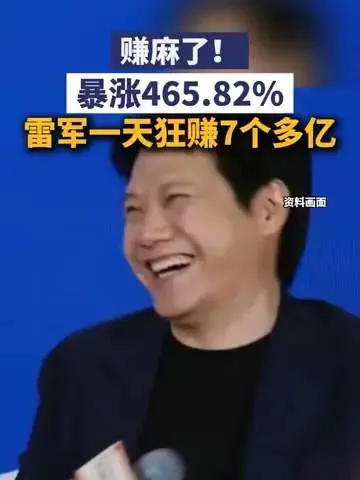
The Toutiao (今日头条) hot board is practically on fire today, and the reason is a number: 700 million yuan. That's the paper profit Lei Jun (雷军) — yes, the Xiaomi (小米) founder — is sitting on after ChangXin Memory Technologies (长鑫存储, or CXMT) exploded onto the public markets with a debut that has half of China's tech-commentariat either swooning or seething.
The headline reads, translated naturally: "Lei Jun's paper profit tops 700 million yuan on Changxin's first day of trading." And with a heat score of nearly 4 million on Toutiao, this isn't just financial news — it's a cultural moment.
Here's why everyone's losing their minds.
The Chip Company You've Never Heard Of (But Should Have)
ChangXin Memory Technologies is China's only serious domestic DRAM — dynamic random-access memory — manufacturer. DRAM is the stuff that makes your computer, phone, and every AI server on the planet actually work at speed. For decades, the global DRAM market has been a cozy oligopoly: Samsung, SK Hynix, and Micron. Three companies. That's it. China buys roughly $100 billion worth of chips annually that it cannot make itself, and memory is one of the most painful choke points.
CXMT is the company Beijing has been desperately funding to break that stranglehold. Based in Hefei — yes, the same city that quietly assembled one of China's most aggressive semiconductor industrial clusters — Changxin has been burning through capital for years, poaching engineers from the Korean giants, filing patents at a furious clip, and slowly, painfully climbing the yield-curve mountain. Their IPO wasn't just a liquidity event. It was a national coming-out party.
And the market showed up. The stock surged on debut, creating instant paper billionaires and validating, at least temporarily, the entire "we will build our own chips" thesis that has consumed Chinese industrial policy since the US export controls began biting in earnest around 2022.
Lei Jun: The Investor Nobody Talks About
Here's the thing that makes this story sing on the Chinese internet: Lei Jun isn't just a phone guy or a car guy. He's one of the most prolific and quietly successful angel investors in Chinese tech history. Before Xiaomi became a household name, before the SU7 electric sedan became a thing I am not allowed to write about here, Lei Jun was making bets. Dozens of them. Hundreds, actually.
His investment vehicle, Shunwei Capital (顺为资本), has backed everything from streaming platforms to robot vacuum makers to — critically — semiconductor companies. The Changxin investment was apparently made years ago, when memory chips were about as sexy as municipal bonds and domestic DRAM seemed like a fantasy. The man saw something. Now he's up nine figures on paper.
This is the version of Lei Jun that Chinese netizens find genuinely fascinating — not the CEO who does three-hour keynote speeches, but the investor who seems to have a preternatural sense for where the puck is going. On Weibo (微博) and Xiaohongshu (小红书), the reaction splits predictably: half the commenters are calling him a genius, the other half are doing the math on how many Xiaomi phones you'd have to sell to make 700 million yuan. It's a lot. Like, a lot a lot.
What This Reveals About the Chinese Tech Psyche
The Changxin IPO matters beyond Lei Jun's personal windfall. It's a stress test for the entire "domestic substitution" (国产替代) narrative that has dominated Chinese tech discourse for three years now. The bet — made by government planners, private investors, and ordinary punters alike — is that China can, through sheer force of will and capital, build a self-sufficient semiconductor stack. Memory is the test case. If CXMT can actually produce competitive DRAM at scale, the theory goes, then the rest of the chip ecosystem — logic, foundry, packaging — becomes thinkable.
The IPO's reception suggests the market believes. Or at least wants to believe. The valuation is rich by any traditional semiconductor metric, but this is a market pricing in geopolitics, industrial policy, and pure national pride. It's the same logic that drove SMIC's (中芯国际) stock to absurd heights in 2020 — logic that eventually collided with reality, but not before making and destroying several fortunes.
Will CXMT be different? Maybe. They've got real technology, real customers, and a real domestic market that has no choice but to buy from them if the export controls tighten further. But memory chips are a brutal commodity business — cyclical, capital-intensive, and dominated by incumbents who can price-floor any upstart into oblivion when they feel threatened. Samsung has done it before. They'll do it again.
The Take
Here's my read: the Changxin IPO is a genuine milestone, not because the company is guaranteed to succeed but because its mere existence at this scale changes the game. Three years ago, China had no domestic DRAM. Now it has a publicly traded memory champion with a multi-billion-dollar valuation and the full backing of an industrial policy apparatus that does not accept "no" as an answer.
Lei Jun's 700 million yuan paper profit is the eye-catching headline. The real story is that China's silicon gold rush has entered a new phase — one where the companies actually have to deliver, not just promise. The IPO was the easy part. Now comes the hard part: making chips that work, at yields that make economic sense, in a market where the competition would happily bleed for a decade to prevent another player from gaining a foothold.
But for one day at least, everyone's happy. Lei Jun's richer. The IPO bankers got paid. And the Toutiao comment section gets to argue about whether this counts as a win for Chinese innovation or just another bubble. My money says it's both. Those things aren't mutually exclusive in this market.