China's Memory Chip IPO Ignites Brutal City Wars
The Toutiao (今日头条) hot board is currently on fire over a headline that sounds like dry securities news but is actually pure Chinese internet catnip: "ChangXin Technology IPO — Which Cities Are the Winners?" (长鑫科技上市 哪些城市是赢家). With a heat score of 13.1 million and climbing, this story has everything the Chinese feed loves: massive IPO drama, semiconductor nationalism, and that most sacred of blood sports — intercity rivalry.
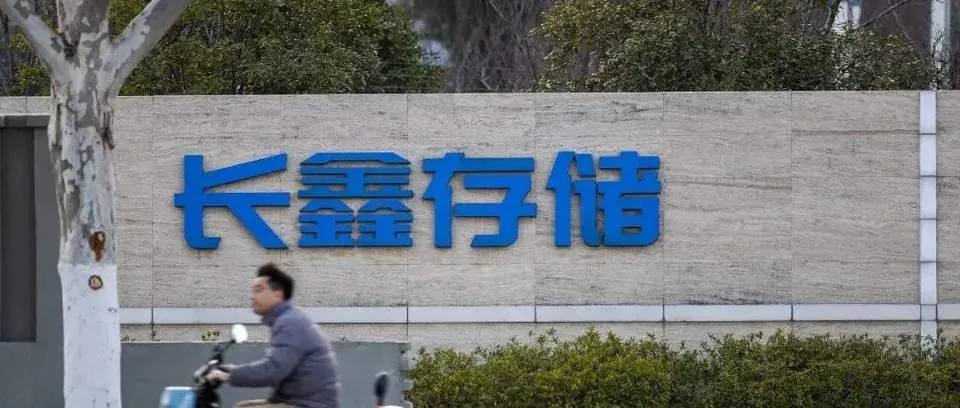
Here's the deal. ChangXin Memory Technologies, known globally as CXMT (长鑫存储), is China's only serious domestic DRAM manufacturer, and it's finally heading for a public listing. The entire country is now doing mental arithmetic to figure out which municipal government just hit the jackpot.
Why a Memory Chip IPO Is Trending Harder Than C-Drama
Let me explain why a company most Western readers have never heard of is trending harder than your average celebrity scandal. DRAM — dynamic random-access memory — is the invisible backbone of everything digital. Your phone, your laptop, the servers running DeepSeek (深度求索) and Qwen (通义千问), the humanoid robots Unitree (宇树科技) is building — they all need DRAM. And for years, this market has been a cozy oligopoly controlled by three companies: Samsung, SK Hynix, and Micron. Three companies. Two countries. The entire global supply of computer memory.
China finds this arrangement... uncomfortable.
ChangXin, headquartered in Hefei (合肥), Anhui Province, is China's great yellow-peril-meets-silicon-valley hope for breaking that monopoly. Founded in 2016, the company has burned through billions of yuan developing domestic DRAM technology and has actually started shipping competitive products — DDR4 and LPDDR4X chips that power smartphones, servers, and AI infrastructure. Not bleeding edge, but real. Their IPO isn't just a liquidity event. It's a coming-out party for China's semiconductor self-sufficiency ambitions.
The valuation whispered around WeChat (微信) finance groups? North of 100 billion yuan. Unicorn territory with a nationalist halo.
The City War Angle — Why Toutiao Users Can't Look Away
Here's where it gets fun. The trending headline isn't "ChangXin IPO" — it's "Which Cities Are the Winners?" Because in China, a mega-IPO isn't a corporate event. It's a municipal scoreboard.
The obvious champion: Hefei. Anhui's capital has been quietly assembling one of China's most aggressive semiconductor ecosystems, and ChangXin is its crown jewel. Hefei's government-backed investment model — where the municipal state essentially operates as a venture capitalist — has become legendary in Chinese policy circles. They bet on ChangXin when the smart money said don't. If this IPO pops, Hefei's "government VC" playbook gets another massive W.
But the Toutiao comment section is where the real entertainment lives. Everyone's arguing about ripple effects:
Shanghai (上海) wants credit because its semiconductor supply chain feeds ChangXin's fab lines. Beijing (北京) claims the talent pipeline — top engineers came through Tsinghua University (清华大学) research initiatives. Shenzhen (深圳) points out that downstream buyers like Huawei (华为) will benefit from domestic memory at scale. Even Nanjing (南京) and Wuxi (无锡) are angling for "supply chain winner" badges.
This is the Chinese internet's favorite content format: take a major news event and immediately reduce it to a city-ranking cage match. Toutiao users gorge on it. Weibo (微博) amplify it. Xiaohongshu (小红书) inevitably turns it into "Which city should young tech workers move to now?" listicles. City boosterism as engagement strategy — chef's kiss.
The Deeper Story: China's Chip Independence Stack
Step back from the city-wars spectacle and you see something structural. ChangXin's IPO represents a critical layer in China's push to build a complete domestic semiconductor stack.
For years, the narrative was simple: China builds the apps, the West builds the silicon underneath. DeepSeek's models run on Nvidia GPUs with Samsung memory. Douyin (抖音) algorithms execute on foreign-designed chips. The entire AI application layer sits atop hardware China doesn't fully control.
ChangXin represents the memory layer of a domestic alternative. Paired with Huawei's Ascend (昇腾) AI accelerators, SMIC's (中芯国际) foundry advancements, and Cambricon's (寒武纪) AI chip designs, ChangXin could eventually supply the RAM that makes a fully Chinese AI compute stack possible. Every IPO yuan funds the next generation of R&D.
The Hefei Model Goes National — For Better or Worse
What really has Chinese policy watchers buzzing isn't just the chips — it's the Hefei investment model itself. Hefei's municipal government has essentially operated as a sovereign tech fund for the past decade, making ballsy early bets on display panels through BOE (京东方), semiconductors through ChangXin, and a portfolio of other deep-tech plays. The ChangXin IPO is their biggest validation yet.
Expect copycats. Dozens of Chinese cities will try to replicate the Hefei playbook — municipal governments acting as deep-tech VCs. Some will find their own ChangXin. Many will torch taxpayer money chasing unicorns and getting duds. The Hefei model works because Hefei made genuinely smart, patient bets. Not every mayor reads the prospectus that carefully.
Bottom Line
A memory chip IPO shouldn't trend this hard. But in today's China, every semiconductor milestone carries geopolitical weight, every IPO is a city's economic report card, and every Toutiao trending topic is fuel for regional bragging wars. ChangXin's listing matters because it proves China's chip independence push is producing real companies with real products — not just propaganda slideshows.
Hefei just took the lead in the semiconductor city rankings. But as every Toutiao commenter knows, in China's tech city wars, the leaderboard never stays still for long.