7.7 Million Winners: China's Chip Stock Gold Rush
7.7 million.
That's how many lucky lottery numbers surfaced in Changxin Technology's (长鑫科技) IPO allotment — and it's trending at the top of Toutiao (今日头条) with a heat score north of 2.8 million. Not Pop Mart (泡泡玛特) blind boxes. Not concert tickets. Not even a milk-tea collaboration drop.
Memory chips.
Well, memory chip stock. But in China's retail-investor-obsessed culture, that distinction barely registers.
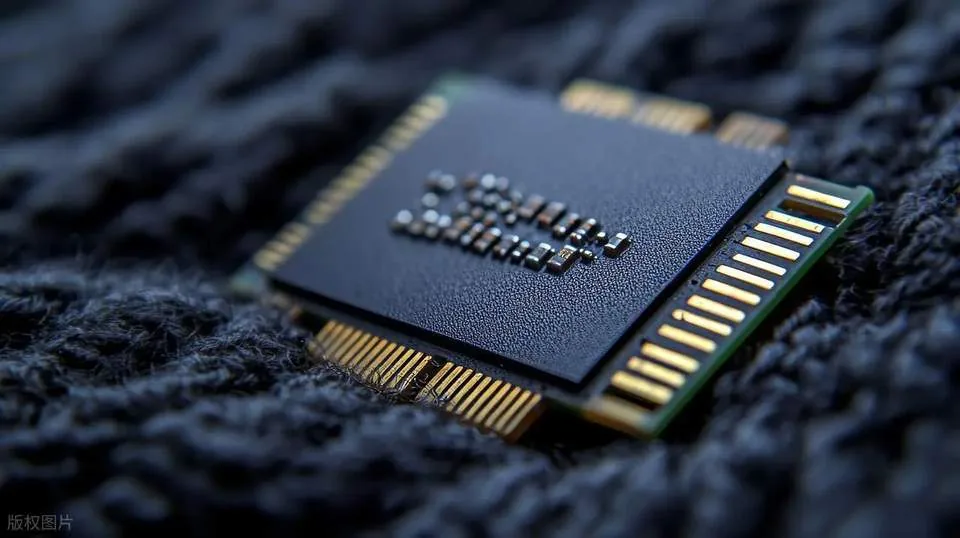
Here's the scene. When a hot Chinese company goes public, regulators run a lottery system — 中签号 (zhòng qiān hào) — to decide which retail investors get the privilege of buying shares at the offering price. Think stock-market Powerball, except the prize is the honor of handing a semiconductor company your savings.
7.7 million winning numbers. The total applicants who tried and lost? Likely tens of millions more. This is one of the largest retail IPO lotteries in Chinese market history.
So who is Changxin?
The name refers to the corporate entity behind ChangXin Memory Technologies (CXMT / 长鑫存储), headquartered in Hefei (合肥) — China's domestic champion in DRAM, the dynamic random-access memory chips inside every phone, laptop, and data center on Earth. The global DRAM market is an oligopoly controlled by three players: Samsung, SK Hynix, and Micron. CXMT is China's bid to become the fourth.
Founded in 2016, CXMT has been incinerating capital to build domestic memory capacity — starting with DDR4 and clawing toward DDR5. It's not just a business. It's a national-resilience project wrapped in silicon.
And Chinese retail investors know it.
The Toutiao comment section under this trending headline is a cultural document in itself. Top comment: "Seven million people standing with domestic chips!" Second: "I didn't win, but I'll keep subscribing until I do." Third, inevitably, someone comparing it to a blind-box drop. (It is not a blind box. Please stop.)
The "背后" — "behind" — in the original headline is doing heavy lifting. It's an invitation to look past the raw lottery numbers at what's structurally powering this mania.
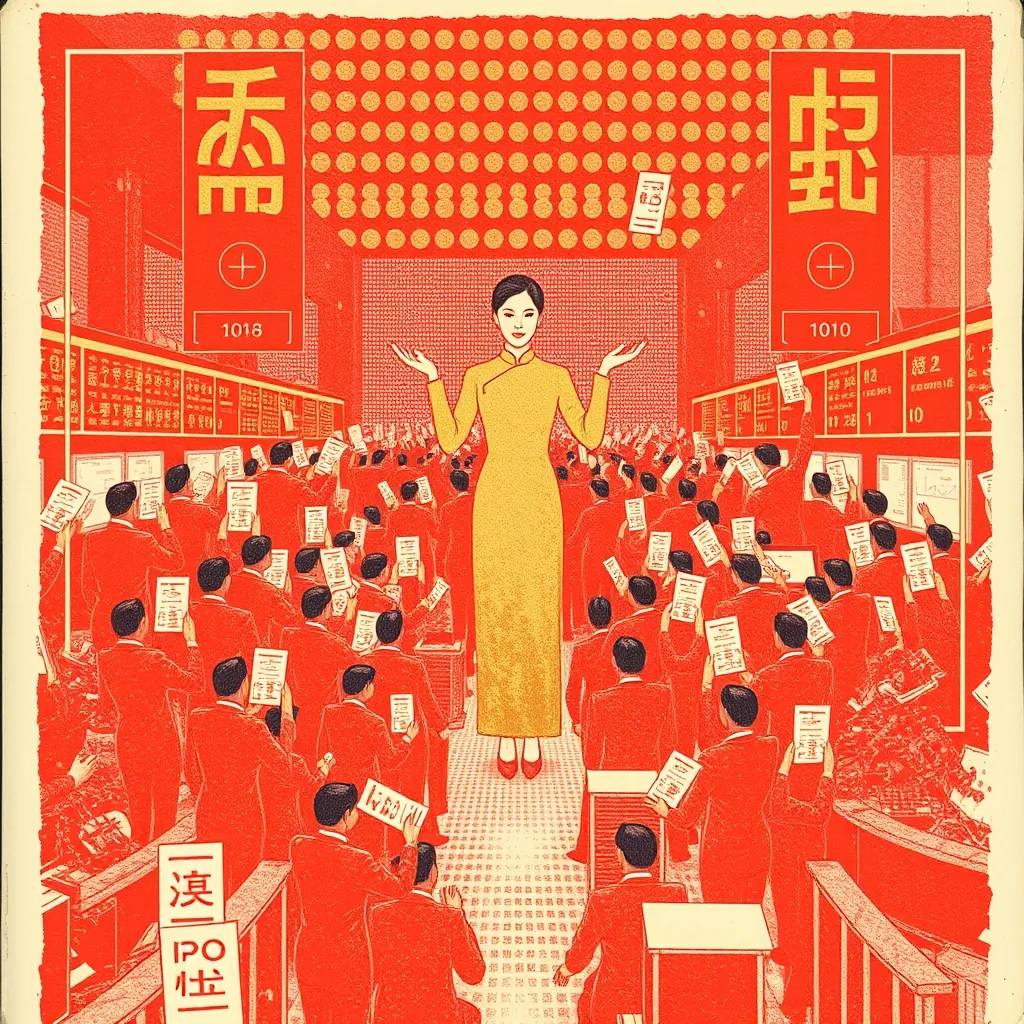
Force One: Supply-chain anxiety as investment thesis. US export controls on advanced semiconductors have made chip self-sufficiency the defining economic project of this era in China. Every IPO is a status report on whether the domestic ecosystem can stand alone. CXMT going public isn't just a financial event — it's a progress report the entire nation is reading.
Force Two: Chinese retail market DNA. China has over 200 million individual stock-market accounts. These aren't passive index-and-forget investors. They trade directly, frequently, and emotionally. IPO lotteries — 打新 (dǎ xīn), literally "hitting new" — are practically a national sport: a relatively low-risk bet where winners flip shares on listing day for quick gains, because first-day pops on the STAR Market (科创板) and ChiNext (创业板) have been legendary. Cambricon (寒武纪) surged over 200% on its 2020 debut. Moore Threads (摩尔线程) IPO chatter already has retail circles buzzing. The chip-stock playbook is well-established, and CXMT is the fattest pitch yet.
Force Three — and here's my opinionated take — patriotic bubble economics meets retail euphoria.
CXMT is genuinely important. It's also genuinely behind. Samsung and SK Hynix are already mass-producing DDR5 and sampling HBM3E for AI accelerators — the memory chips powering the global AI arms race. CXMT is still scaling DDR4 and early DDR5. The technology gap is measured in years, not quarters. Closing it requires engineering talent, process equipment, materials science, and time — things you cannot compress just because 7.7 million people won a lottery.
But markets don't price reality. They price narratives. And the narrative here is irresistible: China's memory champion, going public, backed by the full faith and fury of a nation that's been told semiconductor independence is existential. If you're a Chinese retail investor and you don't apply for this lottery, what are you even doing with your brokerage account?
The result is an IPO that functions less like a capital-raising event and more like a collective act of economic nationalism. Seven million people didn't just subscribe to a stock. They subscribed to a story.
Here's what I'm watching on listing day. If Changxin's stock rockets 200%+ on debut — plausible given the STAR Market's history and the sheer weight of retail demand — it confirms the patriotic-frenzy thesis and probably triggers copycat manias across the semiconductor sector. Every chip-adjacent IPO filing will get mobbed.
If it stumbles — if the pop is modest, or god forbid negative — it could be the first hairline fracture in the chip-stock consensus that has defined Chinese retail investing since 2020. Because here's the uncomfortable math nobody's doing: 7.7 million winning numbers means 7.7 million people positioned for the same outcome. When that many participants expect the same first-day gain, the exit door gets very narrow. The first person through is fine. The last person is the bag-holder.
None of this means CXMT won't succeed as a company. They've already shocked skeptics by reaching DDR4 mass production faster than anyone outside Hefei predicted. The engineering is real. The determination is real. The patriotic fervor is genuine.
But 7.7 million lottery winners expecting a guaranteed moon shot isn't investment analysis. It's faith. And in Chinese markets right now — where retail investors have been scorched by real estate, singed by trust-product defaults, and bored by sluggish blue-chip returns — faith in domestic chips might be the last story everyone can agree to believe simultaneously.
Until they can't.