Drones Over the Fields: China's Summer Sowing Goes Algorithmic
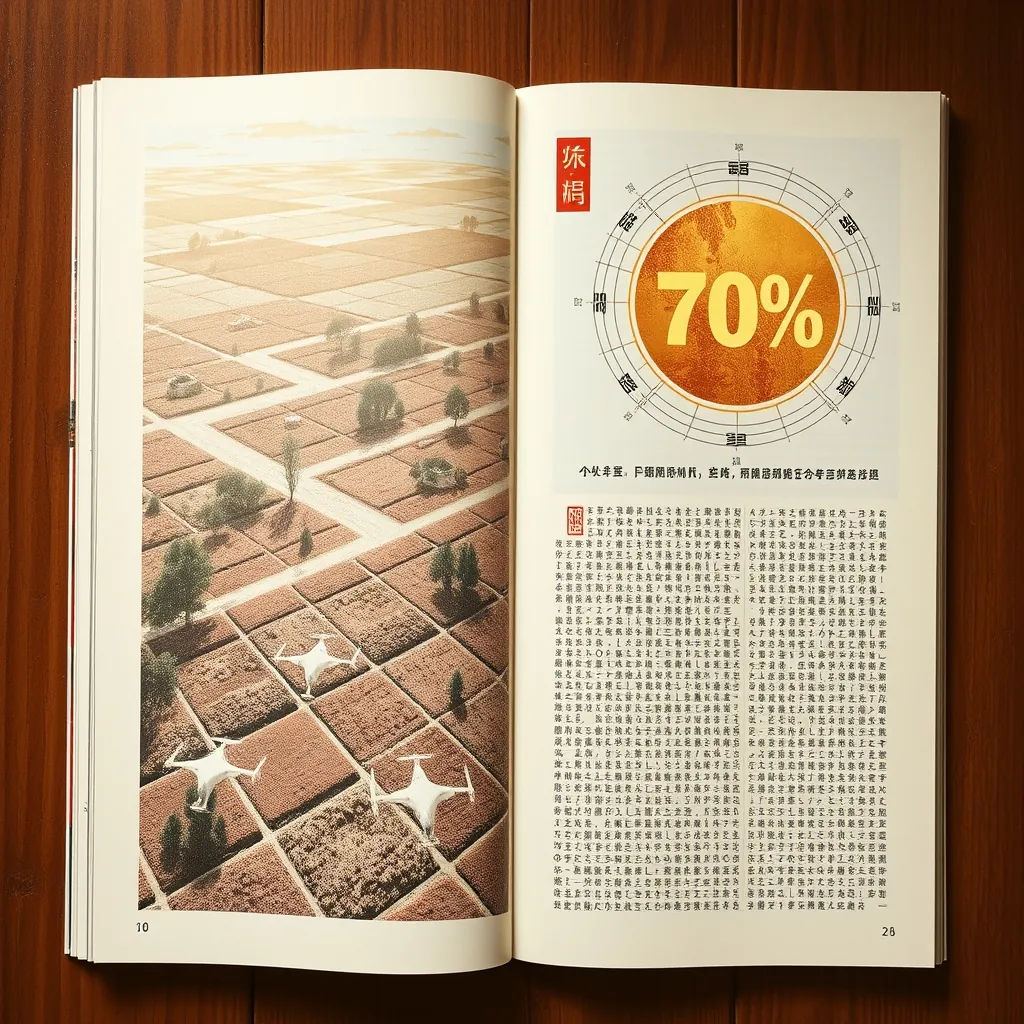
While you were refreshing benchmark leaderboards for DeepSeek (深度求索) and Qwen (通义千问), China's actual mass-market tech story quietly trended at 11 million on Toutiao (今日头条): summer grain planting is nearly 70% done — and the headline leads with "technology empowerment" (科技赋能).
Not "AI conquers reasoning." Not "humanoid robot lands backflip." Just wheat. Sown by drones.
This is the unglamorous frontier where Chinese tech actually meets Chinese reality — and 11 million Toutiao users clicked because, unlike AI model benchmarks, this one puts food on the plate.
The Agritech Arms Race Nobody Covers
China has been quietly assembling one of the world's most aggressive agricultural drone fleets, and the companies involved are names you might not associate with farming at all.
DJI (大疆) — yes, the consumer-drone giant — runs an entire agriculture division that launched its first farming drone in 2012. Their Agras line has cumulatively deployed over 200,000 units across Chinese farmland. These machines carry 40-50 kg payloads, spray with centimeter-level precision using radar terrain-following, and can cover dozens of mu (亩, roughly 0.067 hectares) per flight hour.
Then there's XAG (极飞科技), the Guangzhou-based agritech specialist that has raised north of $400 million and deploys autonomous drones, RTK navigation base stations, and AI-powered crop-scouting systems across Chinese rice paddies and wheat fields. Their drones can direct-seed rice into flooded paddies — a process that replaces backbreaking manual broadcasting and compresses planting time by an order of magnitude.
These aren't consumer toys with a farming sticker. They're industrial tools running autonomous flight paths, precision dosing algorithms, and onboard AI for obstacle avoidance.
Why "70% Complete" Is Actually a Story
Summer grain planting in China covers roughly 400 million mu — about 27 million hectares. The "70% complete" milestone, typically reached in mid-June, represents an enormous logistical undertaking: harvesting winter wheat, then immediately rotating in corn, soybeans, or late rice, all before seasonal weather windows close.
Every day lost is yield lost. The window is brutal.
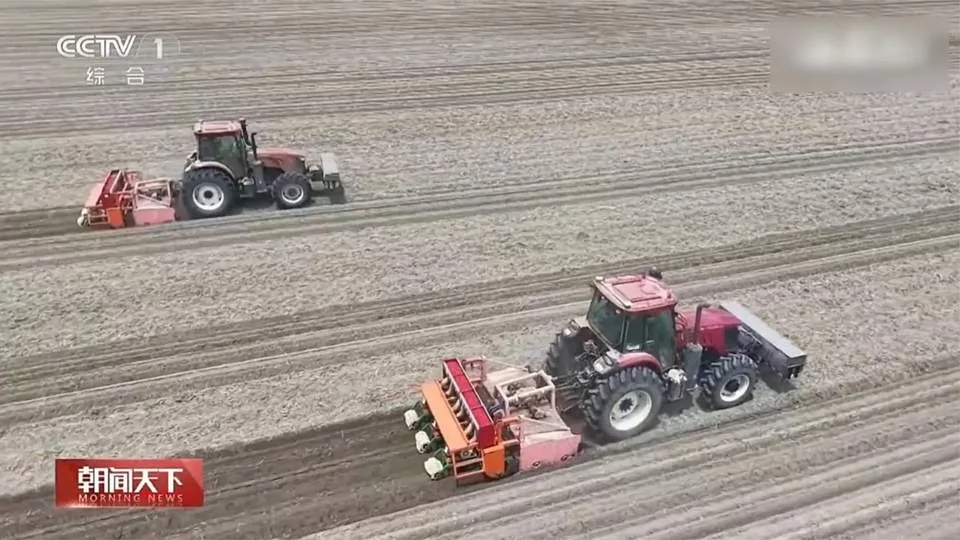
This is where "科技赋能" stops being a buzzword. Autonomous seeders, GPS-guided tractors linked to China's BeiDou (北斗) satellite navigation system, drone-seeded rice, and AI yield-prediction models compress that window from weeks to days. A single XAG drone can seed 5–10 mu per flight hour. Multiply that across millions of mu and you understand why a headline about planting progress leads with technology rather than weather.
The story isn't just about speed — it's about the disappearance of human hands.
The Toutiao Angle: Why Rural China Clicked 11 Million Times
Here's what's genuinely revealing: this headline trended higher than most AI model launches and humanoid-robot demos on Toutiao. The platform's user base skews toward lower-tier cities, rural counties, and agricultural regions — the populations that actually live this story.
Chinese internet culture's relationship with food security runs deeper than any meme cycle. Famine memory, the civilizational significance of grain (有粮心不慌 — "with grain in store, the heart stays calm"), and the national fixation on harvest outcomes cut across class lines. When a Toutiao user in a Henan (河南) farming county sees "summer planting 70% done, empowered by tech," they don't read it as propaganda — they read it as: the drones flew, the seeds went in, the algorithm says we're on track.
This is what makes the Chinese internet genuinely different from Western feeds. The same platform that launches viral memes and livestream-commerce drama also treats agricultural progress reports as trending content, because for a massive segment of users, this is not abstract.
The Unsexy Frontier
While Western media obsesses over ChatGPT benchmark scores and humanoid robot dance routines, China's most consequential tech deployments are happening in places that don't make TechCrunch:
- Computer vision models that diagnose crop diseases from a smartphone photo, deployed across rural cooperative networks
- Autonomous tractors navigating fields via BeiDou positioning, already operating in demonstration zones across Shandong (山东) and Heilongjiang (黑龙江)
- IoT sensor grids monitoring soil moisture, temperature, and nutrient levels across millions of mu
- Livestock AI tracking pig health through camera systems — unglamorous, commercially massive
China's agritech market is projected to exceed $30 billion by 2030, and the infrastructure being built now — drone fleets, satellite-guided equipment, AI crop models — will define how the world's most populous country feeds itself as its rural workforce ages out of farming.
My Take
The headline is state-media-coded optimism, absolutely. "科技赋能" comes pre-packaged with positive spin. But strip away the framing and the underlying tech story is real, consequential, and dramatically under-covered outside China.
Here's the uncomfortable truth behind the 70%: China's rural workforce is aging out faster than any generation can replace it. Young people have migrated to Shenzhen factory floors, Douyin (抖音) studios, and Meituan (美团) delivery routes. The fields are emptying. Without drones, autonomous seeders, and AI-assisted logistics, there literally won't be enough human hands to plant the wheat.
That's the story. Not that technology empowered the harvest — but that without it, there might be no harvest at all.
And on Toutiao, 11 million people already knew that.