Huawei's AI Glasses Let You See the World Through Xiaoyi's Eyes
Huawei (华为) just dropped a teaser that's got the Chinese tech feed buzzing: their AI smart glasses are getting a deep integration with Xiaoyi (小艺), Huawei's voice assistant, under a feature cryptically called "See the World" (看世界). Over 2.5 million views on Toutiao (今日头条) for a pair of glasses. Let that sink in.
Here's what we know: the integration essentially turns the glasses into a wearable AI vision system. Camera on the frame captures what you're looking at, Xiaoyi processes it through whatever large language model Huawei is running on the backend, and you get real-time narration, translation, object identification, or contextual information piped directly into your ears. It's Google Glass energy but 2024-flavored and actually useful.
The "See the World" branding is doing a lot of heavy lifting. This isn't just OCR or basic image recognition — the implication is multimodal AI that understands scenes the way a human would. You're looking at a restaurant menu in Tokyo? Xiaoyi reads it, translates it, maybe even recommends the tonkatsu. Staring at a plant you can't identify? Boom, species, care instructions, and whether your cat will die if it eats it. It's the kind of seamless, glanceable intelligence that makes you understand why Apple Vision Pro felt so overengineered.
Why this matters: China's smart glasses wars are quietly becoming the next consumer-tech frontier while everyone in the West is still arguing about whether the Apple Vision Pro is a flop. The difference is that Chinese players are shipping focused, practical devices instead of trying to strap a computer to your entire face.
Huawei isn't alone here. Baidu (百度) has been pushing its smart glasses powered by Ernie Bot (文心一言). ByteDance (字节跳动) acquired Pico and has AR/VR ambitions that extend beyond gaming. Even smaller players like Xreal (formerly Nreal, now 致敬未知) are carving out niches with consumer-friendly AR glasses that don't make you look like a cyborg reject.
But Huawei has an unfair advantage: ecosystem lock-in. If you're already using a Huawei phone running HarmonyOS (鸿蒙), the glasses become a natural extension. Xiaoyi already knows your calendar, your habits, your voice. Adding "eyes" to that assistant creates something genuinely different — an AI that doesn't just live in your pocket but perceives the world alongside you.

The timing is telling. This drops the same week that Ray-Ban Meta smart glasses are getting attention in the West for their AI features. But while Meta is slowly rolling out multimodal AI to select users, Huawei is going full-send in China's domestic market, where Meta doesn't operate and Google's Gemini is a non-factor. The great AI divergence continues: China builds for its own ecosystem, with its own models, on its own hardware, and the products are getting good enough that nobody's really missing the Western alternatives.
The Toutiao comment section is a preview of consumer sentiment: excitement mixed with practical questions about battery life, privacy concerns, and whether this actually works or is just a slick demo video. Chinese consumers have been burned before by overpromised AI features. But the engagement numbers suggest genuine curiosity rather than cynical eye-rolling — a sign that the market might be ready.
There's also a cultural dimension here that Western observers might miss. In China, voice assistants never really had their "Siri moment" of cultural backlash. People still talk to Xiaoyi, to Alipay's (支付宝) voice features, to Baidu's Du Xiaoxiao (度晓晓). The idea of having an AI companion that literally sees what you see isn't dystopian — it's just... convenient. The privacy calculus is different when you grew up with cameras on every corner and convenience is the national religion.
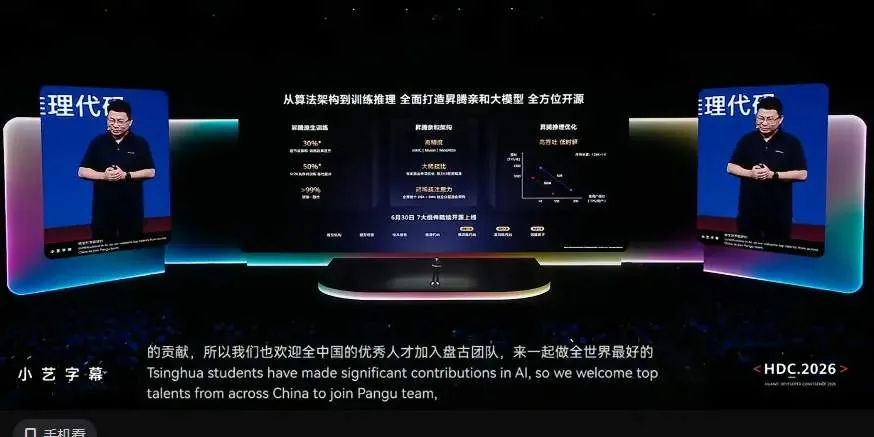
The real question is whether Huawei can execute. Their AI chops have been accelerating — the Pangu (盘古) models are legitimate, and their Ascend (昇腾) chips are the closest thing China has to NVIDIA alternatives that actually work at scale. If the glasses ship with snappy, reliable AI vision that doesn't require a constant internet connection, this could be the product that makes smart glasses mainstream in China.
And that's the story beneath the headline: China's consumer-AI wars are moving from phones to wearables, from chatbots to embodied intelligence, from text to multimodal perception. The glasses are just the beginning. Wait until this same tech gets integrated into the next wave of humanoid robots from companies like Unitree (宇树科技) or UBTech (优必选) — robots that will literally see the world through the same AI eyes.
The future is watching. And in China, it's wearing Huawei.