Huawei's Nova 16 Just Got More Expensive and China's Talking
Here's something you don't see every day in cutthroat Chinese smartphone market: a phone getting more expensive after launch. Yet that's exactly what's happening with Huawei (华为) nova 16 series, and nearly half a million people on Toutiao (今日头条) are buzzing about it.
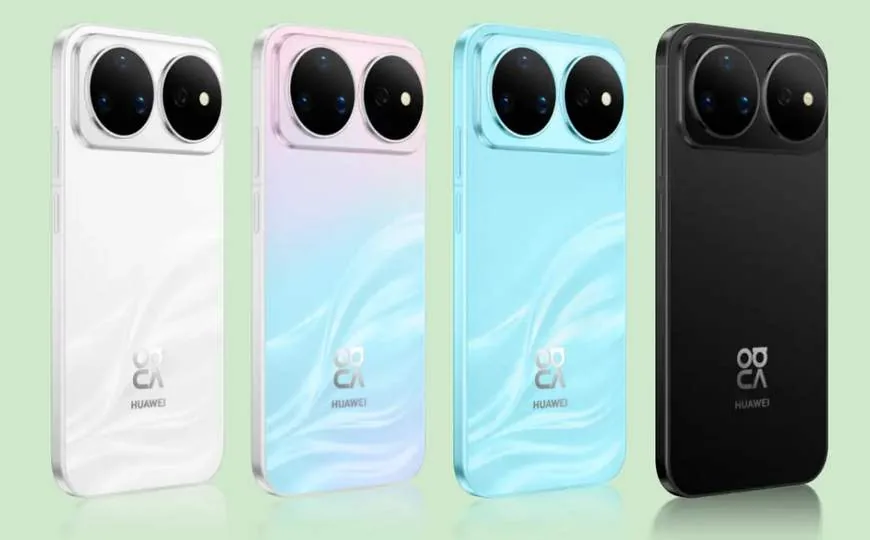
Let's be real—the Chinese smartphone market is a bloodbath. You've got Xiaomi (小米), Oppo (OPPO), Vivo (维沃), and Honor (荣耀) all racing to the bottom on price while cramming in better specs. Price cuts are the norm. "New model launched? Give it three weeks, it'll be 200 yuan off." That's been the rhythm for years.
So when Huawei quietly nudges the nova 16 series upward—and people notice enough to push it to nearly 500K hot searches on Toutiao—something bigger is happening beneath the surface.
The Chip Factor
Here's the uncomfortable truth nobody wants to say out loud: Huawei's still running on constrained chip supply. The Kirin (麒麟) processors that power their phones aren't flowing freely. U.S. sanctions haven't magically disappeared. SMIC (中芯国际) can only produce so much at the 7nm node, and yields reportedly remain... let's charitably call "challenging."
When supply is tight and demand exists, basic economics says prices go up. Huawei isn't being greedy—they're being realistic. Every nova 16 they ship represents a chip allocation decision. Do they sell it cheap and move volume, or price it where demand meets their actual production capacity?
They chose the latter. And the market noticed.
The Brand Premium
But there's something else happening here that's purely cultural. Huawei has achieved something in China that Apple (苹果) achieved in America a decade ago: brand mythos that transcends specs.
The nova series is technically their mid-range line. It's not the flagship Mate (Mate系列) series with all the satellite-calling bells and whistles. It's supposed to be the "accessible" Huawei. The one where a college student or young office worker can say "I support domestic tech" without dropping 7,000 yuan.
When even that line gets a price bump, it signals something about Huawei's confidence in their brand position. They know their customers will pay. They've done the math. The patriotism premium, the ecosystem lock-in from HarmonyOS (鸿蒙系统), the social signaling value of that Huawei logo—it all adds up to pricing power most Chinese phone brands can only dream of.
What the Comments Reveal
Scroll through the Toutiao comments (always a Journey Into Chaos™) and you see a fascinating split:
"Support domestic! The price increase means they're investing in R&D!" — This from the patriotic camp, who've internalized the narrative that paying more for Huawei is somehow patriotic duty.
"I'll just buy Xiaomi then" — The pragmatic camp, who understand that in 2024, a phone is a phone is a phone.
"Wait, weren't phones supposed to get cheaper?" — The confused majority, who've grown up in a world where Chinese consumer electronics only move in one direction: down.
That last group is the most interesting. They're experiencing a tiny cognitive dissonance. Their entire consumer lives, "Made in China" has meant "affordable." Now a Chinese brand is saying: "Actually, our stuff is premium now. Pay up."
It's a microcosm of China's entire economic evolution. The country that taught the world to manufacture cheap is now trying to teach itself to sell expensive.
The AI Angle Nobody's Mentioning
Here's what most coverage misses: the nova 16, like all new Huawei phones, is an AI device. HarmonyOS is being rebuilt around on-device AI. The camera uses AI processing. The voice assistant, the text prediction, the photo editing—all AI-dependent.
When Huawei raises the price of a mid-range phone, they're implicitly saying: "The AI features we're shipping cost real money to develop." Training models isn't free. Running inference on-device requires NPU (neural processing unit) silicon that's not commoditized yet. The Kirin chips that include these NPUs are scarce.
In other words, the AI tax is real, and Huawei is passing some of it to consumers. This is early-stage dynamics. If every Chinese phone brand starts meaningfully integrating AI—not just as a marketing checkbox but as actual functionality—expect more price pressure across the board.
The Bottom Line
A phone price increase shouldn't be news. But in China's hypercompetitive smartphone market, it is. That's the story. The abnormal became normal, and half a million people stopped scrolling to say "wait, what?"
Huawei's betting that their brand, their ecosystem, and their AI story are worth paying more for. They're probably right. But every time they test that thesis, they're also testing the limits of Chinese consumer patience.
Today it's the nova 16. Tomorrow, who knows? The only certainty is that in China's tech scene, the only constant is surprise.