Huawei's nova 16 Launch Broke Toutiao — Here's Why China Still Cares
Here's the thing about Huawei (华为): they could announce a new colorway for a phone case and it would still crack a million hits on Toutiao (今日头条). The nova 16 series launch just pulled 1.63 million热度 on the hot board, and before you roll your eyes at "another phone launch," let me explain why this particular slab of glass and silicon has the Chinese internet acting like it's 2019 again.
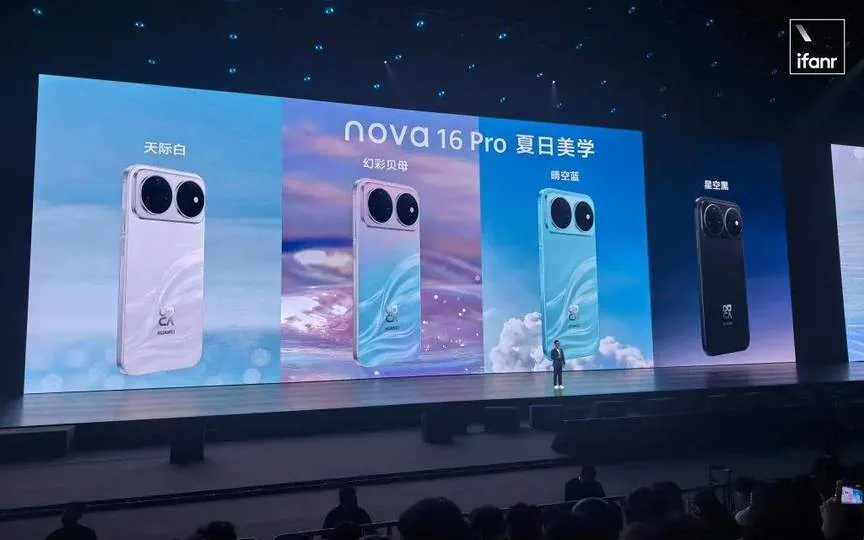
First, some context for the uninitiated. The nova line is Huawei's mid-range fashion phone — think less "pro photographer carrying $1,000+ Mate Pro" and more "TikTok creator who wants to look good on Douyin (抖音) without selling a kidney." It's the phone for the 小红书 (Xiaohongshu/RED) generation, the 美颜 (beauty filter) obsessed, the people who actually use the selfie camera more than the main lens. And in China's consumer hierarchy, that's... basically everyone under 30.
So when Huawei drops a new nova, it's not really a tech event. It's a cultural moment.
The Kirin Comeback Energy
Here's what's actually driving those 1.6 million Trending points: Huawei's silicon comeback narrative is now bleeding into the mid-range. After the Mate 60 Pro's surprise Kirin (麒麟) 9000S chip last August broke the collective brain of Western sanctions architects, every new Huawei release gets scrutinized for what's inside. The nova 16 is shipping with what appears to be another domestically-produced chip — and in a mid-range device, that's arguably more significant than the flagship flex.
Why? Because mid-range is volume. Flagships are ego; mid-range is market share. If Huawei can pump domestic silicon into the $300-500 segment at scale, we're not talking about a symbolic victory anymore. We're talking about structural decoupling of the Chinese smartphone supply chain.
But let's be real — most of those 1.63 million Toutiao clicks aren't from people reading semiconductor analysis. They're from consumers who remember that Huawei was the status phone before sanctions kneecapped the brand in 2019-2022. The nova 16 is tapping into genuine consumer nostalgia married to a comeback narrative that hits differently in a post-Mate-60 China.
The Satellite Play
Here's the spec that's actually interesting: the nova 16 series reportedly supports two-way satellite messaging. Yes, in a mid-range phone. Huawei has been pushing satellite connectivity hard — it debuted on the Mate 50 series and became a killer feature on the Mate 60 Pro. But extending it to the nova line? That's a flex with implications.
In China's telecom landscape, this isn't just a marketing gimmick. Rural coverage gaps, outdoor recreation culture (glamping is massive among Chinese Gen Z), and the general anxiety about being disconnected in a country where everything runs on mobile — satellite messaging addresses real concerns. And it's a feature Apple charges premium prices for. Huawei bringing it mid-range is aggressive.
Design as Douyin-Bait
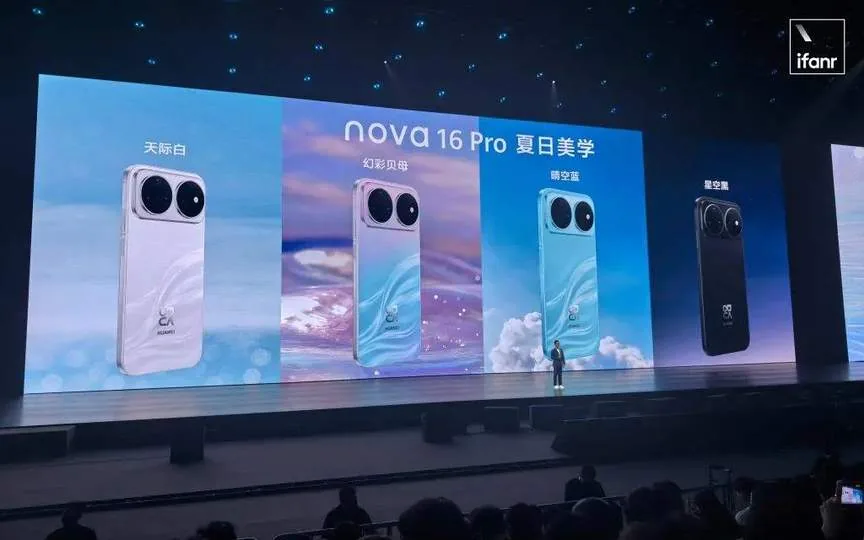
Let's talk aesthetics. The nova line has always been about looks — previous models featured gradient backs, vegan leather options, and colors with names like "Starry Sky Blue" that sound like C-pop songs. The nova 16 continues this tradition with what Chinese netizens are calling a 潮流 (trendy/fashion-forward) design language.
This matters because in China's smartphone market, which contracted in 2022-2023 and is only cautiously recovering, you don't win on specs alone. You win on vibes. The phone needs to look good in unboxing videos on Bilibili (B站). It needs to photograph well for Xiaohongshu lifestyle posts. It needs to signal that you're plugged into the comeback narrative without trying too hard.
Huawei understands this intuitively. Their marketing for the nova line has always been more Seoul than Shenzhen — K-pop influenced, influencer-heavy, targeting the 精致 (refined/aesthetic) consumer who considers their phone an accessory first and a device second.
The Real Competition Isn't Who You Think
Here's the uncomfortable truth the trending numbers obscure: Huawei's real competitor in the mid-range isn't Apple. It's not even Samsung. It's Xiaomi (小米), OPPO, and vivo — domestic rivals who've been feasting on the market share Huawei lost during its sanction-hobbled years.
Xiaomi in particular has been aggressive, positioning itself as the "value innovation" brand. But Huawei retains something Xiaomi can't manufacture: brand prestige. In tier-2 and tier-3 cities (the 县域 economy we keep telling you about), Huawei still carries social weight that Xiaomi can't match. The nova 16 is priced to recapture that audience — consumers who want to participate in the Huawei story but can't justify Mate Pro prices.
What 1.63 Million Clicks Actually Means
Let's decode that trending number. On Toutiao's algorithm, 1.63 million热度 doesn't mean 1.63 million people read the article. It means the topic generated enough engagement (clicks, comments, shares, dwell time) to hit that composite score. The actual readership is likely 3-5x higher.
More importantly: this is a phone launch trending on a general news platform. Toutiao's audience skews older and more male than, say, Xiaohongshu. The fact that a mid-range smartphone is trending here tells you Huawei's brand penetration goes deep into demographics that don't typically follow tech product cycles.
The Bottom Line
The nova 16 isn't going to revolutionize anything. It's a competent mid-range phone with a few headline features (domestic chip, satellite connectivity) wrapped in fashionable design. But that's exactly why it matters. Huawei is proving that the comeback isn't limited to aspirational flagships — it's systemic. The silicon works. The features cascade down. The brand still pulls.
For China-watchers, the nova 16 trending at 1.63 million isn't a tech story. It's a consumer sentiment story. And right now, Chinese consumer sentiment toward Huawei reads like a redemption arc that's still being written.
Watch the Q2 sales numbers. That's where the hype either converts to reality or fades to nostalgia.