Huawei Will Crack EUV — And China's Watching
A semiconductor analyst walked onto a Toutiao (今日头条) hot board with 3.5 million engagements and said the quiet part loud: Huawei (华为) will definitely solve EUV.
The full headline — 「半导体分析师:华为一定会搞定EUV」 — is vintage Chinese internet confidence theater. Not "might." Not "could." 一定. Definitely. And the comments section is exactly what you'd expect: a mix of triumphal chest-thumping, skeptical工程技术-bro debunking, and that very specific Chinese internet flavor of patriotic pragmatism that translates roughly to "I'll believe it when I see it, but also, finally."
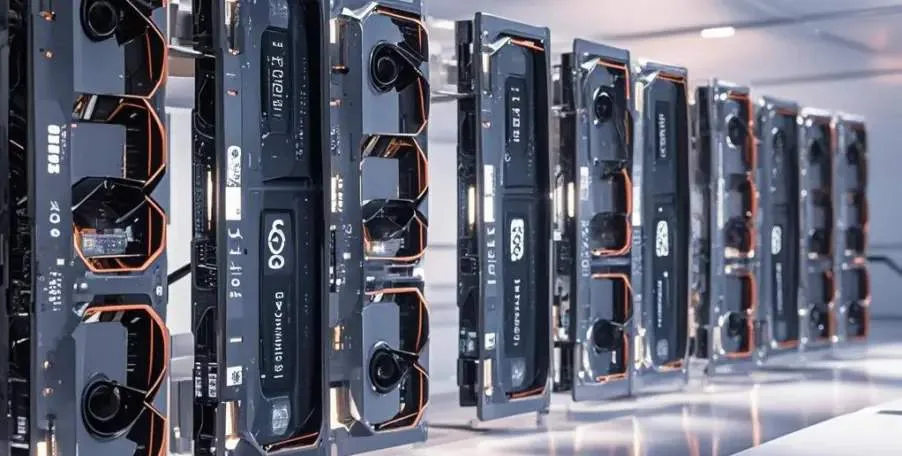
Here's why this matters beyond the headline.
What EUV actually is, for people who don't live on SemiAnalysis
EUV — extreme ultraviolet lithography — is the secret sauce for printing chips at the 5nm-and-below node. It's the reason your phone's chip has 19 billion transistors. The machines are made by exactly one company: ASML (阿斯麦) in the Netherlands. Each unit costs roughly $200 million. The US has spent years weaponizing export controls to ensure Huawei and the broader Chinese semiconductor ecosystem can't get them. No EUV, no cutting-edge chips. No cutting-edge chips, no competitive AI hardware. No competitive AI hardware, and your entire domestic AI story — DeepSeek (深度求索), Qwen (通义千问), the Huawei Ascend (昇腾) compute stack — runs on borrowed time and stockpiled silicon.
So when someone says "Huawei will crack EUV," they're not talking about a gadget. They're talking about whether China's entire AI ambitions can survive a prolonged semiconductor siege. That's why 3.5 million people clicked.
The analyst isn't saying Huawei built an ASML killer in a Shenzhen basement
Let's be clear about what's actually being claimed. Huawei has been pursuing multiple paths to advanced lithography: DUV multi-patterning workarounds (which is how SMIC (中芯国际) reportedly fabricated the Kirin 9000S for the Mate 60), domestic EUV research at the Shanghai Institute of Optics and Fine Mechanics, and deep investments in domestic equipment makers like SMEE (上海微电子). The analyst's bet — and it's a bet, not a leaked spec sheet — is that the combination of state-directed capital, talent repatriation, and pure forced-march necessity gets China to a workable EUV or EUV-equivalent solution within a finite, nameable horizon.
That horizon, in Chinese internet discourse, is usually "three to five years." The same horizon everyone's been saying for the last five years. This time feels different because the Mate 60 proved the DUV workaround actually shipped in volume. That was a psychic break.
The Toutiao reaction is the real story
Toutiao comment sections are where Chinese public opinion goes to get messy and honest. The reaction to this headline splits into three recognizable tribes:
First, the "finally someone says it" crowd — upbeat, forward-looking, ready to declare semiconductor independence imminent. They'll cite the Mate 60, they'll cite Huawei's R&D spend (estimated north of 20% of revenue for years), they'll cite the talent pipeline.
Second, the "cool story, wake me up" engineers — people who actually work in fabs and lithography tracks and know that solving EUV isn't a vibes problem. ASML took 20 years and thousands of engineers across a multinational supply chain. The optics alone — made by Zeiss — represent their own multi-decade miracle. Chinese internet commenters who've read the technical literature love dunking on the optimists.
Third — and this is the fascinating one — the pragmatists. They don't trust the timeline, they don't trust the hype, but they also note that Huawei has a track record of doing things the consensus said couldn't be done on the timeline the consensus said was impossible. The 5G story. The Mate 60. The Ascend compute stack that actually runs DeepSeek's models at scale. There's a begrudging "okay, maybe" energy.
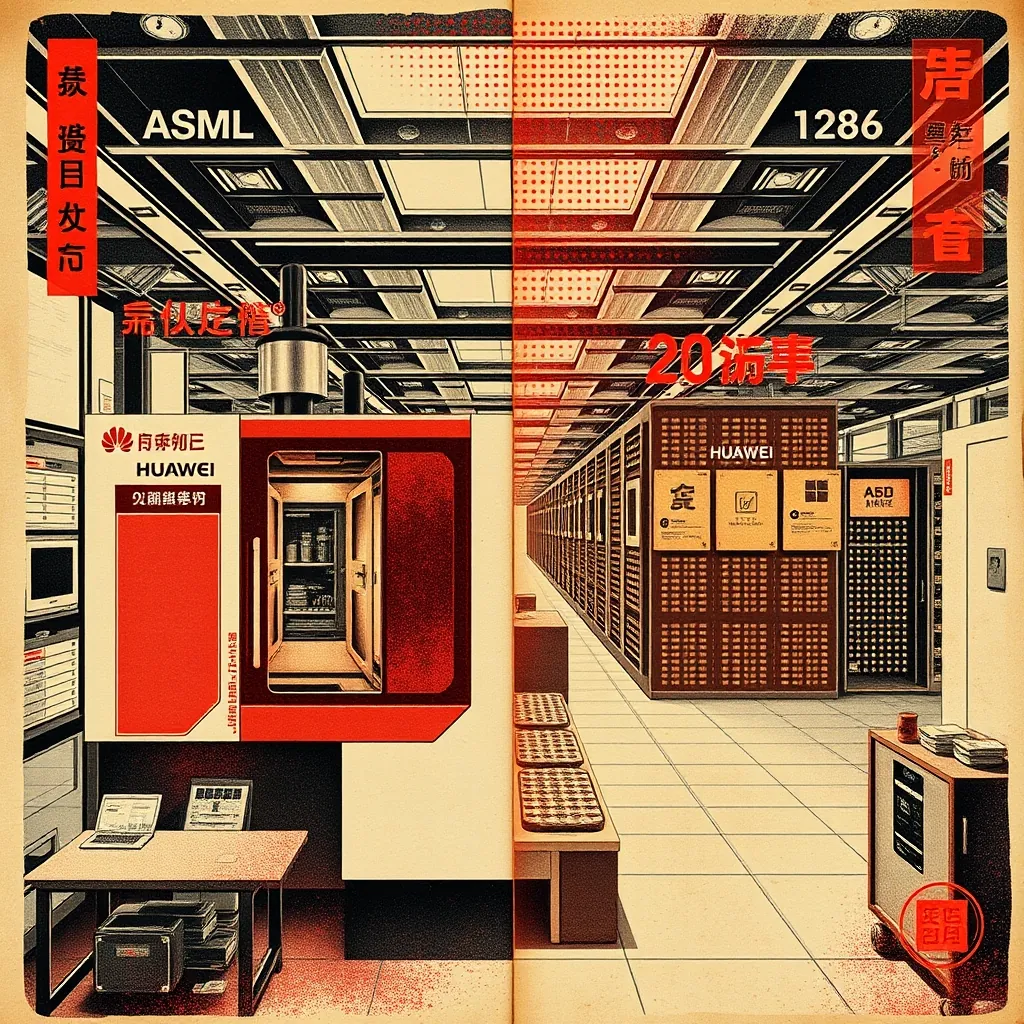
Why this is bigger than chips
The EUV debate is really a proxy for the entire Chinese tech narrative right now: can you decouple from Western core infrastructure and still compete at the frontier? The answer keeps arriving in unexpected places. DeepSeek trained competitive models on restricted compute. Huawei's Ascend chips are now the backbone of China's AI inference infrastructure for major models. SMIC shipped 7nm via DUV multi-patterning when the consensus said it couldn't be done at yield. Each one moves the Overton window of what Chinese internet users think is possible.
The 3.5 million engagement count tells you this isn't a niche semiconductor story anymore. It's mainstream cultural discourse. Your aunt on WeChat is now vaguely aware of what EUV is. That's the shift.
My take
The analyst is probably directionally right and temporally overconfident — a very Chinese-internet-hype combination. Huawei will likely get to a workable EUV or EUV-adjacent solution. The real question isn't if but when, and "when" matters enormously. If it's three years, China's AI hardware story stays globally competitive through this decade. If it's eight, there's a painful gap where domestic models run on inferior chips while the rest of the world accelerates.
Either way, the fact that Toutiao's hottest semiconductor story of the week is a straight-up declaration that Huawei solves the hardest chip problem in the world tells you where the Chinese internet's head is. Not defeatist. Not naive. Running on a very specific cocktail of nationalism, engineering pragmatism, and the lived experience of having watched the Mate 60 actually ship.
The smart money says: watch SMEE's next-generation DUV tool announcements, watch Huawei's patent filings in self-aligned quadruple patterning, and watch whether anyone credible starts talking about nanoimprint lithography as the real end-run around EUV entirely. The comment section will let you know when it's real.