Huawei's HarmonyOS 7 Drops: China's OS Independence Gets Real
Here's the thing about operating systems: nobody cares about them until they become a geopolitical weapon. Then suddenly, everyone's an expert.
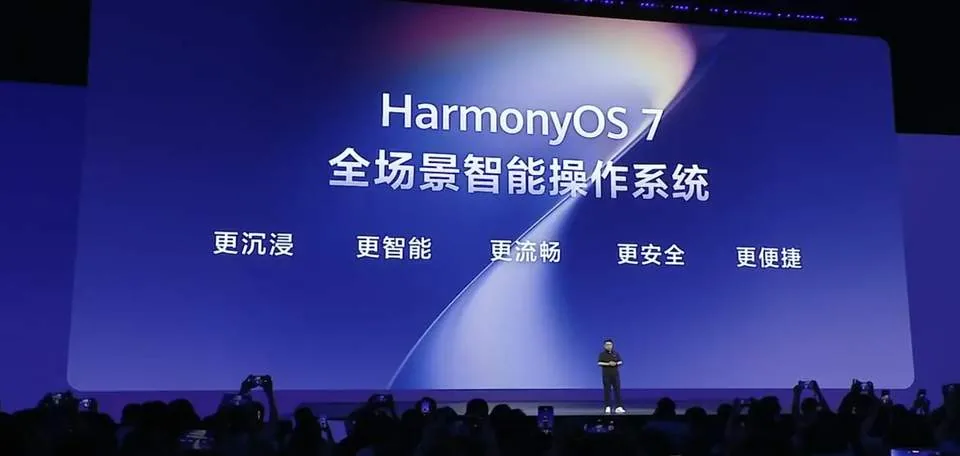
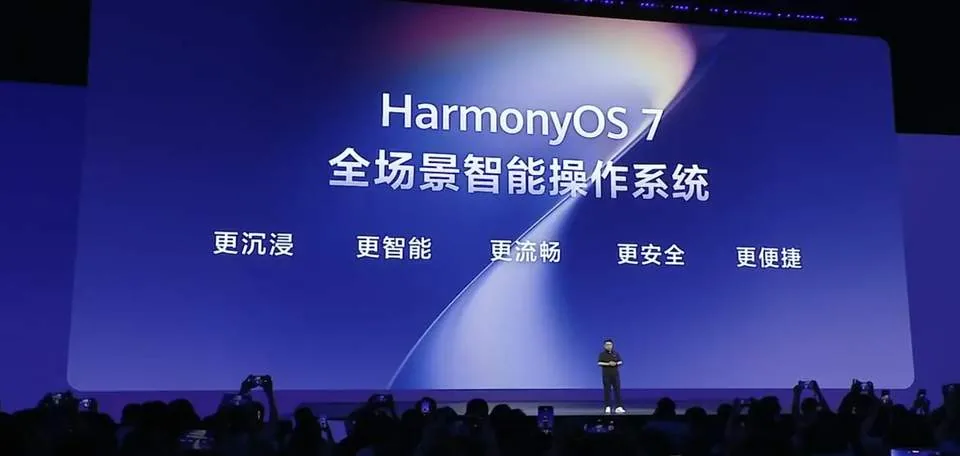
Huawei (华为) just dropped HarmonyOS 7 (鸿蒙7), and with 1.25 million people buzzing about it on Toutiao (今日头条) alone, this isn't just a software update—it's a cultural moment. A flex. A statement that China's tech ecosystem has officially graduated from "fast follower" to "we're building our own walled garden, thank you very much."
Let's rewind. Back in 2019, when the U.S. put Huawei on the Entity List—effectively cutting it off from Google's Android ecosystem—most Western analysts predicted a slow, painful death for Huawei's consumer device business. The hot takes wrote themselves: "No Google services? Dead on arrival." "Chinese consumers won't accept a neutered phone." "HarmonyOS is just Android with a different hat."
Oh, how wrong they were.
HarmonyOS has gone from emergency lifeboat to legitimate ecosystem player. Version 7 isn't just another iterative update—it represents the maturation of China's most ambitious software project since... well, ever. We're talking about an operating system that now runs on phones, tablets, watches, cars, smart home devices, and apparently, your rice cooker if you let it.
The numbers tell a story that Western tech pundits keep underestimating. HarmonyOS has crossed 800 million devices. Let that sink in. Eight. Hundred. Million. That's more than double the population of the United States, all running Chinese-built software that doesn't answer to Silicon Valley or any American sanction regime.
But here's what's actually interesting about this HarmonyOS 7 moment—and why 1.25 million Toutiao users are obsessing over it: it's not really about the technology. It's about what the technology represents.
China's internet ecosystem has always been paradoxically both sealed off and wildly innovative. You had WeChat (微信) building a super-app ecosystem while Google and Facebook sat on the sidelines. You had Douyin (抖音) pioneering short-form video while TikTok became its exported alter ego. But operating systems? That was always the final frontier—the layer where Western dominance seemed unshakeable.
HarmonyOS 7 changes that calculus. The new version reportedly features deeper AI integration (naturally—this is 2024, everything has AI sprinkled on it), improved cross-device handoff that makes Apple's ecosystem look quaint, and a native app ecosystem that's finally reaching critical mass.
The native app part is crucial. For years, the knock on HarmonyOS was that it was just repackaged Android apps running on a compatibility layer. Developers built for Android first, HarmonyOS... maybe, if they had time. But with version 7, Huawei is pushing hard for truly native HarmonyOS apps—software built specifically for the platform that takes advantage of its distributed architecture.
And Chinese developers are actually listening. Not out of patriotism—though that helps—but out of cold commercial calculation. When you have 800 million potential users and you're competing against apps that might not be optimized for the platform, the incentives align pretty quickly.
What makes this moment particularly qipaobuzz-worthy is the consumer psychology at play. Chinese buyers aren't choosing HarmonyOS because they're forced to—they're choosing it because the ecosystem is becoming genuinely good. The seamless device handoff, the smart home integration, the way your phone talks to your tablet talks to your car—it's the Apple ecosystem promise, but executed with Chinese market sensibilities.
This is the part Western observers consistently miss about China's tech ecosystem: it's not succeeding despite being different from the West. It's succeeding because it's different. The assumptions embedded in Western software—individualistic, app-centric, privacy-obsessed—don't necessarily map onto a market where convenience, social integration, and platform harmony are valued differently.
HarmonyOS 7 also arrives at a moment when China's AI race is heating up. DeepSeek (深度求索) is challenging OpenAI's assumptions. Qwen (通义千问) is pushing multimodal boundaries. Having a homegrown OS that can integrate these models at the system level—rather than as third-party apps—gives Chinese AI a distribution advantage that American competitors simply don't have in the Chinese market.
Think about it: if HarmonyOS can bake intelligent features directly into the operating system, leveraging models like those from Zhipu (智谱清言) or Doubao (豆包), then Chinese consumers get AI-first experiences that feel native rather than bolted on. That's a competitive moat no sanctions can cross.
The Toutiao comments tell you everything about the public mood. There's pride, obviously—"Our own OS!" is a common refrain. But there's also genuine technical discussion. Users comparing animation smoothness with iOS. Debating file management improvements. Sharing tips about new features. This isn't blind nationalism; it's engaged, informed consumerism directed at a domestic product that's earning its keep.
For Huawei's competitors—both domestic and international—HarmonyOS 7 is a wake-up call. Xiaomi (小米) and Oppo are still dependent on Android. Even brands with their own skins are fundamentally riding Google's coattails. Huawei has jumped off that particular ride and, surprisingly to many, landed on its feet.
The broader implication? We're watching the final decoupling of the global internet into distinct technological ecosystems. Not just different apps or different platforms, but different foundational software layers. The world where everyone runs on Windows, iOS, or Android is ending. In its place, we're getting a multipolar tech world where Chinese software isn't just a regional variant—it's a parallel universe.
HarmonyOS 7 isn't perfect. The app ecosystem still has gaps. International compatibility remains a question mark. And yes, for Western users accustomed to Google services, it would feel like stepping into an alternate dimension.
But that's exactly the point. It's not built for Western users. It's built for a Chinese market that's increasingly confident in its own technological choices—and large enough to sustain platforms that don't need global dominance to be wildly successful.
Welcome to the splinternet, everyone. It runs on HarmonyOS now.