China Quietly Sends a CAS Academician to Run Its Israel-Tech University
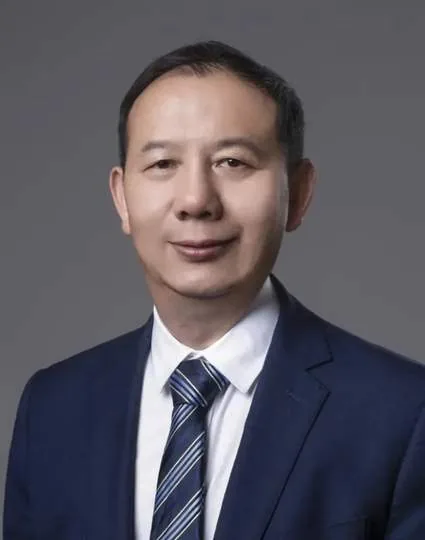
China's academic chessboard just made a move that should make anyone watching the country's tech-talent pipeline sit up and pay attention. Mao Junfa (毛军发), a sitting academician of the Chinese Academy of Sciences (中国科学院) and former vice president of Shanghai Jiao Tong University (上海交通大学), has been appointed president of the Guangdong Technion Israel Institute of Technology (广东以色列理工学院, GTIIT) — and the Chinese internet barely blinked.
That's the story. Now here's why it actually matters more than the tepid hot-board ranking (about 2.3 million on Toutiao, 足够引人注目 but not exactly breaking the server) suggests.
First, the institution itself is a fascinating anomaly. GTIIT is a Sino-foreign joint venture university in Shantou (汕头), Guangdong, established in 2016 through a three-way marriage between Shantou University, the Technion – Israel Institute of Technology, and the Li Ka-shing Foundation (李嘉诚基金会). Li personally donated $130 million to launch the school — one of the largest single private gifts to higher education in Chinese history. The campus is built as a near-replica of the Technion's Haifa home base, with Hebrew lettering on the lab doors and a curriculum modeled directly on the Israeli parent institution. It enrolls around 1,000 undergraduates across chemical engineering, materials science, biotechnology, and mathematics — small, elite, research-intensive.
This is not a diploma mill. This is China trying to import the specific alchemy that made Israel a nation of startups and Nobel laureates despite having roughly the population of Shanghai.
Second, Mao Junfa is a serious hire — and a serious signal. An electrotechnics specialist who was elevated to CAS academician in 2017, Mao spent decades at Shanghai Jiao Tong University, one of China's C9 League (C9联盟) elite institutions, where he eventually rose to vice president. His research focuses on electromagnetic compatibility and electronic packaging — the unglamorous but mission-critical engineering of making chips and circuits work in real-world conditions without interfering with each other. That's the exact kind of expertise that sits at the chokepoint of China's semiconductor ambitions.
Why move a CAS academician with deep chip-packaging expertise to a tiny Sino-Israeli liberal-arts-flavored tech school in Guangdong? A few possibilities, none of them mutually exclusive:
Talent pipeline strategy. GTIIT has direct pipeline relationships with Technion faculty and Israeli tech ecosystem. In a world where Chinese researchers face increasing friction accessing Western institutions, a joint venture campus with an existing Israeli partner is a valuable conduit. Putting a heavyweight academic administrator in charge suggests Beijing (or at least Guangdong province) wants to protect and deepen that conduit.
Guangdong's chip-cluster ambitions. Guangdong is pouring hundreds of billions of yuan into semiconductor manufacturing in the Pearl River Delta. Shantou is not Shenzhen, but it is part of the province's broader talent-attraction strategy. A university president who literally wrote textbooks on electronic packaging is exactly the kind of person who can steer undergraduate research toward industry needs.
The Sino-Israeli relationship is complicated right now. The Israel-Hamas war has strained Israel's international academic partnerships globally. China has tried to position itself as a neutral mediator, and maintaining institutional ties like GTIIT is part of that diplomatic balancing act. A prestigious Chinese president keeps the lights on without any awkwardness.
CAS academicians don't move for nothing. There are only about 800 living CAS academicians across all disciplines. Each appointment is a statement about institutional priorities. When one takes a university presidency — especially at a school most Chinese people have never heard of — it means someone with planning authority decided this school matters more than the public discourse suggests.
The Toutiao reaction was muted, which is itself interesting. The hot-board entry sat in the low millions — enough to register, not enough to trend. Chinese commenters who did engage mostly noted the prestige of the CAS title and praised Mao's academic credentials. A few asked why Shantou, of all places, gets such an unusual institution when it's not exactly a tier-one city. The answer is Li Ka-shing, who is himself from Chaozhou, right next door — the entire GTIIT project is partly a hometown-region prestige play by one of Asia's richest men.
What this reveals about Chinese tech culture right now is a kind of quiet pragmatism. The headline-grabbing AI wars — DeepSeek (深度求索) versus Qwen (通义千问), Unitree (宇树科技) robots doing backflips, the whole benchmark theater — get the clicks. But underneath that noise, China is methodically placing experienced scientific administrators into positions where they can shape the next decade of engineering talent. GTIIT may only graduate a few hundred students a year, but if even a fraction of them go on to materials science PhDs or semiconductor design roles, the payoff compounds.
Israel figured out decades ago that a small country with limited natural resources could punch above its weight by investing ruthlessly in elite technical education. China is now trying to import that playbook — literally, through a physical campus — while keeping its own strategic priorities firmly in the driver's seat.
Mao Junfa's move to Shantou isn't sexy. It won't trend on Douyin (抖音) or spark a Weibo (微博) meme cycle. But in the slow, grinding game of building a self-sufficient tech talent base, this is exactly the kind of move that matters five to ten years from now, when today's undergraduates are founding the next DeepSeek or designing the next Ascend (昇腾) chip.
Watch the small schools. That's where the real chess gets played.