The Pancake Motor Gold Rush: China's Quiet Hardware Coup
China has a new export that nobody outside engineering circles saw coming: ultra-thin, ultra-powerful electric motors that are apparently sending global manufacturers into a buying frenzy.
The headline blazing across Toutiao (今日头条) — 「中国轴向磁通电机成全球抢手货」 — translates to "China's axial flux motors have become globally sought-after goods." With a heat score pushing 2.9 million on the platform's trending board, this is not a niche story. It's a signal that China's hardware supply chain has leveled up yet again — this time in a component so fundamental it touches everything from humanoid robots to factory automation to next-gen drones.
So what the hell is an axial flux motor?
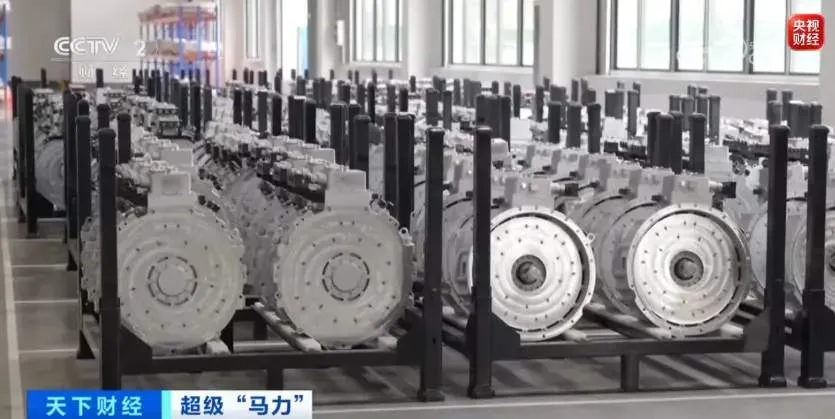
Picture a traditional electric motor as a soup can: cylindrical, magnets spinning inside. An axial flux motor is more like a compact disc — flat, thin, and the magnetic field runs along the axis rather than radially. The result is a motor that's dramatically lighter, shorter, and more power-dense than conventional designs.
If you're building a humanoid robot — say, a Unitree (宇树科技) G1 that needs to balance on two legs while navigating obstacles — every gram matters. You need motors small enough to fit inside a knee joint but powerful enough to absorb dynamic loads during walking. Axial flux is the answer.
If you're building industrial drones for agriculture or logistics, flight time is survival. Lighter motors mean longer battery life. Axial flux delivers.
If you're automating a factory with precision robotic arms, you need torque density and thermal management. Axial flux, again.
The technology was originally pioneered by European firms like YASA in the UK, which got acquired for high-performance applications. But the center of gravity has shifted. Chinese manufacturers have cracked the code on mass production, and the cost curve has bent hard in Beijing's favor.
Why this is trending now
Chinese netizens are buzzing about axial flux because it represents a very specific kind of flex: deep manufacturing capability in a category that requires serious engineering chops. This isn't cheap plastic toys or commodity phone cases. These motors demand precision winding, advanced magnetic materials, and tight thermal tolerances. The fact that Chinese firms are now exporting them at volume — with global buyers reportedly queuing up — feeds into a broader narrative about China climbing the value chain.
On Weibo (微博) and Toutiao comment sections, the reaction is a fascinating blend of pride and pragmatism. Users are drawing a sharp contrast: while Chinese AI models like DeepSeek (深度求索) and Qwen (通义千问) dominate the headlines, it's the unsexy hardware layer — motors, sensors, precision actuators — that ultimately decides who controls the robotics and automation industries. The motor flex matters because without it, the robot doesn't move.
The robotics connection
This is where it gets juicy for anyone tracking China's humanoid robot push. Companies like Unitree (宇树科技), Fourier (傅利叶), and Agibot (智元) are all racing to build commercially viable humanoids. The bottleneck isn't just AI brains — it's muscles. Actuators. Joints. Motors.
If China can produce high-performance axial flux motors at scale and at a fraction of Western costs, it removes one of the most stubborn hardware constraints for the entire domestic robotics ecosystem.
Think about it this way: a humanoid like Boston Dynamics' Atlas costs a fortune largely because of its custom actuation systems. If Chinese manufacturers can bring high-end motor costs down 60-70% through mass production — the same playbook they used for batteries and solar panels — a $20,000 humanoid robot transitions from fantasy to plausible.
That's the real story. The motor isn't just a trophy export. It's an enabler for an entire generation of Chinese robotics companies positioning to undercut global competitors on price while maintaining respectable performance.
The supply chain chess game
There's also a raw-materials angle that makes this story deeper than it appears. China already controls roughly 85-90% of global rare-earth magnet production — and those magnets are the critical input for axial flux motors. So Chinese manufacturers aren't just assembling the motors. They sit on the materials, the processing capability, and the final production. That's vertical integration with fangs.
Global manufacturers looking to diversify supply chains are discovering that when it comes to advanced motor tech, the reliable, high-quality, cost-competitive option increasingly runs through Shenzhen and Suzhou. While European and Japanese firms still hold patent advantages in specific niches, the Chinese production capacity advantage is reshaping buyer expectations.
What the Chinese internet sees
On Bilibili (B站), engineering creators are breaking down axial flux motor architecture with the kind of technical rigor that would make a grad student sweat — winding patterns, flux path optimization, thermal dissipation models. The comments are full of actual engineers debating pole counts and stator geometries.
On Xiaohongshu (小红书), the angle skews more "Made in China 2.0" — the idea that Chinese manufacturing has graduated from knockoffs to advanced components the world genuinely depends on. It's the same energy as the semiconductor追赶 narrative, but applied to electromechanical hardware.
And yes, there's skepticism too. Toutiao commenters are demanding specific export data and questioning whether "globally sought-after" is premature hype. Some note that Japanese firms like Nidec and German engineering still command premium positioning. The discourse is more nuanced than pure flag-waving.
My take
Here's what I think this moment actually signifies. The axial flux motor story is the archetype of China's tech strategy: dominate the unglamorous middle layers while everyone else fights over the flashy top.
Western companies can design the world's most sophisticated humanoid robot in simulation. They can train the smartest vision-language model. But if they can't source affordable, high-performance actuators at scale, the product never ships at a price anyone can pay. China is methodically building exactly that supply chain — and the world is quietly placing orders.
The axial flux motor won't trend on TikTok. It won't spawn a Labubu-level consumer mania. But in five years, when Chinese humanoid robots are walking out of factories at one-third the price of their Western equivalents, remember the pancake motor that made it possible.
The boring layer wins. It always does.