Sichuan's Gaokao Scores Drop and China's AI Giants Smell Blood
Every June, China experiences a collective nervous breakdown disguised as a meritocracy celebration. The trigger? Provincial education authorities publish the year's gaokao (高考) score cutoff lines — the minimum scores needed to qualify for different tiers of universities. Today it's Sichuan's (四川) turn, and the number — 2.4 million on Toutiao's (今日头条) hot board — tells you everything about how this story metastasizes across every platform, every family WhatsApp group, every livestream host pretending to be an education expert.
But here's what's actually interesting: the scramble to monetize gaokao panic has been completely infiltrated by China's AI labs.

The Gaokao-Industrial Complex, Now Powered by Transformers
Let's be clear about scale. Sichuan alone had roughly 800,000 gaokao test-takers this year. Nationwide, the number exceeds 13 million. When score lines drop, every single one of those students — and more importantly, their parents — needs to know: "What school will take me? What major? What city?" This is a multi-billion-yuan information arbitrage opportunity.
And Chinese AI companies have noticed.
Alibaba's (阿里巴巴) Qwen (通义千问) launched a dedicated gaokao application assistant this season. ByteDance's (字节跳动) Doubao (豆包) rolled out a smart matching feature. Moonshot's Kimi (月之暗面) is being deployed by countless third-party education apps leveraging its long-context ability to digest entire university catalogs. Zhipu's (智谱) GLM has been pitched to high schools as a career-planning companion. Even DeepSeek (深度求索) — the disruptor that terrified Silicon Valley in January — has seen its open-weight models scooped up by scrappy ed-tech startups offering free gaokao advice to capture user data.
This isn't charity. The funnel is obvious: free gaokao advice → app download → premium subscription → upsell to test-prep courses, overseas study consulting, adult skilling certificates.
Why Sichuan Matters Disproportionately
Sichuan is not the most populous province (that's Guangdong), nor historically the highest-scoring (that honor usually goes to Jiangsu or Zhejiang). But Sichuan has become a fascinating case study for two reasons.
First, it's a bellwether for inland China's education anxiety. Chengdu's tech boom — it hosts major offices for Tencent (腾讯), ByteDance, and a growing roster of AI startups — has created a chasm between urban elite families who treat the gaokao as one option among many and rural families who still see it as the only ladder out. When Sichuan's score lines move, it reflects whether the inland urban-rural gap is narrowing or widening.
Second, Sichuan's cutoffs historically have been relatively forgiving compared to coastal provinces, which means it attracts "gaokao migrants" — families who relocate to game the system. This is technically illegal and socially controversial, but it happens at scale. The announcement of cutoff lines triggers an immediate secondary conversation on Weibo (微博) and Xiaohongshu (小红书) about fairness, regional quotas, and whether the whole system is rigged.
The Livestream Economy of Exam Results
Here's where it gets truly dystopian and entertaining in equal measure.
Within hours of Sichuan's announcement, Douyin (抖音) will be flooded with livestreams hosted by self-styled "education experts" — some legitimate, most not — offering real-time analysis of what scores mean what. East Buy (东方甄选), the livestream-commerce company that rose to fame on the back of Dong Yuhui (董宇辉), has historically pivoted its content calendar around gaokao season, even if it doesn't directly sell application-consulting services. The vibe is: "We're here for your children's future, and also here are some snacks."
Bilibili (B站) takes a different angle. The platform's massive Gen Z user base treats gaokao score season as content fuel. Expect reaction videos, "I got into Tsinghua" flex posts, and — increasingly — AI-generated explainers where virtual avatars break down province-by-province score trends. The meme economy around gaokao is genuinely sophisticated: Bilibili creators have built entire channels analyzing historical score data with more rigor than most academic papers.
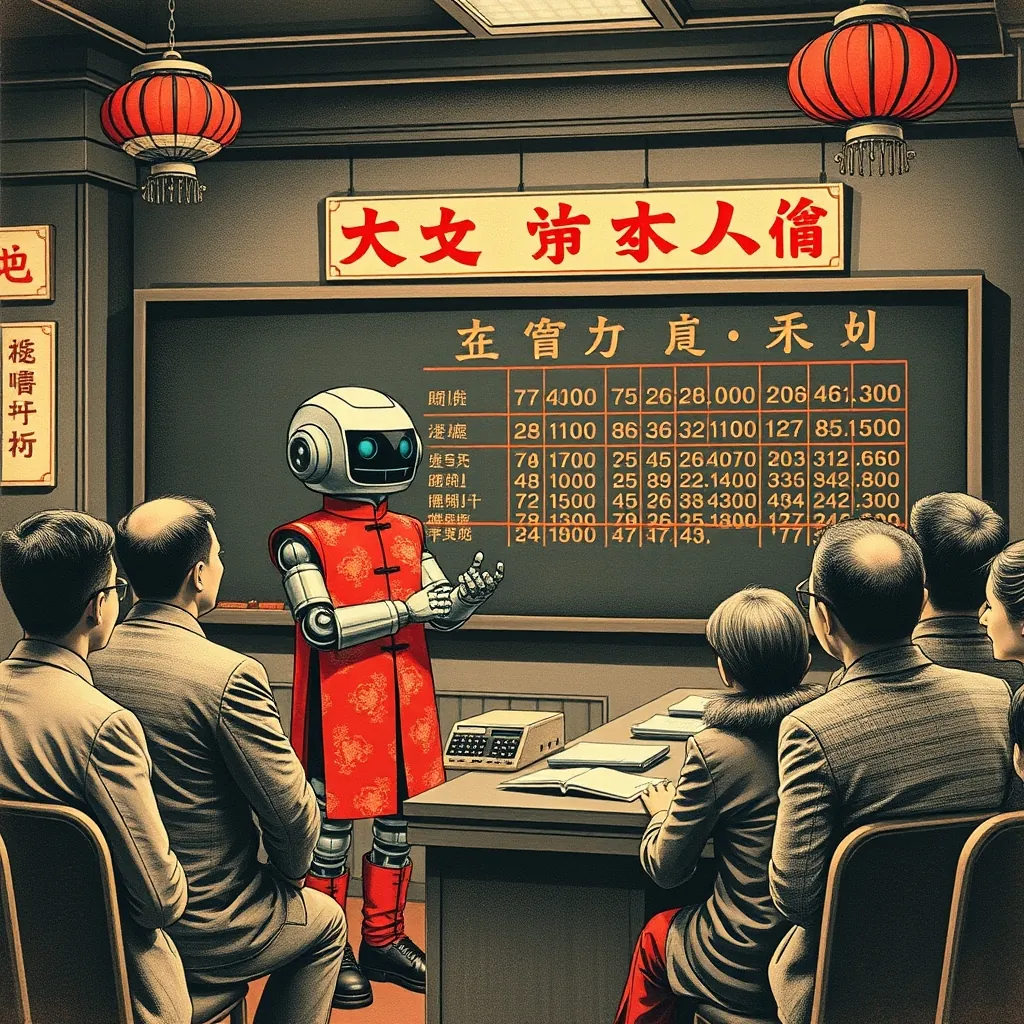
The Dark Horse: AI Apps Eating Traditional Consulting
Traditional gaokao consulting services in China charge anywhere from 5,000 to 50,000 yuan for "application strategy" packages — essentially helping families navigate the Byzantine system of university quotas, major selection, and geographic preferences. It's a market estimated at over 10 billion yuan annually.
AI is eating this from the bottom up. A free Doubao query can now produce a reasonably competent list of "reach, match, and safety" schools given a score and province. Qwen's dedicated tool pulls from official Ministry of Education data. The accuracy isn't perfect — hallucinations still happen, and university admission data is messier than AI companies admit — but the gap between "free AI" and "5,000-yuan human consultant" is closing fast.
This terrifies the traditional consulting industry and delights cost-conscious families in lower-tier cities. It's possibly the most concrete example yet of Chinese AI models delivering consumer value that ordinary people can actually feel.
What Sichuan's Numbers Actually Tell Us
Without the specific score lines in front of me (they're dropping as I write), here's what to watch for:
- Tier 1 cutoff movement: If the liberal arts (文科) and science (理科) Tier 1 lines drop significantly, it signals either an easier exam or expanded quotas — both politically sensitive readings.
- Sichuan vs. neighboring provinces: Compare with Chongqing and Yunnan to gauge whether western China is gaining ground on the coast.
- Discussion volume on Toutiao: The 2.4 million heat score suggests this is a top-five story nationally, confirming gaokao remains the single most reliable annual engagement driver for Chinese platforms.
The Bottom Line
The gaokao score announcement is the rare Chinese internet event that cuts across every demographic — AI founders and factory workers alike care about where their kids can go to school. In 2025, what's new is that the entire information ecosystem around it has been rebuilt by Chinese AI companies in the span of 18 months. If you want to understand why DeepSeek mattered beyond geopolitical optics, or why ByteDance is pouring resources into Doubao, watch what happens when Sichuan's score lines hit.
Millions of desperate queries. Billions of yuan in downstream decisions. An entire industry of "education experts" sweating whether they'll still have jobs next June.
That's not a meme. That's structural transformation.