Shanghai's AI Circus Is Back: Inside the 2026 WAIC Hype Machine
The headline blaring across Toutiao (今日头条) today — "Unlocking the New Highlights of the 2026 World Artificial Intelligence Conference" — is doing exactly what it's designed to do: manufacture anticipation 12 months early. And honestly? It's working on me.
The World Artificial Intelligence Conference, or WAIC (世界人工智能大会), has evolved from a fairly dry Shanghai policy summit into China's equivalent of Apple WWDC, CES, and a Burning Man for engineers — all welded together and staged at the Shanghai World Expo Exhibition and Convention Center. It is the single most important annual showcase of what China's AI ecosystem actually ships versus what it merely claims. So when state media starts teasing "new highlights" for the 2026 edition before 2025's summer heat has even faded, you should pay attention.
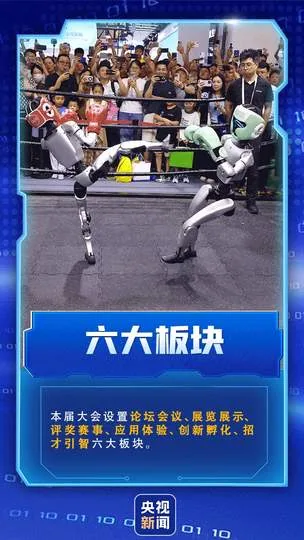
Here's why this matters: WAIC has become the canonical ground truth for separating Chinese AI vaporware from deployed reality. The 2024 edition was where Unitree (宇树科技) and their G1 humanoid robot became the unavoidable selfie prop of the Chinese internet. The 2025 iteration saw DeepSeek (深度求索) silently become the conference's gravitational center — every booth within 50 meters of their presence was packed. For 2026, the Toutiao teaser signals that Shanghai's municipal government and the MIIT ecosystem are already coordinating which companies get marquee treatment.
So what are the likely "new highlights" being teased? Let me decode based on the current trajectory of Chinese AI:
1. The Agent Wars Go Live
Manus — the general-purpose AI agent that briefly broke the Chinese internet in early 2025 — will almost certainly have a keynote presence. But the real fight will be between the foundation model labs trying to demonstrate that their agents can actually complete multi-step real-world tasks without face-planting. Expect Zhipu's GLM (智谱清言), Moonshot's Kimi (月之暗面), and Alibaba's Qwen/Tongyi (通义千问) to stage live agent-vs-agent demos. DeepSeek will likely avoid the theatrics and instead publish a quietly devastating paper the same week showing their model doing the same tasks at 1/20th the inference cost. That's their signature move, and it works.
2. Humanoid Robots Graduate From Trade-Show Props
WAIC 2026 is shaping up to be the moment Chinese humanoid robotics stops being about impressive balancing acts and starts being about deployment numbers. Fourier (傅利叶) and their GR-1, Agibot (智元 / 远征), UBTech (优必选), and Unitree will all be fighting to announce actual factory deployments rather than pilot programs. The benchmark to watch: how many units shipped, not how many units theoretically ordered. Unitree has been the consumer pricing disruptor — their G1 at roughly $16,000 was the shockwave — but the enterprise robotics space is where the 2026 narrative will shift.
3. The Chip Question Gets Louder
Every WAIC has a subtext about compute independence. Huawei's Ascend (昇腾) chips have been the face of China's domestic AI silicon push, and Cambricon (寒武纪) and Moore Threads (摩尔线程) have been fighting for credibility in training and inference respectively. WAIC 2026 will likely feature more aggressive benchmarking claims — "comparable to H100" is the phrase every Chinese chip company now legally cannot stop themselves from saying. Whether those benchmarks survive independent testing is another matter entirely, but the PR war will be fought here.
4. Consumer AI Apps Finally Get Center Stage
The most interesting shift for 2026: WAIC has traditionally been an enterprise and research affair. But ByteDance's (字节跳动) Doubao (豆包) has become China's most-downloaded AI chatbot app with over 50 million monthly active users, and that kind of consumer traction forces conference organizers to create dedicated consumer-AI tracks. Expect sessions on AI-generated content for Douyin (抖音) creators, AI-powered shopping assistants for Pinduoduo (拼多多) and Meituan (美团), and Xiaohongshu/RED (小红书) inevitably showing up with some AI beauty-filter or content-creation tool.
5. The Benchmark Circus Continues
Every Chinese AI lab has figured out that winning benchmarks — or at least appearing to — is worth millions in valuation. The 2026 WAIC will feature at least three new benchmark suites from Chinese institutions arguing that existing Western benchmarks are culturally biased or insufficiently comprehensive. Some of these critiques are legitimate. Most are strategic. The dance never changes.
Here's my honest read: WAIC matters because it's the one week per year when China's fragmented AI ecosystem has to show its collective hand. DeepSeek can publish papers from Hangzhou in relative obscurity. Unitree can post robot videos on Douyin that go viral globally. But WAIC forces everyone into the same exhibition hall, and the physical proximity exposes who's genuinely shipping versus who's still rendering concept videos.
The Toutiao hot-board placement — with over 15 million heat score — also tells you something about Chinese public appetite for this story. This isn't niche tech press. This is mainstream Chinese internet users actively curious about what their country's AI sector will demonstrate next year. That curiosity is itself a strategic asset, and Beijing knows it.
The 2026 WAIC won't answer whether China has closed the gap with American frontier labs. But it will answer a more practical question: which Chinese companies are building things that actual people and businesses will use? That's the only benchmark that ultimately matters. Everything else is performance art with extra steps.