48°C Meltdown: China's Influencers Roast India's Grid
A headline is scorching across Toutiao (今日头条) right now — and it's not about the weather, exactly. With nearly 12 million views and climbing, the trending topic reads: 'Big V: India's power grid crushed by 48°C heatwave.' The 'Big V' (大V) in question is a verified influencer commentator, and their hot take has ignited a full-blown session of Chinese social-media schadenfreude.

Here's what happened: northern India has been baking under unprecedented 48-degree-Celsius heat, and the power grid simply couldn't cope. Rolling blackouts. Coal plants gasping. Transformers literally melting. The image of a modern nation of 1.4 billion people unable to keep the lights on during a heatwave was, shall we say, irresistible content for China's commentariat.
But why does this matter for understanding Chinese internet culture right now?
First, it reveals the enduring appeal of the 'infrastructure comparison' genre on Chinese platforms. There's an entire cottage industry of influencers on Toutiao, Douyin (抖音), and Weibo (微博) who specialize in comparing China's infrastructure — high-speed rail, power grids, 5G coverage — with that of other countries, particularly India. It's not just nationalism; it's genuine engagement bait. These posts generate massive comment threads, with users sharing personal anecdotes ('I visited Delhi and the power went out three times during dinner') and counter-arguments ('But India's software industry...'). The engagement algorithms love it.
Second, the 'Big V' phenomenon itself is fascinating. These verified influencers — often with millions of followers — operate in a gray zone between journalism and opinion. They aggregate news, add commentary, and frame narratives. When a Big V says India's grid was 'crushed' (击穿), that framing becomes the dominant interpretation for their audience. It's not reporting; it's narrative curation. And on Toutiao's hot board, where this story sat with 11.8 million views, the framing is everything.
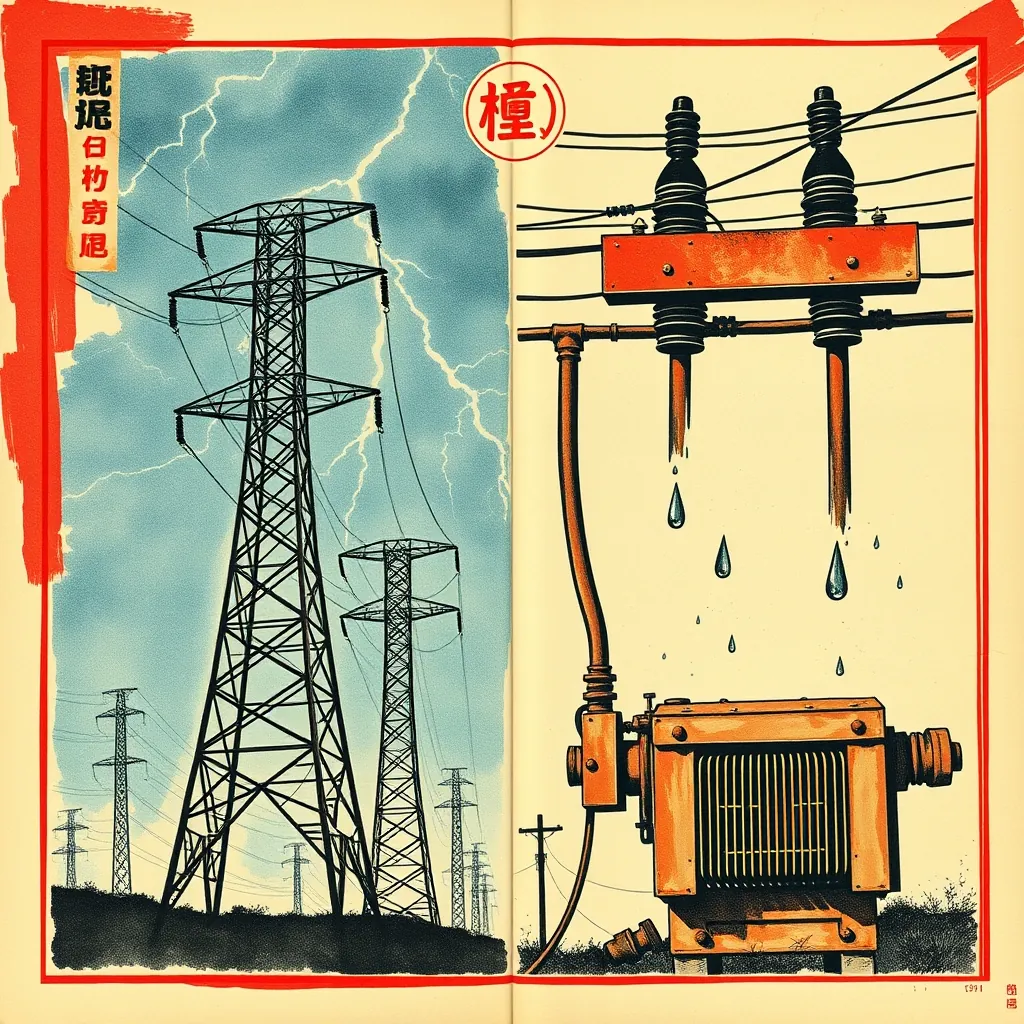
Third — and this is where it gets genuinely interesting — the story touches on something Chinese netizens are increasingly anxious about themselves: climate resilience. While the tone is mocking, the subtext is unsettling. China faced its own extreme heat crisis in 2022, when Sichuan province's hydroelectric-dependent grid buckled under drought conditions, forcing factory shutdowns and power rationing. The lesson wasn't lost on anyone. If India at 48°C is today's spectacle, China at 42°C was yesterday's reality.
This duality — confidence tinged with anxiety — defines so much of Chinese internet discourse right now. The same commenters who mock India's grid vulnerability will, in other threads, express genuine concern about China's energy transition, the reliability of renewable sources, and whether the national grid can handle increasing air-conditioning demand as summers grow hotter.
The numbers tell part of the story. India's peak power demand hit 250 gigawatts during the heatwave, straining a grid that relies heavily on coal (about 70% of generation). China's grid, by comparison, handles peak loads exceeding 1,300 gigawatts — but China also faces the challenge of integrating massive renewable capacity while maintaining baseload reliability. It's the same problem at different scales.
What makes this trending moment quintessentially 'Chinese internet' is the framing through comparison. On Western social media, the India heatwave story is covered as a climate tragedy. On Chinese social media, it becomes an implicit benchmark: 'Could we do better?' The answer, carefully curated by Big Vs, is usually 'yes' — but the question itself reveals underlying uncertainty.
The comment sections are revealing. Amid the jokes about 'sweating curry' and 'yoga in the dark' (yes, really — Chinese internet humor can be brutal), there are genuine discussions about grid modernization, the pace of India's economic development versus China's, and whether authoritarian governance models have inherent advantages in infrastructure resilience. It's a mix of shitposting and sincere geopolitical analysis that would be unthinkable on sanitized Western platforms.
For brands and observers watching Chinese social media, stories like this are instructive. The engagement isn't random — it follows predictable patterns. Infrastructure comparisons involving India, Southeast Asian nations, or Africa consistently outperform similar comparisons with Western countries. There's a specific audience appetite for 'developing nation competition' content that reflects China's self-image as the world's most successful developing country. You want to go viral on Toutiao? Find a story about somewhere that's struggling with something China does well, and frame it through that lens.
The 48°C headline will fade in a few days, replaced by the next engagement catalyst. But the underlying dynamics — Big V narrative control, infrastructure nationalism, climate anxiety disguised as mockery, comparison-as-identity — these are permanent features of the Chinese internet landscape. Read the comments, not just the headlines. That's where the real China watching happens.