The 980 Billion Yuan Question: Why China's Whales Are Selling
The headline burning up Toutiao (今日头条) right now isn't about AI benchmark wars or Pop Mart's (泡泡玛特) next Labubu drop — it's about money leaving the building. Big money.
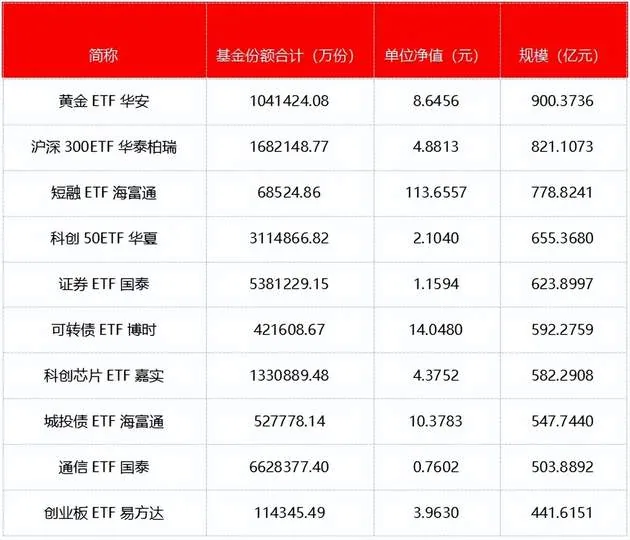
"Large funds reduce holdings by over 980 billion yuan — what signal does this release?" (大资金减持9800多亿释放何信号)
That number — 980 billion yuan — is staggering. Roughly $135 billion USD in net holdings reduction across major institutional portfolios. This isn't retail panic triggered by a Weibo (微博) rumor thread. This is mutual fund managers, insurance allocators, and pension strategists quietly (or not so quietly) heading for the exits.
When whales move this much water, you stop scrolling and pay attention.
The Number That Stops Conversations
The Toutiao hot board — where this story sits with nearly 5.7 million engagement signals — reflects how deeply this has penetrated mainstream Chinese awareness. This isn't a niche story for Xueqiu (雪球) day-traders anymore. Your aunt who checks her Alipay (支付宝) fund balance every morning is seeing this headline. Your cousin who trades on his phone during lunch break is asking uncomfortable questions.
The selling pattern isn't random either. Institutional trimming has concentrated in sectors that commanded the loudest narrative excitement but offered the murkiest paths to actual returns.
What's Getting Dumped?
Chinese consumer internet equities — think Alibaba (阿里巴巴), Tencent (腾讯), Meituan (美团) — have absorbed persistent institutional selling. These remain cash-generating machines with user bases most Western platforms would sacrifice a server farm for. But growth multiple compression has been relentless. When Tencent trades at valuations that would've seemed apocalyptic five years ago and institutions are STILL hitting sell, that's a forward-expectations statement, not a balance sheet critique.
Tech and semiconductor plays have seen rotation too. Despite national-champion energy around Huawei Ascend chips and companies like Cambricon (寒武纪), institutional money is taking profits where they exist and cutting where they don't. The gap between patriotic narrative and portfolio performance has widened into an uncomfortable canyon.
Even AI-adjacent holdings aren't immune. Everyone's been buzzing about DeepSeek (深度求索) and its earthquake through global AI assumptions. Alibaba's Qwen/Tongyi (通义千问) keeps climbing benchmark leaderboards. ByteDance (字节跳动) pushes Doubao (豆包) into millions more devices daily. But translating model quality into tradable equity value remains an unsolved problem. ByteDance is private — you can't buy the Doubao hype directly. The public-market proxies for Chinese AI enthusiasm have been volatile at best, disappointing at worst.
Where's the Money Going?
Some capital is rotating into fixed-income — the boring stuff that doesn't trend but preserves principal. Chinese government bonds have seen steady demand. Bank deposit rates keep getting cut, yet money keeps flowing in anyway. This is the financial equivalent of "lying flat" (躺平) — the cultural posture of disengaging from the grind that defined post-pandemic Chinese youth psychology. Now it's institutional behavior.
Some money is going defensive: consumer staples, utilities, dividend-paying stocks. Companies manufacturing rice cooker replacement parts don't make headlines. They do make distributions.
And some capital is simply waiting. Cash positions at major funds have reportedly climbed. When the dominant market question is "is this the bottom?" for the seventh consecutive quarter, sometimes the smart trade is refusing to play.
The Consumer Paradox
Here's what should fascinate anyone watching China from outside: institutional caution coexists with genuinely explosive consumer energy. Pop Mart's Labubu figures command absurd resale prices across Southeast Asia. Milk tea brands expand into county-tier cities (县域) at breakneck pace. Train travel content on Xiaohongshu (小红书) sends booking surges through previously unknown destinations.
Livestream commerce evolves relentlessly. Dong Yuhui (董宇辉) and East Buy (东方甄选) demonstrated that personality-driven selling isn't a gimmick — it's a structural shift. Bilibili (B站) memes still drive product launches. Douyin (抖音) trends still make or break restaurant chains.
The disconnect between market pessimism and consumer vitality is the story beneath the story. Spending has become experiential and moment-focused rather than product-accumulative. Someone drops 200 yuan on a themed milk tea collaboration without flinching but agonizes over 1,000 yuan in an index fund.
This behavioral split is precisely what institutional money reads when trimming positions. If consumers spend on experiences rather than discoverable products, the platforms that monetized product discovery face harder roads. Pinduoduo (拼多多) captures different value from a milk tea pilgrimage than from a bulk household goods order.
The AI Reality Check
Chinese AI labs produce genuinely impressive work. DeepSeek forced a global reassessment of open-source capabilities. Moonshot's Kimi (月之暗面) pushes long-context boundaries. Zhipu's GLM (智谱清言) models iterate constantly. MiniMax, Baichuan (百川), Yi/01.AI (零一万物) — the ecosystem runs deep.
But institutional money operates on a different frequency. Model quality and stock performance occupy different dimensions. The companies building China's best AI include private startups you cannot invest in and tech conglomerates whose AI revenue remains a rounding error against legacy businesses.
When big money examines Chinese AI, they see brilliance and monetization uncertainty in equal measure. The selloff isn't a referendum on Chinese AI capability. It's an acknowledgment that capability-to-revenue translation remains messy.
What the Whales Know
The signal embedded in 980 billion yuan of selling is direct: expect volatility, pursue selectivity, and abandon faith in broad recovery narratives. Chinese innovation — whether Unitree (宇树科技) robotics platforms, Fourier (傅利叶) humanoids, or the next DeepSeek surprise — will keep astonishing global observers. But the market mechanism for capturing that astonishment remains deeply imperfect.
This isn't the end of China's story. It's a chapter where patience gets stress-tested. What returns the whales isn't hype — it's earnings, clarity, and the boring fundamentals that never trend on Toutiao.
Until then, the smart money votes with its feet. And the rest of us decode the footprints.