China Drops 102 New Standards June 1: Your Consumer World Just Got a Makeover
Something quietly massive just happened in China's consumer landscape, and almost nobody outside the country noticed.
On June 1st, a whopping 102 national standards (国家标准) officially went into effect across the country, covering everything from the safety of children's toys to the energy efficiency of your home appliances. The news, trending at nearly 10 million views on Toutiao (今日头条), signals yet another wave of China's relentless regulatory machine reshaping the products that show up in your Douyin (抖音) shopping cart and Pinduoduo (拼多多) group buys.
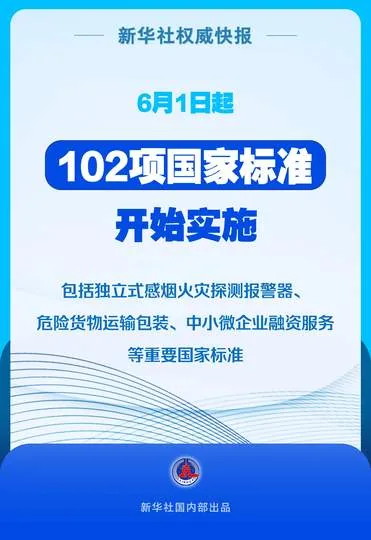
So why should anyone care about bureaucratic standards documents? Because in China, standards are soft power disguised as red tape. They determine which products survive the cutthroat arena of Chinese e-commerce, which gadgets get the coveted gold-standard certification labels, and which categories see entire shakeouts as smaller players can't keep up with compliance costs.
Let's break down what's actually happening here and why it matters for anyone watching China's consumer-tech ecosystem.
The Standards Industrial Complex
China's Standardization Administration (SAC) drops batches of new national standards (GB standards, short for Guobiao 国标) multiple times a year, but a single batch of 102 hitting simultaneously is a significant regulatory payload. These aren't abstract policy wishes—they're legally binding technical specifications that manufacturers must meet or risk being pulled from platforms like Taobao (淘宝), JD.com (京东), and Douyin's (抖音) livestream shopping channels.
The timing is strategic too. June 1st is International Children's Day in China, and a significant chunk of these standards target children's products—from the materials used in toys to the safety mechanisms on baby strollers. It's regulatory theater with real teeth: demonstrate you care about kids by making compliance mandatory on the one day everyone's paying attention to children.
But here's where it gets interesting for the China-watch crowd: these standards increasingly touch the exact categories driving Chinese consumer hype cycles.
When Standards Meet Consumer Mania
Consider the current obsession with blind boxes and designer toys—the Pop Mart (泡泡玛特) phenomenon that's turned Labubu figures into must-have status symbols across China's tier-2 and tier-3 cities. New standards around toy safety, chemical content in plastics, and age-appropriate labeling directly impact how companies like Pop Mart design, manufacture, and package their products. Compliance isn't optional; it's table stakes for staying on shelves.
Or think about the milk-tea wars consuming China's youth. Standards around food additives, packaging materials, and hygiene protocols affect every chain from Heytea (喜茶) to Nayuki (奈雪的茶). When your favorite brand reformulates that taro-paste topping, there's a decent chance a GB standard somewhere prompted the change.
The same dynamic plays out in home appliances, electronics, and increasingly, in AI-adjacent hardware. Smart home devices, wearable tech, and IoT gadgets all fall under evolving standards regimes that dictate everything from electromagnetic compatibility to data-security protocols.
The Compliance Moat
Here's the cynical take that Chinese entrepreneurs openly discuss: standards create moats. Every time a new batch of GB standards drops, smaller manufacturers scramble. Compliance costs money—testing, certification, retooling production lines. For a factory in Shenzhen cranking out generic Bluetooth speakers, a new electromagnetic compatibility standard might mean the difference between staying in business or shutting down.
This is by design. China's regulatory apparatus uses standards as industrial policy, deliberately pushing low-quality, low-margin players out of the market while rewarding companies with the scale and sophistication to adapt quickly. It's survival of the richest compliance budget.
The result? Market consolidation. In category after category—from small appliances to children's clothing to smart devices—you see the same pattern: dozens of no-name brands competing on price gradually thin out to a handful of recognized names competing on features and brand cachet. Standards accelerate this process.
What the Toutiao Traction Reveals
The fact that this standards announcement racked up nearly 10 million hot-board views on Toutiao (今日头条) tells us something about Chinese consumer consciousness. People aren't just passively accepting whatever shows up in their shopping feeds—they're increasingly aware that regulatory frameworks shape product quality and safety.
This reflects a broader maturation of Chinese consumer culture. The era of caveat emptor on Taobao is giving way to an expectation that platforms and regulators share responsibility for product quality. When consumers share posts about new food-safety standards or children's-product regulations, they're signaling that they've internalized the connection between policy and their daily lives.
For global brands watching China, the lesson is clear: GB standards are not optional reading. They're the invisible architecture determining market access, competitive dynamics, and ultimately, which products Chinese consumers encounter in their daily scroll through Xiaohongshu (小红书) product recommendations.
The Bigger Picture
China's standards regime is also a form of normative power projection. By establishing detailed technical specifications across hundreds of categories, China creates de facto rules that affect global supply chains. Foreign companies selling into China must meet GB standards; Chinese companies building to GB specifications find it easier to export to markets that recognize Chinese certifications.
It's a quiet form of influence that doesn't generate headlines the way a new DeepSeek (深度求索) model or a Unitree (宇树科技) robot does, but it shapes the material reality of consumption across the world's largest consumer market.
So the next time you unbox a product that was designed, manufactured, or assembled in China, remember: somewhere in that product's DNA, there's a GB standard that shaped its specs. And every June 1st, a fresh batch of those standards quietly remakes the consumer landscape all over again.