China's AI Resurrection Trend Is Peak Emotional Chaos
A woman named Yu Na (于娜) saw an AI-generated recreation of her deceased husband on screen and completely broke down sobbing. The clip exploded across Chinese social media this week, racking up over 6 million views on Toutiao (今日头条) alone. Welcome to China's latest AI consumer obsession: digitally resurrecting the dead.
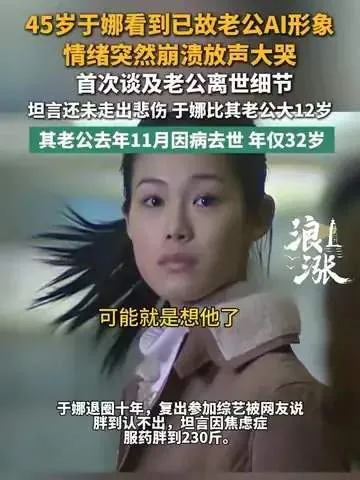
Let's be clear about what's happening here. This isn't some sci-fi movie plot. This is real people paying real money to use Chinese AI tools to recreate photorealistic avatars of their departed loved ones — and then having full emotional meltdowns when the results hit a little too close to reality.
The technology powering these digital resurrections comes from China's increasingly sophisticated AI ecosystem. Companies like ByteDance's Doubao (豆包), Alibaba's Tongyi Qianwen (通义千问), and smaller startups like Silicon Intelligence (硅基智能) and Super Brain (超级大脑) have made it trivially easy to generate lifelike video from just a handful of photos. We're talking about tools that can take your dead grandma's WeChat profile pictures and produce a talking, blinking, somewhat-convincing video of her saying whatever you want.
The price point? Sometimes as low as 10 RMB (about $1.40). Premium services with voice cloning and custom scripts can run up to 1,000 RMB ($140). That's the Chinese tech playbook in a nutshell: take something emotionally charged, slap a freemium model on it, and watch the engagement metrics go vertical.
This trend first gained major traction during Qingming Festival (清明节) in April 2024 — China's traditional tomb-sweeping day where families honor their ancestors. AI resurrection services saw a 400% spike in orders during that period, according to multiple Chinese media reports. Startups literally ran promotional campaigns: 'Can't visit the cemetery? Bring grandma back to life on your phone!' Only in China's hyper-competitive consumer internet landscape would grief become a growth hack.
The ethical nightmare goes deeper than the marketing. Some companies have been caught offering AI resurrection services using publicly available photos of deceased celebrities and influencers without their families' consent. Imagine scrolling through Douyin (抖音) and seeing a sponsored post of a late pop star hawking weight-loss tea. That's not hypothetical — that actually happened with several deceased Chinese public figures, triggering widespread outrage and eventual platform crackdowns.
But here's what makes this story quintessentially Chinese internet: the sentimentality. Chinese social media has always had a complicated relationship with emotional content. Platforms like Kuaishou (快手) and Douyin built their empires on rural grandpas crying about their grandchildren and migrant workers documenting their loneliness. There's a genuine cultural thread here — Confucian filial piety meets algorithmic engagement optimization. The AI resurrection trend sits squarely at that intersection.
The Yu Na clip went viral precisely because it hit every emotional button the Chinese internet loves: tragic widowhood, technological wonder, raw unfiltered grief, and that specific brand of melodramatic catharsis that drives shares and comments. Toutiao's recommendation algorithm saw those engagement signals and pushed it to millions more. The cycle feeds itself.
China's AI ethics conversation is still catching up. There are no comprehensive regulations specifically targeting AI resurrection or digital necromancy. The Cyberspace Administration of China has issued broad guidelines on deepfake technology requiring disclosure and consent, but enforcement against individual small-scale operators is essentially nonexistent. It's the Wild West with a grieving customer base.
The technical quality varies wildly. Some AI resurrection videos are genuinely uncanny — smooth facial movements, accurate voice synthesis, natural expressions. Others look like cursed deepfakes from 2019, with glitchy lip movements and voices that sound like a GPS navigation system having an existential crisis. Yet people still pay. The emotional need overrides the technical skepticism.
Chinese AI companies are paying attention. Several startups have pivoted specifically toward the 'digital immortality' market, offering subscription services where you can apparently chat with an AI version of your deceased relative through a chatbot interface. One company, SenseTime-affiliated SenseMirage, reportedly charges annual maintenance fees to keep your digital loved one's avatar updated and accessible. It's like a cloud subscription, except instead of storing photos, you're storing a simulation of someone's dead uncle.
The philosophical questions are staggering. Does interacting with an AI recreation help with grief processing or does it trap people in permanent denial? Chinese psychologists are split, with some praising the 'closure' potential and others warning about 'digital attachment disorder.' Meanwhile, the startups don't care — they've got unit economics to optimize.
What Yu Na's viral moment reveals is that China's AI consumer market has moved far beyond chatbots and productivity tools. The real demand is emotional. Deeply, messily, profitably emotional. When you combine China's massive consumer internet infrastructure with AI capabilities that are increasingly matching or exceeding Western models, you get use cases that would make Silicon Valley's 'ethical AI' committees collectively faint.
The Chinese internet's response to the Yu Na video was predictably divided. Sympathetic comments about grief and closure competed with cynical hot takes about exploitation and digital necrophilia. Some users shared their own experiences with AI resurrection services. Others threatened to report the companies involved. The discourse was chaotic, emotional, and completely authentic — everything you'd expect from a nation of 1.4 billion people grappling with technology that would have seemed like black magic a decade ago.
Welcome to the future of Chinese AI. It's not just about benchmark scores and model parameters. It's about making widows cry over digital ghosts — and then monetizing the tears.