Grandpa vs. Poplar Fluff: One Match, 20 Cars Torched
Every spring, northern China transforms into something resembling a low-budget disaster movie. The villain? Poplar fluff (杨絮) — those cotton-like seeds that billow off female poplar trees in apocalyptic white clouds, blanketing streets, clogging lungs, and generally making life miserable for roughly 300 million people across half the country.
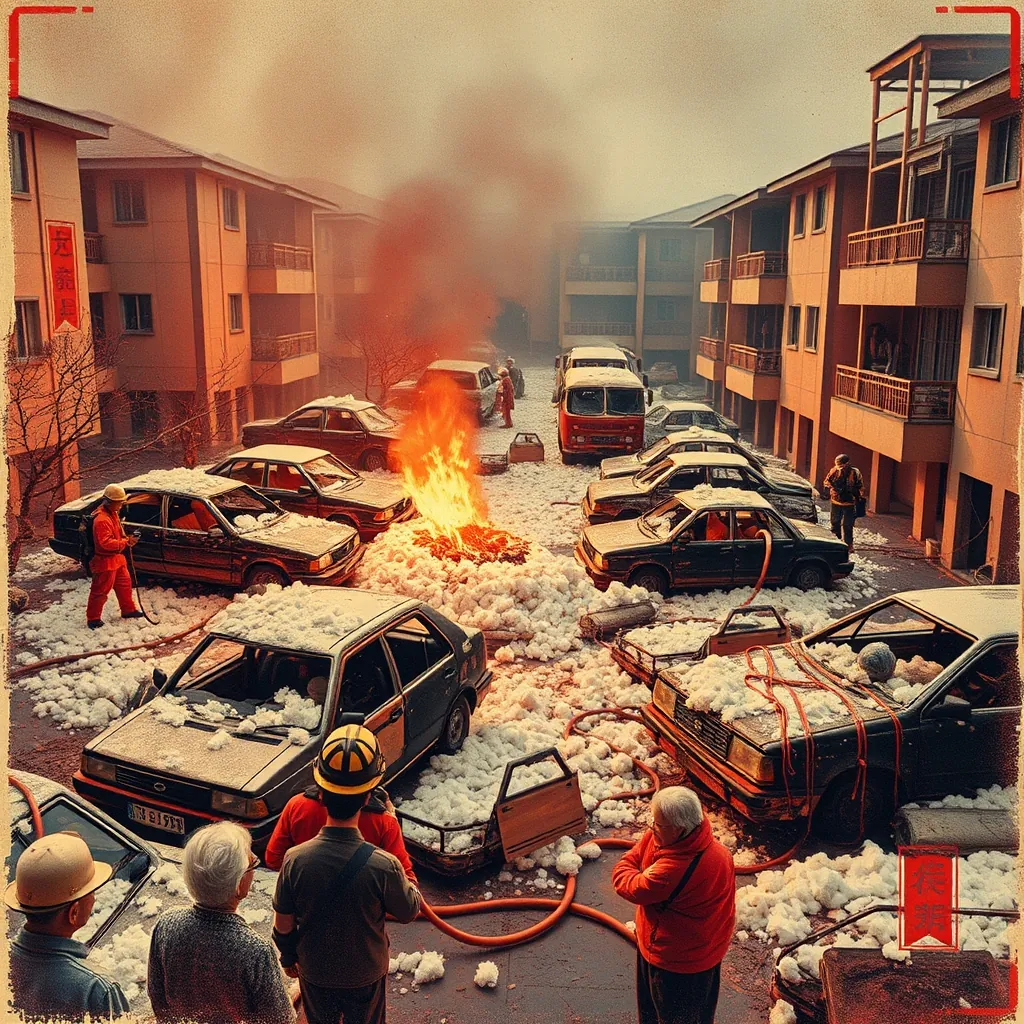
And now, thanks to one elderly man's spectacularly bad judgment, we have the viral incident to crown all fluff-season chaos: «老人烧杨絮引燃20辆汽车» — an old man tried to burn away accumulated poplar cotton and accidentally set twenty cars on fire. The story is currently blazing across Toutiao (今日头条) with nearly 9 million views, because of course it is.

Let's unpack this glorious disaster.
The Fluffituation
First, some context for the uninitiated. In the 1960s and 70s, China planted enormous numbers of female poplar trees across northern cities as part of massive afforestation campaigns. Fast-forward six decades, and those trees have matured into fluff-producing factories that release their cottony seeds every April and May, turning cities like Beijing, Tianjin, and Shijiazhuang into something that looks like a snow globe someone shook too hard.
The fluff gets everywhere. It drifts into apartments through windows, accumulates in drifts along sidewalks, triggers allergies en masse, and — critically for this story — piles up in parking lots, alleyways, and any semi-enclosed space where the wind can't disperse it.
Here's the thing about poplar fluff that every Chinese person knows but apparently one grandpa chose to ignore: it is extraordinarily flammable. The stuff is essentially nature's kindling — dry, fibrous, airborne, and capable of carrying a flame faster than you can say "保险能赔吗" (will insurance cover this?).
Every year, Chinese fire departments issue warnings. Every year, someone ignores them.
Match Meet Fluff
According to the Toutiao thread, an elderly man in an unnamed northern Chinese city decided he'd had enough of the poplar fluff accumulating near his residential compound. Rather than, say, sweeping it up or waiting for rain, he opted for the direct approach: he set it alight.
The fluff, being basically a distributed explosive, did what fluff does. The fire raced through the accumulated cotton faster than a Weibo (微博) hot topic, reached a parking area, and proceeded to consume twenty vehicles before firefighters could bring the inferno under control.
Twenty cars. One match. Grandpa's spring cleaning ritual turned into a seven-figure insurance claim.
The Toutiao comment section, as you might imagine, is absolutely chef's kiss. Top comments range from dark humor ("爷爷觉得这火暖和" — Grandpa thought the fire was cozy) to genuine outrage about why cities still allow female poplar trees to exist. There are debates about insurance liability, whether the elderly man should face criminal charges, and the eternal Chinese internet sport of comparing regional fluff-suffering (Beijing people claim they have it worst; Tianjin residents disagree violently).
Why This Matters (Seriously)
Look, on the surface this is just a funny viral disaster story. But dig deeper and you'll find it touches on several genuinely important threads in Chinese urban life.
First: the aging population problem. China has 280 million people over 60, many living in older residential compounds with limited property management. When an elderly person takes fluff-disposal into their own hands with a lighter, it reflects a gap in municipal services and community care that's only going to widen.
Second: urban planning's debt to the past. Those 1960s poplar plantings were done with good intentions but zero consideration for gendered tree biology. Cities have spent the last decade trying to replace female poplars or inject them with growth inhibitors, but progress is glacial. Beijing alone has over a million poplar trees. You can't exactly chainsaw them all overnight.
Third: China's viral-news ecosystem. This story hit 8.7 million Toutiao views in hours, not because it's geopolitically significant, but because it's relatable. Everyone north of the Yangtze has suffered through fluff season. Everyone has imagined burning it. One guy actually did. The internet's collective response is basically: "终于有人干了" — someone finally did it.
Fourth: the insurance and liability question. Commenters are actively debating whether the man's family should pay, whether property management shares blame, and whether car owners have comprehensive coverage. This is a remarkably sophisticated conversation about legal responsibility in a country where consumer-protection frameworks are still maturing.
The Takeaway
China's poplar fluff problem won't be solved anytime soon. Cities are injecting trees, replacing where possible, and occasionally deploying water cannons to wet down fluff before it becomes airborne. But for the foreseeable future, every spring will bring the white clouds, the allergy complaints, the fire warnings — and, inevitably, the viral videos of someone who thought they could burn it all away.
This particular grandpa learned the hard way that nature always wins. Twenty car owners learned that parking near fluff drifts is a bad life choice. And the Chinese internet got exactly the chaotic, relatable content it craves.
Spring in China. Never change.
(Or actually, please do. Replace the female poplars already.)