Japan's Robot Fight Night: Bots Bolt Before Bell
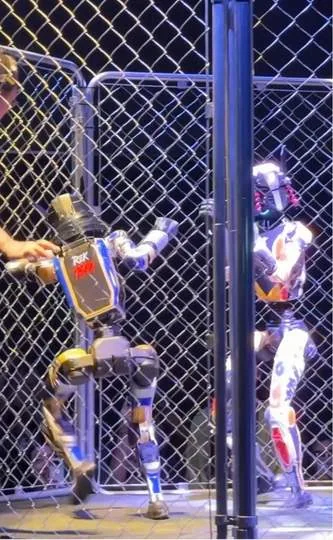
The Chinese internet is currently in absolute meltdown over footage from what was supposed to be a Japanese robot fighting tournament — except the mechanical gladiators never actually fought. According to the trending headline on Toutiao (今日头条), which racked up a scorching 2.1 million hot score, the bots "crashed into the door and ran away" before the competition even started.
Yes, you read that right.
In what appears to be either a catastrophic technical failure, a spectacular PR disaster, or possibly both simultaneously, a Japanese robot combat event has gone viral across Chinese social media for every reason except the intended one. The footage circulating on platforms like Douyin (抖音) and Bilibili (B站) shows what looks like a scene from a very low-budget sci-fi comedy — machines built for pitched robotic combat instead malfunctioning, careening into doorframes, and generally behaving like confused Roombas at a house party they weren't invited to.
Now, why is this particular clip catching fire on Chinese platforms right now? Let me explain the subtext, because there's a lot of it.
There's a rich, slightly petty, and deeply entertaining rivalry brewing in Asian robotics, and Chinese netizens are absolutely seated for every chapter. Japan has historically occupied the spiritual throne of robot culture — Astro Boy, Gundam, the beloved ASIMO that could jog and wave but never really did much else. For decades, "Japanese robot" conjured images of chrome friendliness and engineering prestige.
But the actual center of gravity in practical humanoid robotics has been shifting — hard — toward China.
Companies like Unitree (宇树科技) have been making genuine global waves with their H1 and G1 humanoid platforms. The G1, in particular, broke the internet earlier this year when it hit the market at roughly $16,000, a price point that made Western robotics executives perform visible spit-takes on LinkedIn. Unitree's quadruped robots are already fixtures in research labs from MIT to ETH Zurich. Meanwhile, Fourier (傅利叶) has been steadily advancing its GR-1 humanoid for medical and rehabilitation applications, Agibot (智元) is making aggressive plays in embodied intelligence, and even XPeng — better known to Western audiences as an automaker, though we won't dwell on that — has deployed its IRON humanoid robot in factory settings.
So when footage surfaces of a Japanese robot fighting competition going spectacularly, comprehensively sideways? Chinese social media doesn't just laugh. It treats the moment as narrative vindication.
The comments sections tell the full story. On Weibo (微博), users are posting things like "连机器人都知道什么时候该跑" — "even the robots know when to quit." On Bilibili, robotics enthusiasts are dissecting the malfunction footage frame by frame, earnestly debating whether the failures stem from locomotion instability, sensor calibration disasters, or just catastrophic event management. It's mockery layered over genuine technical curiosity, which is a very specific Chinese internet energy.
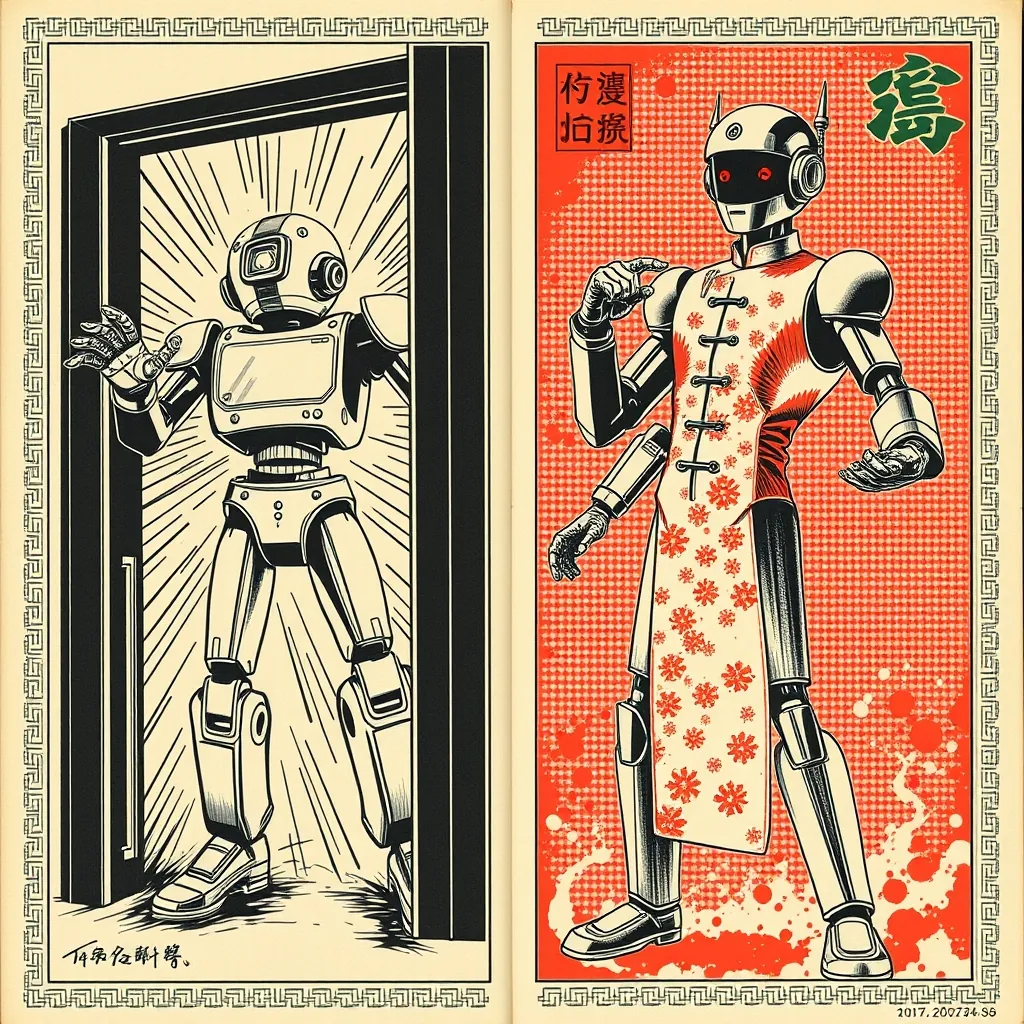
What's striking is the speed at which Chinese content creators turned this into comparative propaganda. Within hours of the clip circulating, there were already edited compilations contrasting the malfunctioning Japanese robots with footage of Unitree's G1 performing parkour, Fourier's GR-1 walking smoothly through clinical environments, and various Chinese robot dogs doing backflips for no functional reason whatsoever. The contrast editing is brutal, effective, and entirely organic — the kind of user-generated brand marketing that no advertising budget can purchase.
The robot combat angle deserves attention too. Fighting robotics has existed as a niche-but-passionate subculture globally for decades — BattleBots in America, Robot Wars in the UK, various spin-offs across Asia. But these have traditionally featured remote-controlled machines, essentially glorified wedges and spinning weapons on wheels. Japan attempting to bring this format to bipedal humanoid robots is conceptually fascinating and technologically ambitious. The execution, evidently, needed more rehearsal time.
The timing of this viral moment is almost too perfect. Chinese robotics companies have been on a demonstrable hot streak through 2024 and into 2025. Unitree platforms have appeared at international trade shows from Las Vegas to Hannover. Chinese universities and startups have been publishing aggressively at top-tier robotics conferences. The Chinese government has prioritized embodied AI and humanoid robotics in national technology roadmaps. The story of "China as the serious robotics contender" has been building with real momentum — and a clip of Japanese robots failing to reach the starting line feeds directly into that narrative with surgical precision.
Now, full disclosure: robot demos fail everywhere. American humanoid showcases have produced their share of faceplant compilations. Boston Dynamics went through years of Atlas falling over before it learned to backflip. Chinese promotional robot videos are frequently edited to showcase only the successful takes. The honest reality of robotics development — anywhere on Earth — is that it's messy, iterative, and absolutely packed with humiliating moments that never make the highlight reel.
But perception is its own reality, and on the Chinese internet today, the perception is crystallizing into something potent: the humanoid robot revolution is underway, Chinese companies are leading the practical charge, and occasionally, overseas competitors' fighting machines will crash into doorways and flee the premises before the opening bell.
Whether that perception aligns with ground truth is a question for engineers and analysts. For now, the memes are exceptional, the engagement numbers are astronomical, and somewhere in a Unitree office in Hangzhou, a marketing team is definitely smiling.
And honestly? They've earned the smirk.